
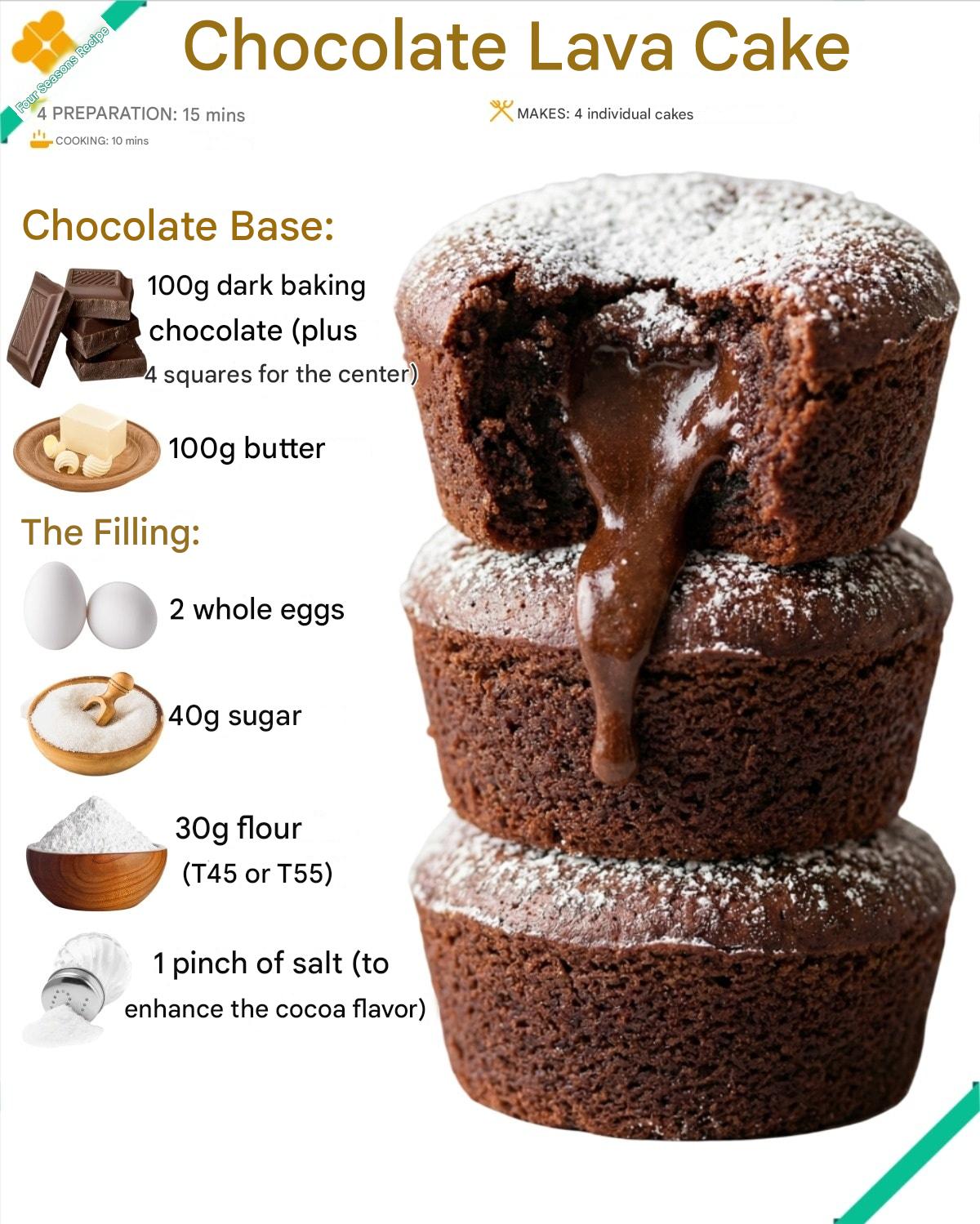
I grease the ramekins well, pour in half the batter, press a square of chocolate into the center of each, and cover with the remaining batter. I bake them until the edges are set but the centers still feel soft. The smell at this stage is incredible, and pulling them out at just the right moment is the secret to that flowing lava center.
Pro Tips for Best Results
I tested this recipe three different ways, adjusting baking times, and I learned that even one extra minute can change everything. Every oven behaves slightly differently, so I recommend doing a test run if you’re serving these for guests. The edges should look firm while the center still jiggles slightly.
Another lesson I learned the hard way is to let the batter rest for a few minutes before baking. When I bake immediately, the texture is good, but resting briefly allows the flour to hydrate fully, giving a smoother interior.
Don’t skip greasing the ramekins thoroughly. I once thought a light coating was enough, and the cakes stuck badly. Butter generously and even dust lightly with cocoa powder if you want extra insurance.
Finally, trust your instincts more than the clock. I always peek through the oven door near the end and gently shake the tray. That visual cue tells me more than a timer ever could.
Common Mistakes to Avoid
I made the mistake of baking these too long during my first attempt, and instead of lava, I got fully set chocolate cake. While still tasty, it wasn’t what I wanted. Pulling them earlier makes all the difference.
Another common error is using chocolate that’s too sweet. I once tried milk chocolate, and the result lacked depth. Dark chocolate gives that rich contrast that makes the dessert memorable.
I’ve also rushed the melting process before, turning the heat too high and scorching the chocolate. Low and slow is the only way to keep the flavor clean and smooth.(See the next page below to continue…)