
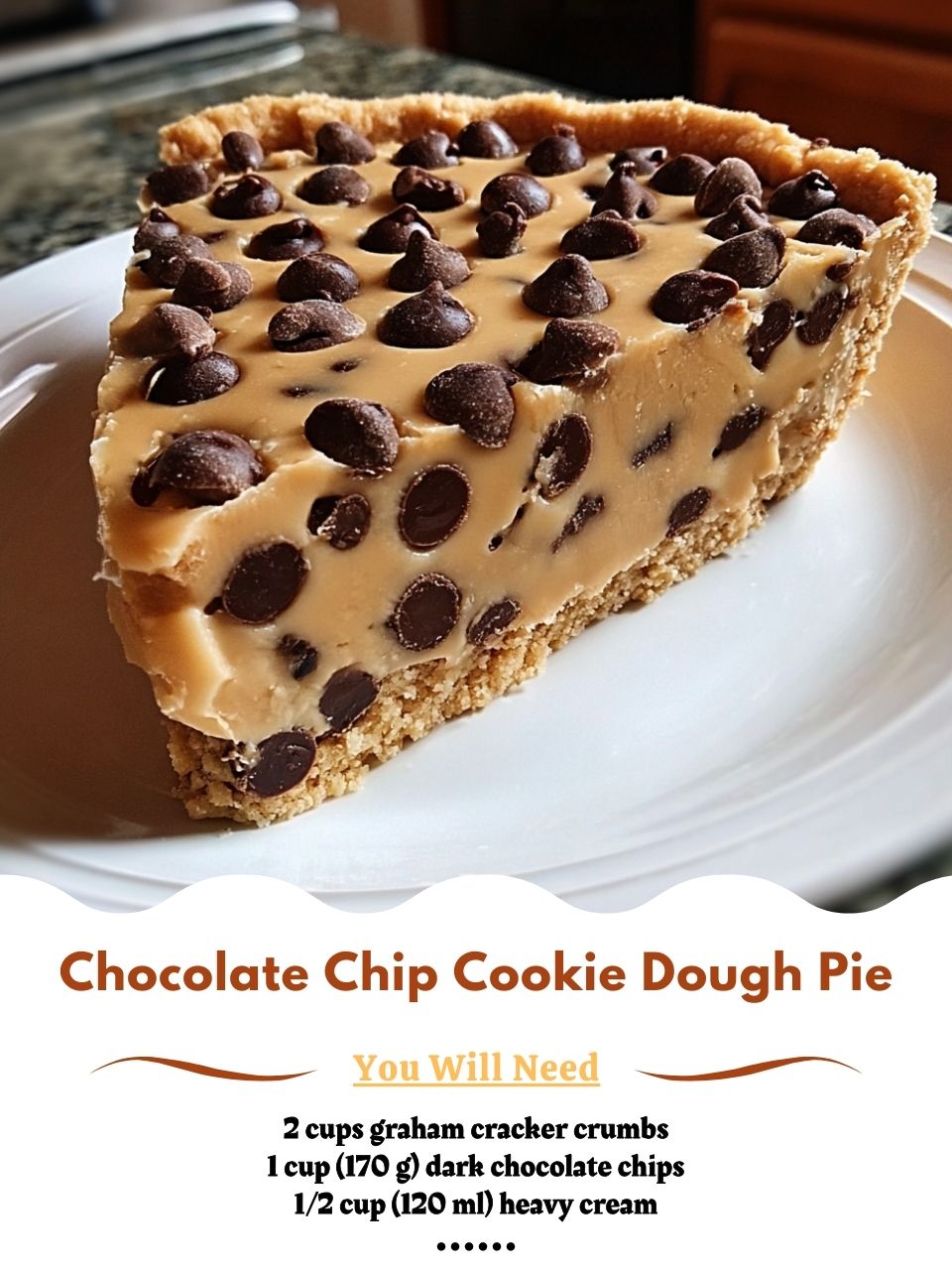
Now, retrieve your chilled crust. Using your spatula or clean hands, press the cookie dough filling into the crust, spreading it out into a smooth, even layer. I like to make the top a little swirly for a rustic look. Once filled, I cover the pie loosely with plastic wrap and refrigerate it for at least 4 hours, but ideally overnight. This long chill is non-negotiable—it allows the filling to firm up perfectly so you get clean, gorgeous slices.
For the final flourish, I make a simple chocolate ganache. I heat the heavy cream until just simmering, then pour it over the dark chocolate chips in a heatproof bowl. I let it sit for a minute before stirring slowly into a silky, glossy pool. After letting it cool for about 10 minutes, I pour it over the chilled pie, tilting the plate to create an even, shiny top. A final 30-minute chill sets the ganache, and then it’s ready to slice and devour.
Pro Tips for Best Results
First, truly soften your butter to room temperature. I leave mine out for a few hours. If it’s too cold, your sugars won’t cream properly, and you’ll have a grainy texture. I’ve tried microwaving it in a pinch, but if it gets at all melty, it won’t whip up with the right structure. Patience here pays off in the smoothest, creamiest filling.
For the ganache topping, don’t rush the cooling. If you pour it onto the pie while it’s too hot, it will melt the top layer of your beautiful cookie dough filling. Let it cool until it’s just barely warm to the touch—thick enough to coat the back of a spoon. This ensures a distinct, stunning layer of chocolate on top of the dough.
When pressing in the crust, pay special attention to where the bottom meets the sides. I build up a little ridge there and press extra firmly. This is the weakest point, and a good seal prevents crumbling when you slice. Using the flat bottom of a cup or glass is the best trick I’ve found for a professional-looking, compact crust.
Common Mistakes to Avoid
The biggest mistake is skipping the heat treatment of the flour. Raw flour can carry bacteria just like raw eggs. Baking it for those few minutes eliminates any risk and gives you complete peace of mind to enjoy every bite. I learned this lesson early on, and now it’s a non-negotiable first step in my kitchen.
Don’t use cold butter for the filling. My first attempt resulted in a lumpy, difficult-to-spread mess because I was impatient. The butter must be soft enough that your finger leaves a clear indentation. This is what allows it to whip up with the sugars and create that dreamy, spreadable cookie dough texture we’re after.
Avoid overmixing once you add the flour. Stir it in just until the last streaks disappear. Overworking the dough can activate the wheat proteins and make the filling a bit tough or pasty, rather than soft and tender. Fold gently and with a light hand for the best result.(See the next page below to continue…)