
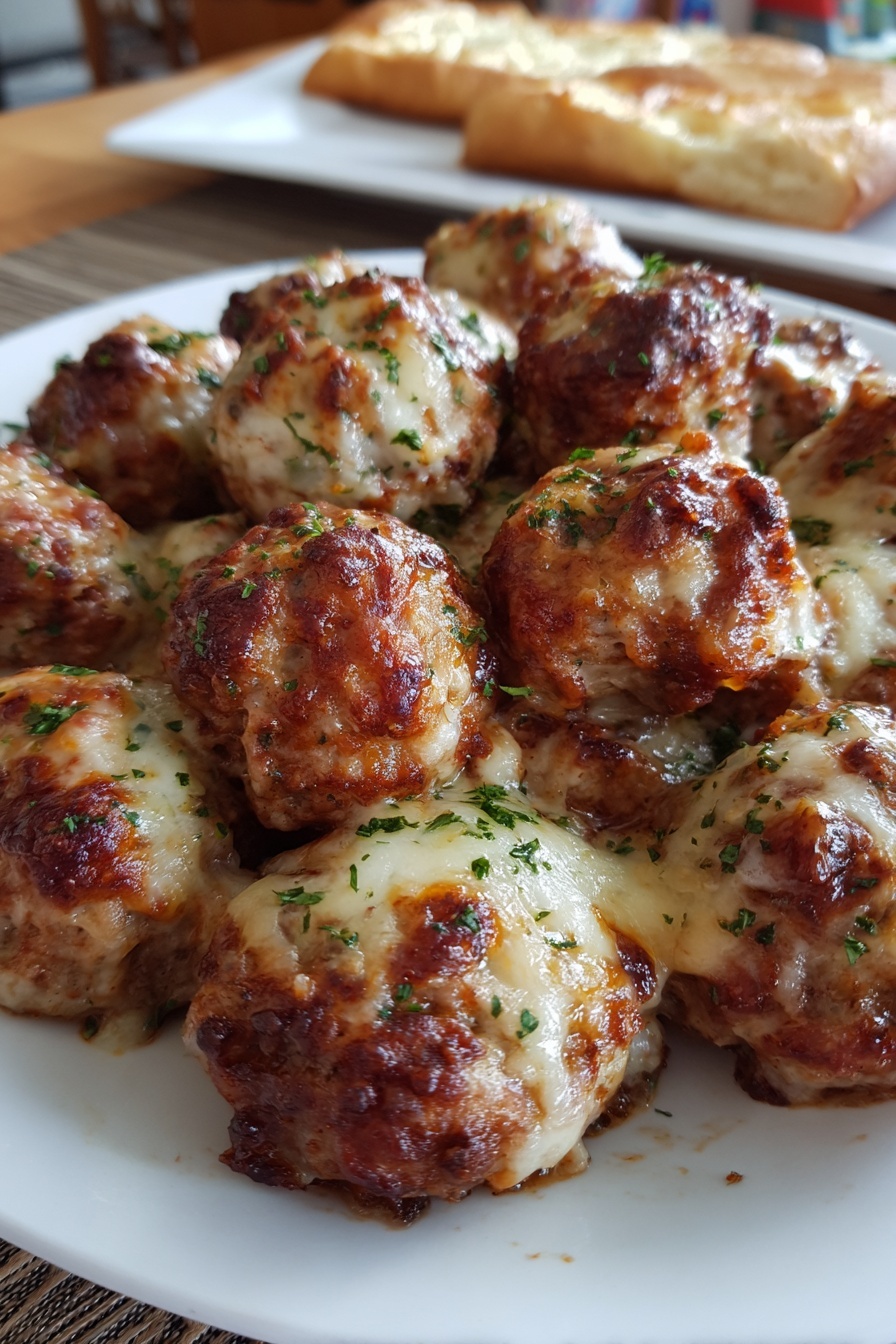
I bake the meatballs for 18-22 minutes. The timing can vary based on size, so I always use an instant-read thermometer to be sure. I insert it into the center of a meatball (trying to avoid the cheese core for an accurate meat reading). They are done when the internal temperature of the meat reaches 160°F. At this point, the cheese inside will be perfectly molten, and the outside will be gloriously browned. I let them rest on the tray for 5 minutes before serving—this allows the juices to settle and prevents the cheese from erupting like a volcano when you bite in.
Pro Tips for Best Results
The secret to a perfectly sealed cheese pocket is to ensure the meat layer around the cube is of even thickness. I tested this by making the meat shell too thin in spots, and the cheese burst through during baking. Now, I make sure the patty in my hand is an even circle and that the cheese cube is fully enclosed with no thin spots before I start rolling.
Use an instant-read thermometer. Guessing doneness is a gamble that often leads to dry meatballs or, worse, undercooked meat. The meat must reach 160°F. The cheese will be molten and perfect at that temperature. Letting the meatballs rest for 5 minutes after baking is just as important; it allows the carryover heat to finish the cooking gently and lets the cheese thicken slightly so it oozes instead of gushes.
Don’t skip the garlic butter wash. I tried baking them plain once, and while they were fine, they missed that quintessential garlic bread flavor and the beautiful, caramelized exterior. Brushing them with the butter mixture halfway through baking (at the 10-minute mark) is another trick I’ve used for an extra garlicky punch, but doing it at the beginning works beautifully and is simpler.
Common Mistakes to Avoid
The first mistake I made was using the wrong mozzarella. I tried fresh mozzarella (the soft balls in water) in my first batch. They released so much water while baking that they steamed the meatballs from the inside, resulting in a soggy texture and a sad, empty cavity where the cheese should have been. Low-moisture, block-style mozzarella is designed to melt beautifully without separating.(See the next page below to continue…)