
Over-mixing after adding the caramel bits is a common error. As I mentioned, the mixer’s paddle will chop and melt the caramels. But also, if you’re mixing by hand, resist the urge to stir vigorously. Gently fold them in until just distributed. You want to maintain as much air as possible in that fluffy cream cheese mixture you just worked so hard to create. Vigorous stirring will deflate it and make the final product denser.
Skipping the plastic wrap shaping technique will lead to frustration. Trying to shape this soft mixture with your bare hands is a sticky, messy ordeal. The plastic wrap acts as a non-stick barrier and gives you the leverage to press and compact the cheese into a perfectly smooth, round ball. Trust me, do not try to free-form this one. Use the wrap to your advantage, twisting the top tightly to help form the sphere.
Finally, do not try to coat the ball before it’s adequately chilled. I made this mistake on my second attempt, thinking a little extra freezer time was unnecessary. The coating immediately stuck to my hands and the ball started to melt and deform. The 45-minute freeze firms up the exterior just enough so that when you roll it, the coating adheres to the ball, not to your fingers. It’s the difference between a neat, professional-looking dessert and a delicious but homely lump.
Serving Suggestions
I love serving this on a large platter or a cheeseboard surrounded by an array of dippers. For a classic feel, I always include extra graham cracker sheets broken into large pieces. The contrast of dipping a plain cracker into the rich ball is just perfect. I also add apple slices—a tart Granny Smith is my favorite—for a fresh, crisp contrast that plays wonderfully with the caramel. Pretzel rods or shortbread cookies are fantastic for a salty-sweet combination.
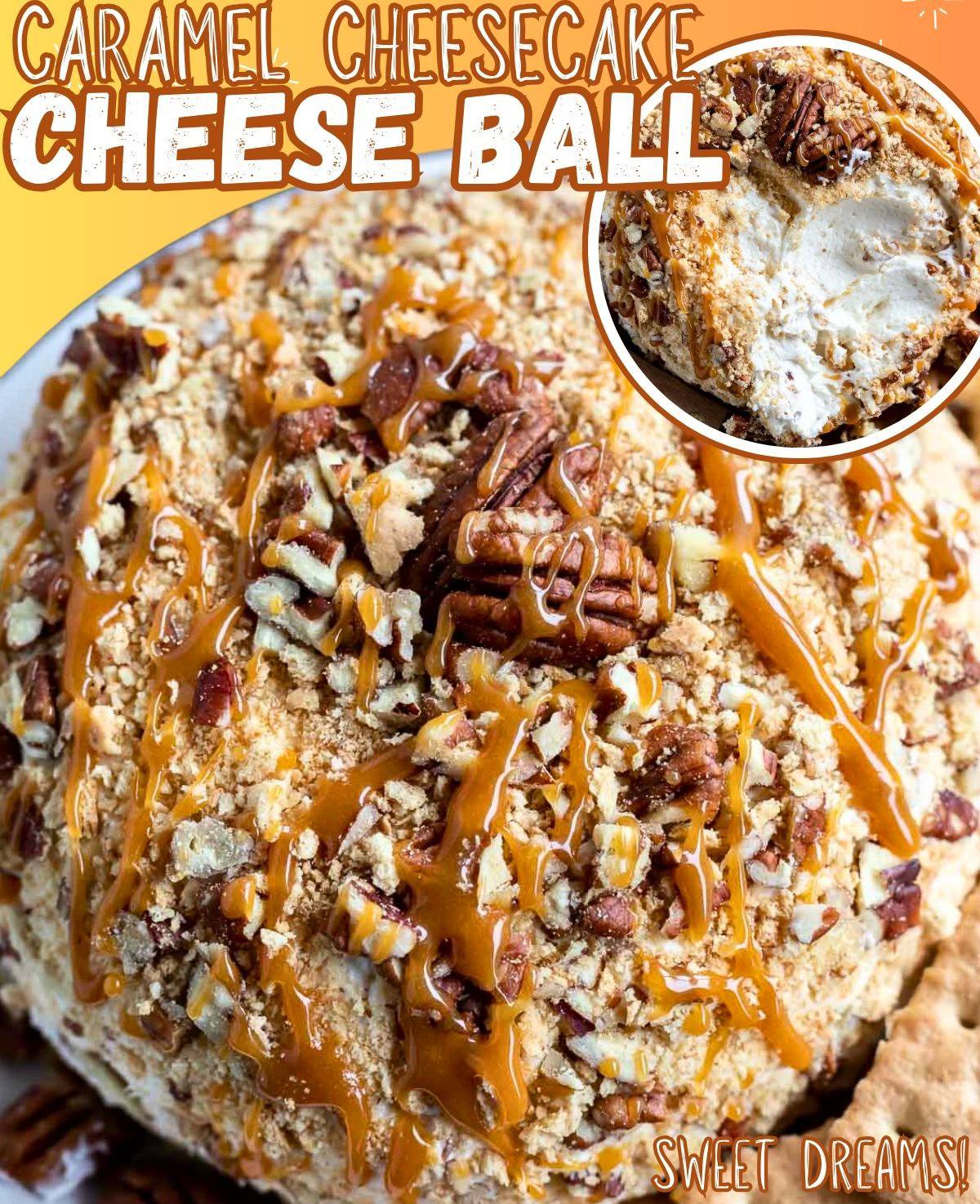
For a truly stunning presentation, I’ll place the finished ball on a bed of extra crushed graham crackers, drizzle the top very lightly with a little extra caramel sauce (store-bought is fine here!), and sprinkle a few reserved caramel bits and toasted nuts over it. I then place a small, festive spreader or butter knife right in the center. This makes it look like a show-stopping dessert from a bakery, and the joy on my guests’ faces when they realize they can just dig in is priceless.
When I’m serving it as more of a dessert centerpiece at a sit-down dinner, I’ll slice it like a cake at the table. A sharp knife run under hot water and wiped clean makes beautiful, clean slices. I plate each slice with a few berries and a dollop of whipped cream. It transforms from a casual snack into an elegant, plated dessert that still carries that wonderful, fun cheese ball spirit.
Variations & Customizations
For a chocolate lover’s twist, I’ve swapped the graham cracker coating for crushed chocolate wafer cookies or even finely chopped Oreos (filling and all). I’ll also fold in mini chocolate chips along with the caramel bits. The result is like a chocolate turtle cheesecake in ball form. It’s incredibly rich, so I serve it with strawberry slices for a bright, fruity counterpoint.
If you’re not a nut person, you have options. I’ve made a version using only crushed Biscoff cookies for the coating—the spicy speculoos flavor is incredible with the caramel. Another time, for a friend with allergies, I used all graham crackers but mixed in 1/4 cup of toasted coconut flakes. The coconut added the necessary textural contrast and a lovely tropical note that worked surprisingly well.
Feeling adventurous? Stir in a tablespoon of bourbon or rum along with the vanilla extract for a grown-up kick. The alcohol’s bite mellows beautifully as it chills. I’ve also done a “salted caramel” version by using a salted caramel sauce for a light drizzle at the end and rolling the edges of the coated ball in a few flakes of fancy sea salt. It takes the sweet-and-salty dynamic to a whole new level.
How to Store, Freeze & Reheat
Storing this is a breeze. Once served, I place any leftovers (if there are any!) in an airtight container or wrap the whole ball tightly in a fresh layer of plastic wrap. It keeps beautifully in the refrigerator for up to 5 days. The flavor actually improves after a day or two as everything continues to meld. The coating may get slightly softer from the moisture of the cheese, but it’s still delicious.
You can absolutely freeze the cheese ball, either before or after coating. To freeze before coating, shape and wrap the plain ball tightly in plastic wrap, then a layer of foil. It will keep for up to 2 months. Thaw overnight in the refrigerator, then roll in your coating just before serving. You can also freeze it fully coated. I place the finished ball on a small parchment-lined plate until solid, then wrap it the same way. Let it thaw, still wrapped, in the fridge overnight.
What doesn’t work is freezing it after it’s been served and left out. The temperature fluctuations can cause condensation inside the wrap, making the coating soggy. Also, avoid reheating this in any traditional sense. It is meant to be served chilled. If it becomes too firm straight from the fridge, simply let it sit on the counter for 15-20 minutes before serving to take the deepest chill off and allow the creamy texture to shine through.
Conclusion
This Caramel Cheesecake Cheese Ball is more than just a recipe; it’s a little bit of kitchen sleight of hand that never fails to delight. It has saved my dignity at more potlucks than I can count and has become my most-requested treat for family gatherings. It proves that with a few quality ingredients and some clever chilling, you can create something truly magical and memorable. I hope it brings as much sweet joy to your table as it has to mine. Happy spreading