
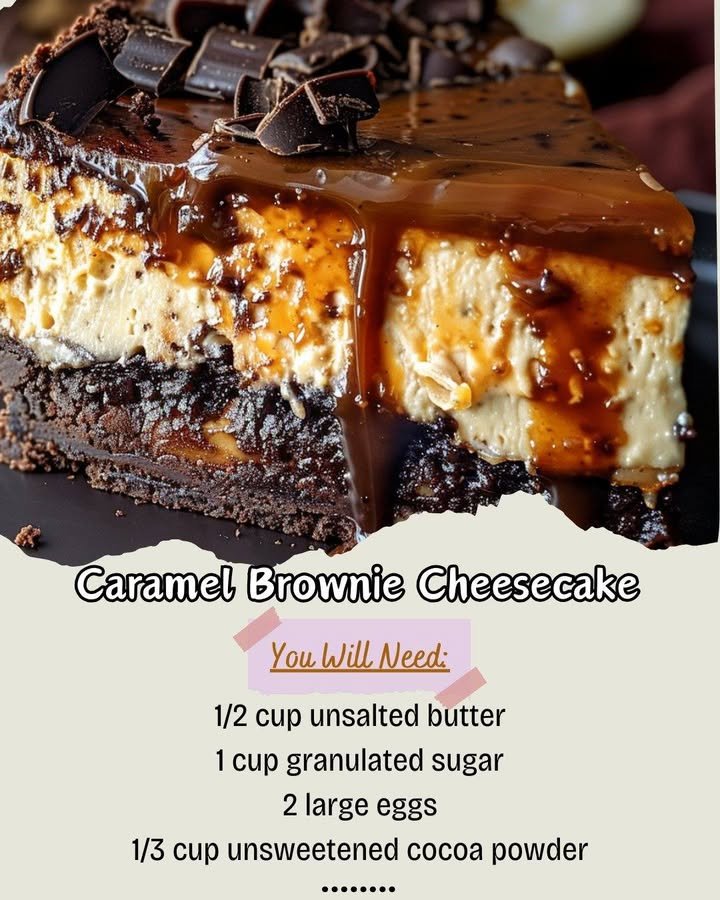
Now, for the assembly. I take the partially baked brownie base out of the oven—it will look shiny and slightly set. I carefully pour all that luscious cheesecake batter over the top. Then, I drizzle about half of the caramel sauce in big, lazy swirls over the surface. Using a knife or a skewer, I gently marble the caramel into the cheesecake layer. I don’t overdo it; just a few figure-eight motions to create beautiful ribbons. This goes back into the oven for 45-50 minutes. The center should still have a slight jiggle, like set Jell-O, when you gently shake the pan. I’ve learned that if you wait for it to be completely firm, it’s overbaked and will be dry.
The cooling process is non-negotiable for a perfect texture. I turn the oven off, crack the door open, and let the cheesecake sit inside for about an hour. This gradual temperature change is the secret I swear by to prevent major cracking. After that, I let it cool completely on the counter before running a thin knife around the edge to loosen it from the pan. Then, and this is the true test of patience, it goes into the refrigerator to chill and set fully for at least 6 hours, but overnight is even better. The wait is agonizing, but I promise you, it makes all the difference for that clean, perfect slice.
Pro Tips for Best Results
First, ingredient temperature is your best friend. I cannot stress this enough: room-temperature cream cheese, eggs, and sour cream are absolutely critical. Cold ingredients don’t incorporate smoothly, leading to a lumpy batter that can bake unevenly. I plan ahead and take everything out about 2 hours before I start baking. It’s a simple step, but it’s the number one thing that guarantees that dreamy, silky-smooth cheesecake texture.
Second, don’t skip the water bath if you’re prone to cracks. I’ve tested this recipe both with and without one. While the brownie base provides some insulation, if your oven runs hot or dry, a water bath is the ultimate insurance policy. I wrap the bottom of my springform pan tightly in heavy-duty foil, place it in a larger roasting pan, and pour hot water into the larger pan until it comes about halfway up the sides of the springform. It creates a steamy environment for the gentlest, most even bake.
Finally, the quality of your caramel matters. A good, thick caramel sauce that holds its shape is key. I’ve tried using a runny sauce, and it just sunk into the cheesecake layer and disappeared. If you’re using store-bought, look for a “dessert topping” style. If you’re making your own, cook it until it nicely coats the back of a spoon. That thicker consistency gives you those beautiful, distinct caramel swirls in every single slice.
Common Mistakes to Avoid
The first big mistake I made was over-mixing the cheesecake batter after adding the eggs. I got a little overzealous with my mixer, and the result was a cheesecake that puffed up beautifully in the oven, then fell dramatically and cracked as it cooled. The extra air you whip in expands and then collapses. Now, I mix just until the last streak of yolk disappears, and I always finish by hand with a spatula to make sure everything at the bottom is incorporated. (See the next page below to continue…)