
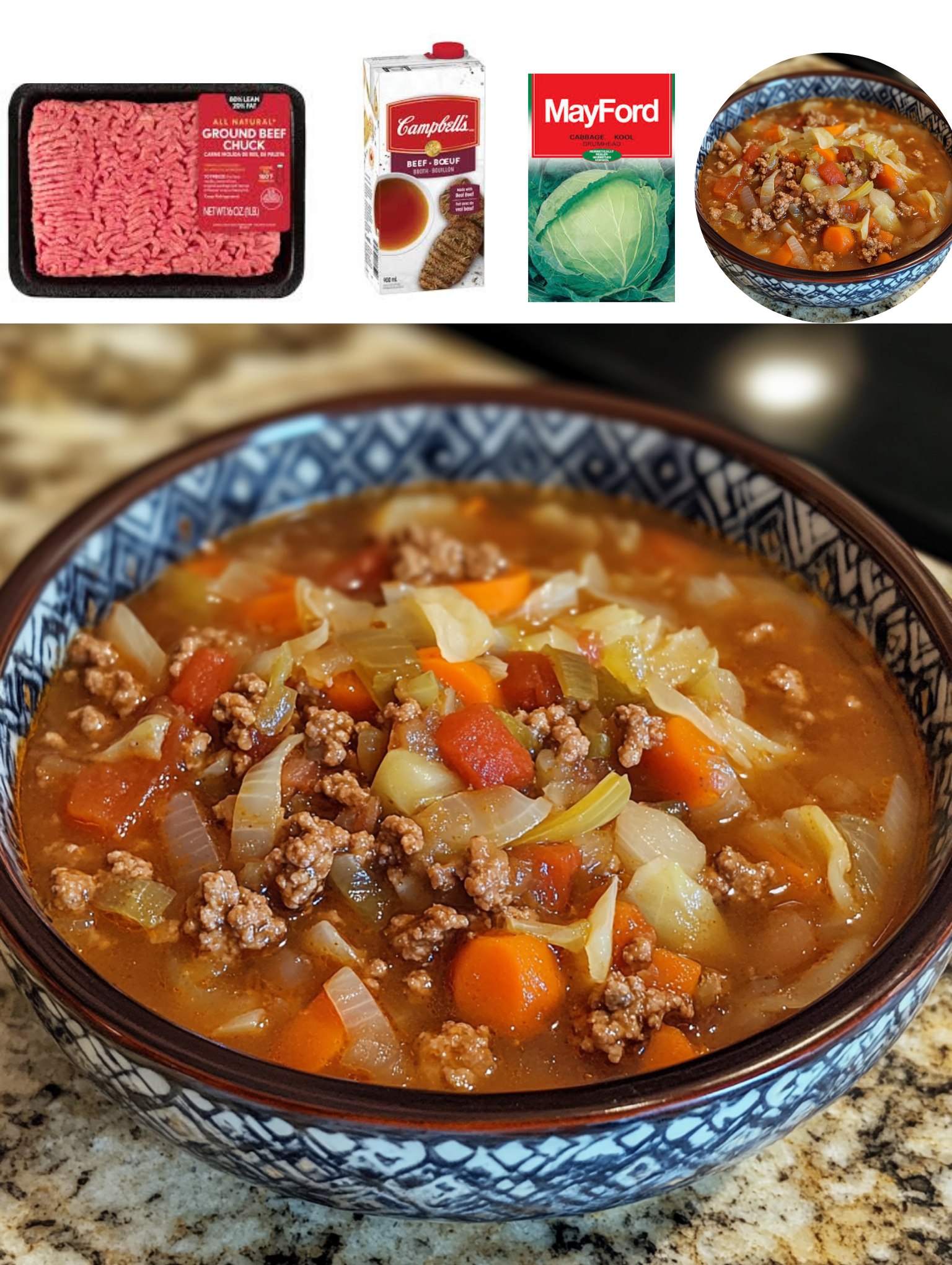
Cabbage Soup with Ground Beef is one of those cozy, stick‑to‑your‑ribs recipes that’s surprisingly easy to throw together with pantry staples. Ground beef is browned with onion and garlic, then simmered with chopped cabbage, carrots, tomatoes, and beef broth until everything is tender and infused with savory flavor.
Some versions stay brothy and simple, while others add rice or potatoes so the soup eats more like a full meal in a bowl, echoing the flavor of classic cabbage rolls without the rolling. It’s naturally high in fiber, very flexible, and perfect for chilly nights or make‑ahead lunches.
Equipment
- Large heavy‑bottomed soup pot or Dutch oven (5–6 quarts).
- Wooden spoon or spatula for browning and stirring.
- Cutting board and sharp knife for chopping vegetables and cabbage.
- Measuring cups and spoons.
Ingredients
- 1–1½ lb (450–680 g) ground beef (85–90% lean works well).
- 1–2 tablespoons olive oil (only needed if your beef is very lean).
- 1 medium yellow onion, chopped (about 1 cup).
- 2–3 cloves garlic, minced (or 1 teaspoon garlic powder).
- 2 carrots, peeled and sliced or diced.
- 2 celery stalks, sliced (optional but classic in many versions).
- ½–1 medium head green cabbage, cored and chopped into bite‑size pieces (about 4–8 cups).
Tomato and liquid base:
- 1 can (14–16 oz / 400–450 g) tomato sauce.
- 1 can (14–16 oz / 400–450 g) diced tomatoes, with juices.
- 4–6 cups (about 1–1.5 L) beef broth or stock, low‑sodium if possible.
- 1–2 cups water, as needed to reach desired consistency.
Optional starch (to make it “cabbage roll soup” style):
Seasonings:
- 1–2 teaspoons kosher salt, or to taste.
- ½–1 teaspoon black pepper.
- 1 teaspoon Italian seasoning or dried oregano.
- 1 teaspoon paprika (sweet or smoked).
- 1 teaspoon chili powder (optional, for gentle warmth).
- 1–2 teaspoons brown sugar (optional, to balance tomato acidity).
- 1–2 bay leaves.
- 1–2 teaspoons Worcestershire sauce or a splash of soy sauce (optional umami boost).
- 1 tablespoon vinegar (white or red wine), added at the end to brighten.
Optional garnish: chopped parsley, sour cream, grated Parmesan, or a drizzle of olive oil.
Instructions And Steps
Heat the soup pot over medium‑high heat and add the oil if using. Crumble in the ground beef and cook, breaking it apart with a wooden spoon, until it’s nicely browned and no longer pink. Season lightly with salt and pepper during this stage to build flavor from the beginning.
If there is a lot of fat in the pot, drain off most of it, leaving just a tablespoon or so to keep the flavor without making the soup greasy. Add the chopped onion to the beef and cook for 2–3 minutes, stirring, until the onion begins to soften and turn translucent. Stir in the minced garlic and cook for another 30–60 seconds until fragrant, being careful not to burn it.
Add the sliced carrots and celery (if using) to the pot and sauté them with the beef and onions for another 3–4 minutes. This brief sauté helps them start softening and adds extra sweetness and depth to the broth as they cook.
Stir in the chopped cabbage, working in batches if needed; the pot will look very full at first, but the cabbage will wilt down significantly as it cooks. Toss the cabbage with the beef and vegetables for a couple of minutes until it begins to soften and shrink in volume.
Pour in the tomato sauce, diced tomatoes with their juice, and 4 cups of the beef broth. Add the Italian seasoning or oregano, paprika, chili powder (if using), brown sugar, bay leaves, Worcestershire or soy sauce, and a pinch more salt and pepper. Stir well to combine, scraping up any browned bits from the bottom of the pot; those bits add valuable flavor.
If you’re including rice or potatoes, add them at this stage as well. Rice will absorb both liquid and flavor as it cooks, making the soup thicker and more filling, while diced potatoes will soften and lend a slightly creamy texture once tender.
Increase the heat and bring the soup just up to a boil. As soon as it boils, reduce the heat to medium‑low to maintain a gentle simmer. Simmer, uncovered or partially covered, for about 20–30 minutes, stirring occasionally, until the cabbage, carrots, and any rice or potatoes are tender.
As the soup simmers, keep an eye on the liquid level. If it seems too thick or the rice absorbs more broth than expected, add some of the remaining broth or a bit of water to reach your desired consistency. For a more stew‑like bowl, keep it on the thicker side; for a lighter soup, lean into extra broth.
Once the vegetables and any rice/potatoes are tender, remove the bay leaves and stir in vinegar to brighten the flavors. Taste the soup and adjust seasoning with more salt, pepper, or spices as needed; tomatoes and cabbage can soak up salt, so it’s common to need another pinch at the end.
Let the soup simmer for another 5–10 minutes if you have time, to allow the flavors to fully meld. If you want a slightly richer mouthfeel without cream, you can mash a few pieces of potato or cabbage against the side of the pot and stir them in to thicken naturally.
Serve the cabbage soup hot in deep bowls, optionally topped with a sprinkle of chopped parsley or a spoonful of sour cream for creaminess and tang. Crusty bread, rolls, or cornbread make great accompaniments for soaking up the flavorful tomato‑beef broth.
Tips And Tricks
Cut cabbage into even bite‑size pieces so it cooks at the same rate; very large pieces can be unwieldy to eat and may stay firmer than smaller shreds. Green cabbage is the standard, but Savoy can also work for a softer, sweeter texture.
Brown the beef well rather than just cooking it until gray; caramelization adds depth and helps build a more complex broth without extra ingredients. Seasoning the meat with part of the salt and pepper while it browns, then adjusting at the end, layers the flavor more effectively than salting only at the finish.
Use low‑sodium broth and tomatoes when possible so you have more control over final salt levels, especially if you plan to simmer for longer and reduce the liquid. Tomatoes and cabbage can become overly salty if you start with a heavily salted base and then concentrate it as you cook.
If adding rice, remember it will continue to absorb liquid even after cooking, especially when the soup is stored overnight. When reheating leftovers, plan to stir in a splash of broth or water to loosen the texture back to a soup rather than a very thick stew.
A small amount of brown sugar and vinegar may seem unusual in soup, but they’re classic in cabbage roll–style soups: sugar balances tomato acidity and cabbage’s slight bitterness, while vinegar brightens and sharpens the flavors. Start with 1 teaspoon each and adjust to taste so the soup tastes lively but not sweet.
Cabbage Soup with Ground Beef keeps very well. Many cooks note the flavor improves by the next day as the beef, cabbage, and tomato mingle. Store in the fridge for several days or freeze in portions; just remember to leave some headspace in containers for expansion if freezing.
Variations
Cabbage roll soup: To get closer to traditional cabbage rolls, include uncooked rice, extra paprika, and perhaps a bit of ground pork or sausage along with the beef, simmering until the rice is tender. Some recipes add a touch more tomato sauce and brown sugar to echo the slightly sweet‑tangy sauce often used in baked rolls.
Low‑carb or keto version: Skip the rice and potatoes and lean into extra cabbage and maybe mushrooms or zucchini for bulk. Use more beef and even a bit of extra olive oil if you need to keep the soup satisfying and higher in healthy fats.
Spicy variation: Increase chili powder, add red pepper flakes, or stir in a diced jalapeño along with the onion for a spicier bowl. A splash of hot sauce at the table also lets each person customize the heat without changing the base recipe.
Herb‑forward twist: Swap Italian seasoning for dill, marjoram, or caraway seeds to give the soup more of an Eastern European flavor profile reminiscent of some traditional cabbage dishes. Fresh dill or parsley stirred in at the end adds brightness and plays well with the cabbage and tomato.
Richer, stew‑like option: Add a spoonful of tomato paste along with the tomato sauce, and simmer longer (up to 45–60 minutes) to reduce and intensify the broth, as some recipes suggest. Right before serving, stir in a small dollop of sour cream into individual bowls for a borscht‑adjacent, creamy finish.
Whichever route you choose, Cabbage Soup with Ground Beef delivers a bowl full of savory beef, tender cabbage, and bright tomato broth that’s inexpensive, flexible, and deeply satisfying.