
hit counter
Posted in

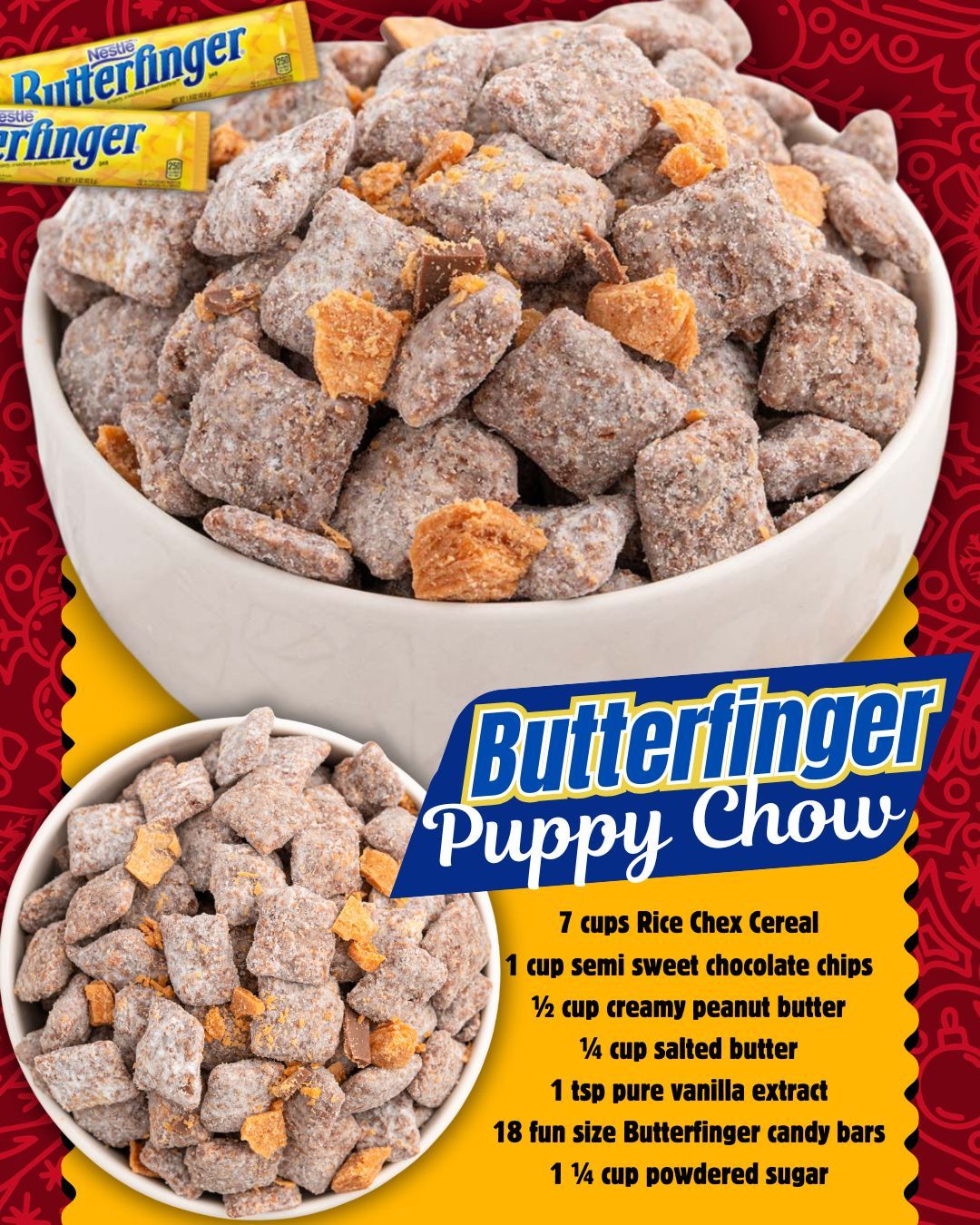
BUTTERFINGER PUPPY CHOW

Traditional puppy chow coats Chex cereal in melted chocolate and peanut butter, then tumbles it in powdered sugar for a sweet, crunchy, finger‑licking snack. Butterfinger Puppy Chow takes that formula and boosts the flavor by mixing in crushed Butterfinger bars, so every piece has little shards of crispy candy clinging to it.

The base is usually Rice Chex or Corn Chex, which stays light and crisp even under the chocolate‑peanut butter coating, and the whole batch comes together in about 15 minutes with no oven required—just a microwave or stovetop to melt the chocolate mixture. It’s ideal for holiday snack bowls, game‑day munching, bake sales, and using up leftover Butterfinger bars after Halloween.

Equipment

  • Extra‑large mixing bowl for tossing Chex cereal with the chocolate‑peanut butter mixture and Butterfinger pieces.
  • Medium microwave‑safe bowl or heatproof bowl for melting chocolate chips, peanut butter, and butter.
  • Spatula or wooden spoon for stirring the melted mixture and gently folding it into the cereal.
  • Large zip‑top bag or lidded container for shaking the coated cereal with powdered sugar (or you can toss directly in the bowl).
  • Baking sheet lined with parchment or wax paper for spreading the puppy chow out to cool and dry.
  • Knife and cutting board for chopping Butterfinger bars into small pieces.
  • Measuring cups and spoons for cereal, chocolate, peanut butter, butter, vanilla, and powdered sugar.
  • Airtight container or zip‑top bags for storing the finished snack mix.

Ingredients (with measurements)

Exact quantities vary, but most Butterfinger Puppy Chow recipes follow the same structure. Here is a solid, well‑tested set of measurements based on several sources.

  • 7 cups Rice Chex cereal (or Corn Chex; about 210 g).
  • 1 cup (about 170 g) semi‑sweet chocolate chips.
  • ½ cup (120 g) creamy peanut butter.
  • ¼ cup (56 g) salted butter (or unsalted plus a small pinch of salt).
  • 1 teaspoon pure vanilla extract.
  • 18 fun‑size Butterfinger candy bars, with about 15 bars finely crushed to mix in and 3 bars roughly chopped for garnish (this is about 2½ cups total chopped candy).
  • 1¼ cups (about 150 g) powdered sugar, sifted; some recipes go up to 3–4 cups for a heavier sugar coating on larger cereal batches.

Other versions scale up to 10 cups cereal, 1½–2 cups chocolate, 1½ cups peanut butter, ¼ cup butter, 2½ cups crushed Butterfingers, and around 3½–4 cups powdered sugar, but the proportions remain similar.

Instructions and steps

Butterfinger Puppy Chow is made in three basic stages: coat the cereal in a warm chocolate‑peanut butter mixture, add Butterfinger pieces, and shake it all with powdered sugar. The process starts with prepping the cereal.

Rice Chex (or your chosen Chex variety) is measured into an extra‑large mixing bowl—big enough that you can stir without spilling. Using a large bowl helps coat everything evenly and avoids crushing the cereal as you mix.

Next, the Butterfinger bars are prepared. Most recipes suggest unwrapping about 15 fun‑size bars and chopping or crushing them into small pieces, roughly pea‑sized or smaller, reserving 3 more bars to chop into slightly larger chunks for garnish at the end.

The candy can be chopped with a knife or crushed in a zip‑top bag with a rolling pin; the goal is a mix of fine crumbs and small shards so they cling to the chocolate‑coated cereal later. The crushed Butterfinger bits are set aside until the cereal is coated.

The chocolate‑peanut butter mixture is melted in a microwave‑safe bowl. Semi‑sweet chocolate chips, creamy peanut butter, and butter are combined in the bowl and microwaved in 30‑second intervals, stirring in between, until completely melted and smooth.

It typically takes about 1 to 1½ minutes in total, depending on your microwave. If you prefer the stovetop, you can melt the ingredients over a double boiler, stirring until glossy and fully combined. Once melted, vanilla extract is stirred in to round out the flavor.

The warm chocolate‑peanut butter mixture is then poured over the bowl of Rice Chex. Using a spatula or wooden spoon, the cereal is gently folded until every piece is coated; a light hand helps avoid crushing the cereal. It can take a minute or two of careful stirring to reach the bottom of the bowl and ensure that no dry Chex remain.

Once the cereal is thoroughly coated, about 2 cups of the finely crushed Butterfinger bits are sprinkled over the mixture and gently folded in. This step ensures that Butterfinger flavor is embedded in the chocolate layer itself, not just sprinkled on top.

At this point, the coated cereal and candy mixture is ready for its sugar “snow.” There are two main ways to do this. Some recipes have you add the powdered sugar directly to the large bowl and toss gently until all cereal pieces are covered.

Others prefer the zip‑top bag method: the powdered sugar is poured into a large gallon‑size bag or a large container with a tight‑fitting lid, then the chocolate‑coated cereal (with Butterfinger bits) is transferred into the bag. The bag is sealed and shaken vigorously until all the pieces are coated in sugar and separated into powdery clusters.

Whichever method you use, the goal is to cover every chocolate‑coated Chex piece in powdered sugar so it loses its stickiness and gains that classic puppy chow look and texture. If the mixture still seems glossy or clumpy after shaking, more powdered sugar can be added in small handfuls and shaken again until the desired coverage is achieved.

Once coated in powdered sugar, the Butterfinger Puppy Chow is spread out on a parchment‑lined baking sheet or two in an even layer to cool and dry completely. This step prevents condensation and helps the coating set.

While it cools, the reserved roughly chopped Butterfinger pieces are sprinkled over the top, pressing them lightly so they adhere to any still‑tacky spots. After 20–30 minutes at room temperature, or a brief chill in the fridge if your kitchen is warm, the puppy chow is ready to transfer to serving bowls or airtight containers.

Stored in an airtight container at room temperature, Butterfinger Puppy Chow usually stays fresh and crunchy for about 3–5 days; some sources recommend refrigerating it if you live in a hot climate or if the snack will be out for long periods. It also freezes well—spread it in a single layer to freeze, then move it to freezer bags—so it’s a great make‑ahead snack for holiday gifting.

Variations

Butterfinger Puppy Chow is very adaptable, and many recipes suggest fun ways to change it up while keeping the same basic technique. One easy tweak is to play with the cereal. While Rice Chex is common, Corn Chex, Wheat Chex, Chocolate Chex, Crispix, or a combination can be used as the base; each variety brings a slightly different flavor and texture but still holds the coating well. Using a mix of cereals can add visual interest and crunch.

The chocolate can also be varied. Semi‑sweet chocolate chips are popular because they balance sweetness, but milk chocolate chips give a more candy‑bar‑like profile, echoing the chocolate used in Butterfinger bars.

Dark chocolate chips can make the snack less sweet and a bit more sophisticated, which some people prefer when serving adults. A few recipes use chocolate candy melts or almond bark for a smoother, more stable coating that sets quickly, especially if the mix will sit out on a buffet table for hours.

Peanut butter types matter too. Most recipes call for regular, shelf‑stable creamy peanut butter (not natural peanut butter that separates) to keep the mixture smooth and prevent seizing. However, you can swap in crunchy peanut butter for extra texture or use peanut butter blends like chocolate peanut butter for an even more intense chocolate‑peanut flavor.

For those avoiding peanuts, some bakers use almond butter or sunflower seed butter and pair it with other candy bars like Butterfinger‑style knockoffs or different crushed bars for a peanut‑free but still decadent snack.

Beyond Butterfingers, the mix‑ins can be expanded. Many hosts bulk up the base recipe by adding M&Ms, Reese’s Pieces, pretzels, mini marshmallows, or chopped nuts after the puppy chow cools, turning it into a more complex party mix with different shapes and pops of flavor.

Using seasonal M&Ms and colored sprinkles is a common way to make the snack match holidays—orange and brown candies for Halloween, red and green for Christmas, pastel for Easter, or team colors for game day.

You can also adjust the sweetness and sugar level. Some recipes use up to 4 cups of powdered sugar for heavily coated, very sweet puppy chow, while others stick closer to 1–1½ cups for a lighter dusting that lets more chocolate and Butterfinger flavor shine through. Salty add‑ins like pretzels or salted peanuts can temper the sweetness and add a more pronounced sweet‑and‑salty contrast.

For a more pronounced Butterfinger punch, some bakers stir extra Butterfinger crumbs into the melted chocolate‑peanut butter mixture before pouring it over the cereal, or they reserve a portion of the candy to fold in gently at the very end so there are bigger candy clusters.

Others drizzle melted peanut butter or caramel sauce over the cooled puppy chow and toss briefly to create streaks of additional flavor (though this can make the mix a bit stickier and may require more powdered sugar to keep it from clumping).

However it is customized, the core structure stays the same: crispy Chex cereal, a warm chocolate‑peanut butter coating, a shower of powdered sugar, and plenty of crushed Butterfinger bars mixed in.

That combination delivers a snack mix that’s crunchy yet light, deeply chocolate‑and‑peanut‑buttery, and just messy enough to feel fun and indulgent—exactly what people expect from the best kind of holiday or party “puppy chow.”

Leave a Reply

Your email address will not be published. Required fields are marked *