
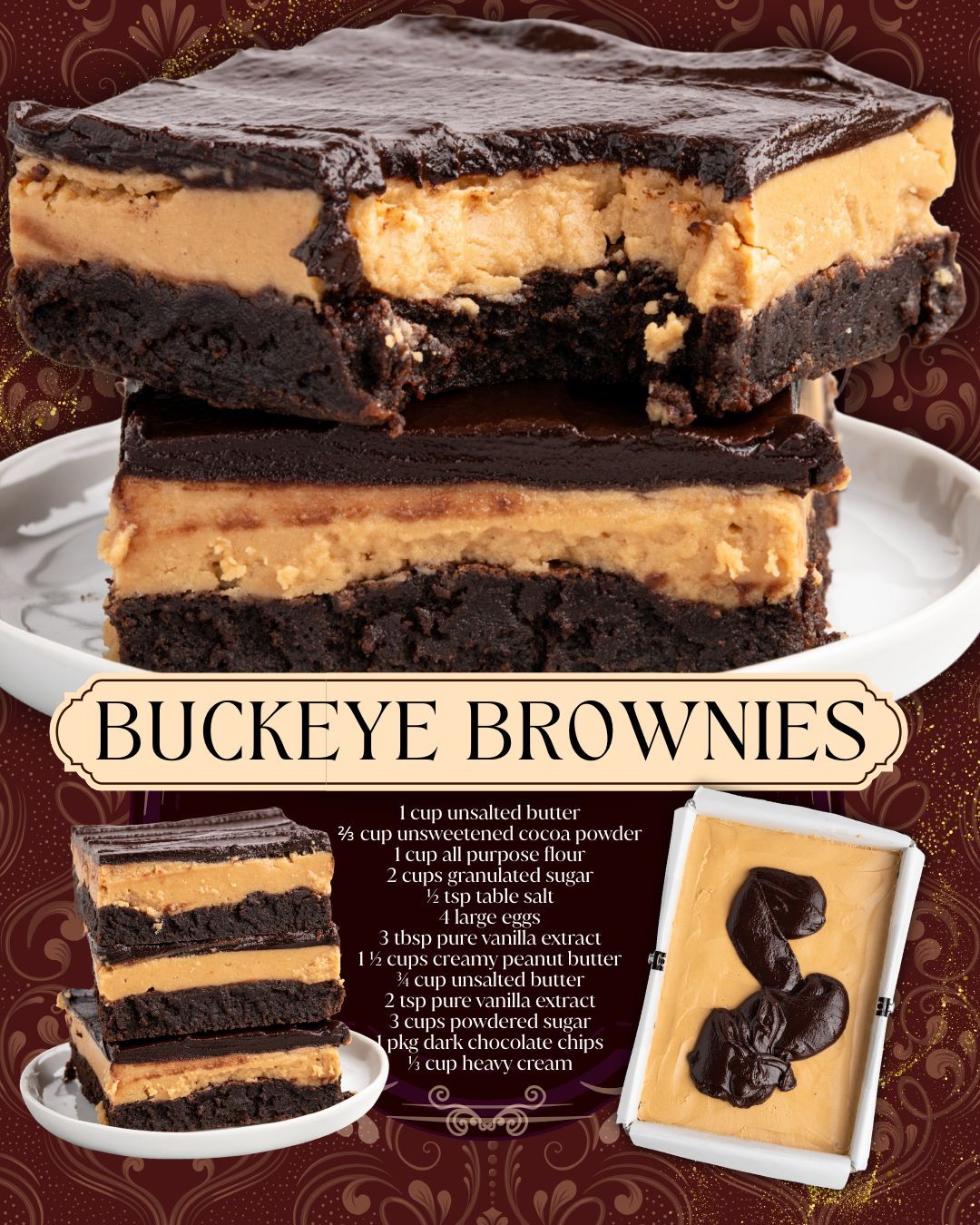
For the final chocolate topping, I melt chocolate chips and butter together in short microwave bursts. I stir until silky, making sure the chocolate isn’t overheated. Then I pour the warm mixture over the chilled peanut butter layer and tilt the pan to let it flow into a glossy, even sheet. After chilling again until the topping sets, I lift the brownies out and cut them into squares. Each slice reveals three perfect layers—dark brownie, creamy peanut butter, shiny chocolate—and at that moment, I always grab a corner piece just to “test” it.
Pro Tips for Best Results
One of the biggest lessons I learned with this recipe is not to overbake the brownies. Brownies continue cooking slightly as they cool, so pulling them out when the center still looks a little soft ensures they stay fudgy. I’ve tested this multiple times, and every time I overbaked even by a few minutes, they turned dry. Trust me—slightly underbaked is the way to go here.
Another tip is to chill the peanut butter layer before pouring the chocolate topping. If the peanut butter layer is too soft, the warm chocolate will melt into it, creating swirls instead of neat layers. While the swirls can be pretty, they ruin the Buckeye look. Taking just fifteen minutes to firm the layer makes the entire dessert look polished and professional.
When it comes to cutting the brownies, running your knife under hot water makes a surprisingly big difference. I learned this trick after struggling to get clean cuts through the thick chocolate topping. A warm knife melts through the chocolate slightly, giving you perfect, sharp edges without pulling or cracking.
Lastly, use room-temperature ingredients for the peanut butter layer. Cold butter or cold peanut butter won’t blend smoothly and can create lumps. Once I accidentally used cold peanut butter straight from the fridge, and the filling turned grainy instead of creamy. Letting everything sit out for a bit ensures the perfect whipped texture.
Common Mistakes to Avoid
One common mistake I made early on was overmixing the brownie batter after adding the flour. Overmixing activates the gluten in the flour, which makes brownies cakey instead of fudgy. Once I realized how important that gentle folding step is, my brownies instantly improved in texture.
Another mistake is using natural peanut butter for the filling. I love natural peanut butter for everyday eating, but it does not work well here. The oils separate too easily, and the filling becomes greasy and unstable. Regular creamy peanut butter makes the filling hold its shape beautifully.
A third issue is pouring hot chocolate topping onto the peanut butter layer without letting it cool slightly. If the chocolate is piping hot, it melts the peanut butter layer and makes everything run together. Letting the melted chocolate sit for a minute or two ensures smooth pouring without melting anything underneath.
Finally, skipping the parchment paper lining is a recipe for frustration. These brownies are dense and layered, and trying to lift them out of the pan without parchment is nearly impossible. I did it once, and it took me ten minutes just to pry out one corner. Now I never bake without parchment; it saves time, effort, and emotional distress.(See the next page below to continue…)