
Once the bars are shaped, I place them onto a parchment-lined baking sheet and slide the tray into the freezer. This chilling step is essential. The first time I ever made them, I skipped it out of impatience, and the warm, freshly shaped bars completely fell apart when I tried dipping them into the chocolate. Now I always give them at least an hour in the freezer. When they come out, they’re firm and easy to handle, and they hold their shape beautifully.
While the bars chill, I melt the milk chocolate in short 20-second bursts in the microwave, stirring between bursts until it becomes smooth and glossy. It’s tempting to melt the chocolate all at once, but slow intervals prevent scorching, and trust me—burnt chocolate is heartbreaking. Alternatively, melting the chocolate over low heat in a small pot works wonderfully too, especially if you want a silky texture.
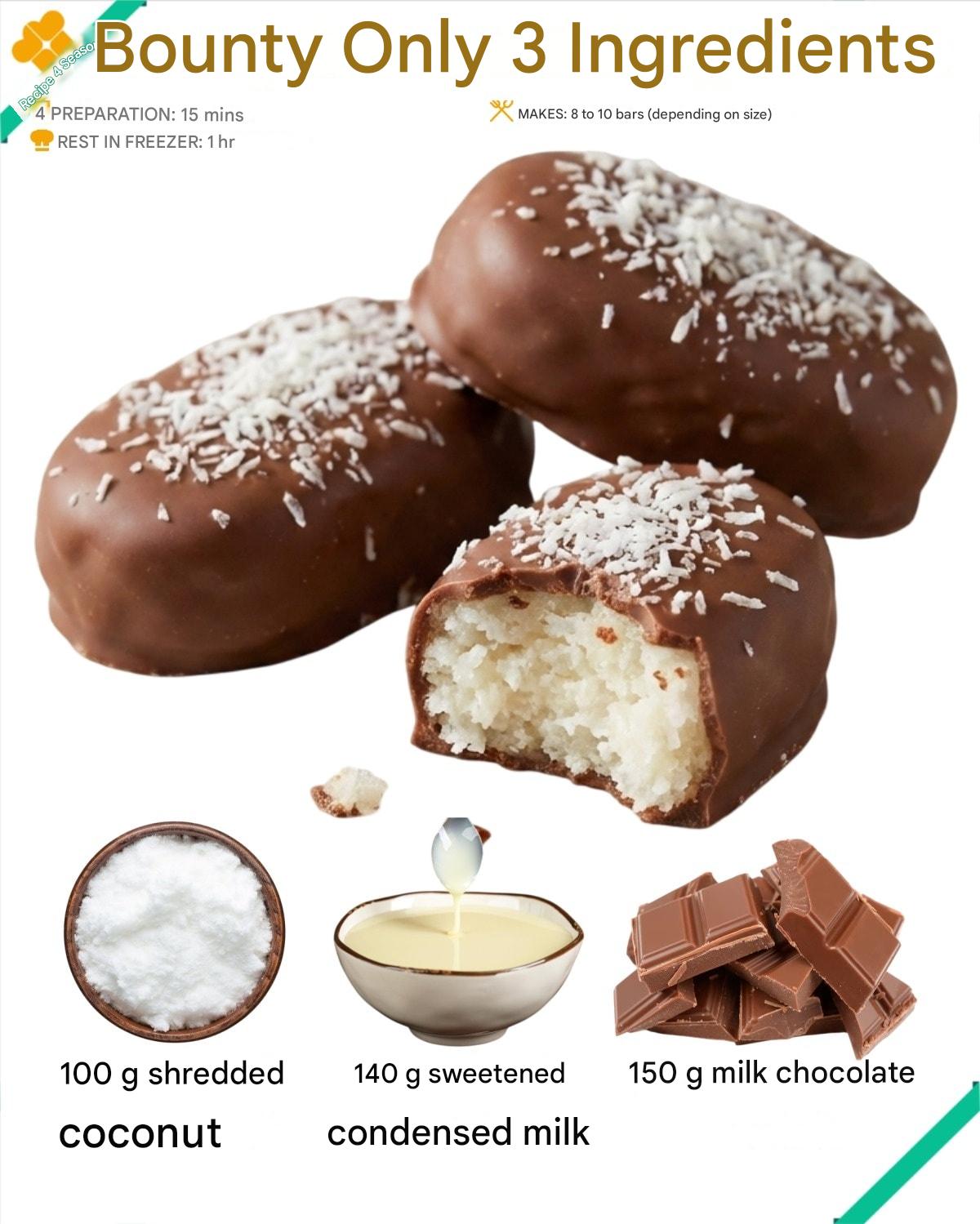
Once the bars are frozen and the chocolate is melted, I dip each chilled coconut piece into the chocolate, rolling or spooning chocolate over the top until fully coated. I gently tap off any excess chocolate and place each bar back onto the parchment. If I’m feeling extra festive, I sprinkle a bit of shredded coconut on top before the chocolate sets. Then I let the bars rest at room temperature or pop them back in the fridge for a faster set. When I bite into that first finished bar—the crisp shell, the soft coconut center—I always feel a little amazed at how such a simple recipe can taste so luxurious.
Pro Tips for Best Results
I tested this recipe three different ways—mixing the coconut mixture by hand, using a food processor, and pressing it into one large slab before cutting. The hand-mixed version gave the best texture by far because the coconut stays fluffy while still binding perfectly. The food processor made the filling too pasty, and cutting a slab into bars made the edges crumble. So now I ALWAYS shape the bars by hand.
Here’s what I learned the hard way: don’t skip the freezing step. Without that chilling time, the bars soften too quickly and slide into the chocolate instead of dipping neatly. When they’re firm from the freezer, dipping becomes incredibly satisfying—each bar stays intact and coats smoothly.
Another tip is to avoid overheated chocolate. If your chocolate gets too thick or starts to seize, add a tiny amount of coconut oil—just half a teaspoon—to loosen it. I discovered this trick on a day when my chocolate overheated from microwave impatience, and a little coconut oil saved the entire batch.
Lastly, shape the bars slightly smaller than you think you should. Once coated in chocolate, they grow in size, and smaller bars create that perfect chocolate-to-coconut ratio that really mimic the flavor of classic Bounty candies.
Common Mistakes to Avoid
I made this mistake the first time—using too much condensed milk because the mixture looked dry at first. But shredded coconut absorbs moisture over time, so adding too much too soon makes the filling runny. Always mix thoroughly first, then judge the texture.
Another mistake is using warm chocolate while the bars are still soft. If your chocolate is too hot, it melts the frozen edges and creates messy coating that slides off. Let the chocolate cool for a couple of minutes after melting; it should be warm, not steaming.(See the next page below to continue…)