
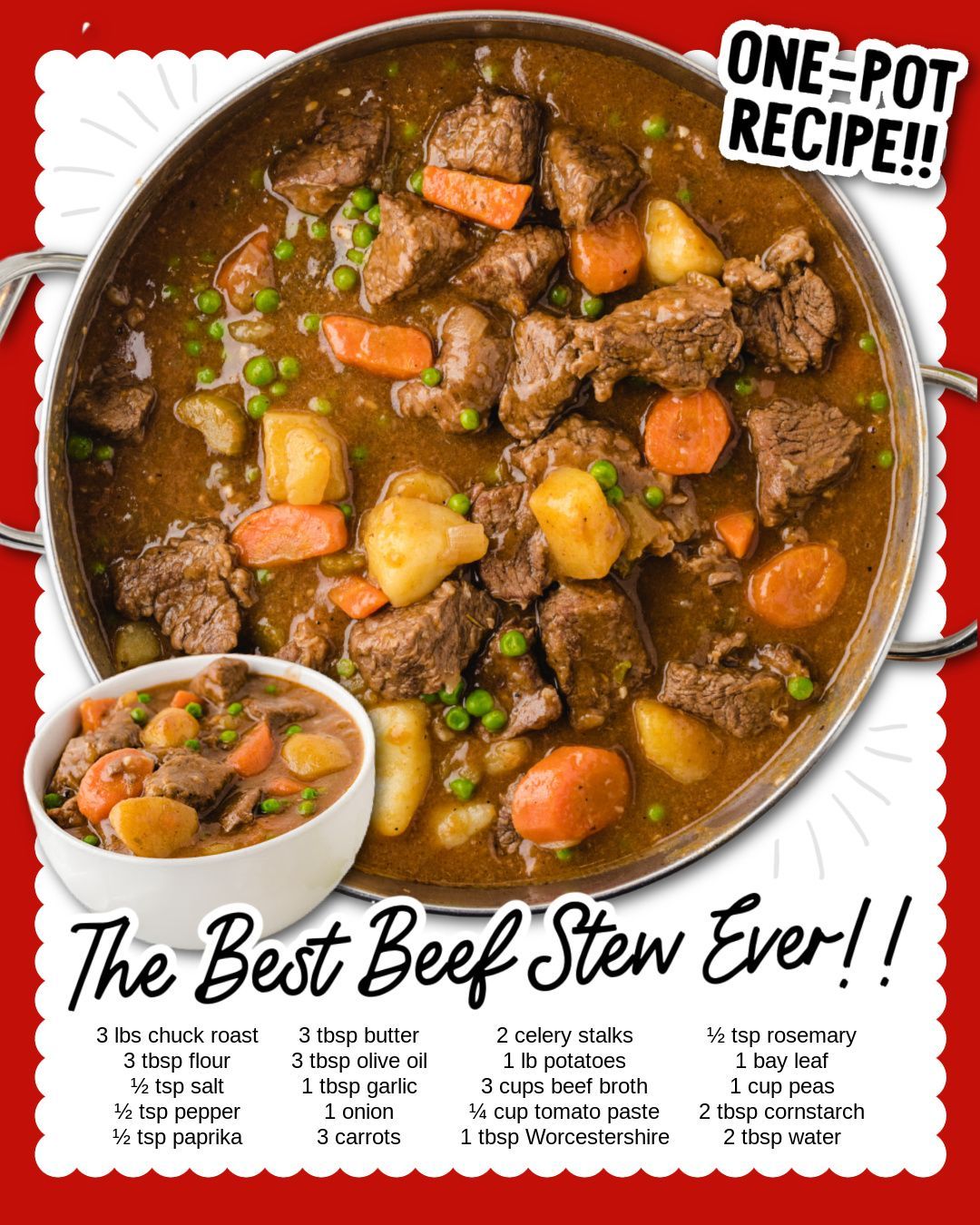
Serving Suggestions
I love serving this beef stew with warm, crusty bread. There is something so perfect about dunking a thick piece of bread into the rich gravy and letting it soak up all the flavor. Sometimes I’ll even make garlic bread when I want the meal to feel extra cozy and indulgent.
Another favorite pairing is mashed potatoes. I know there are potatoes already in the stew, but trust me on this: a scoop of creamy mashed potatoes in a bowl topped with a ladle of stew feels like the ultimate comfort meal. It’s a trick I discovered one cold winter evening, and I’ve been doing it ever since.
During the holidays, I love serving this stew with a simple green salad tossed with a bright vinaigrette. The crisp greens offer a refreshing contrast to the hearty stew, making the meal feel balanced and complete. It’s also a great way to lighten things up without losing the comfort factor.
For a cozy weekend dinner, I sometimes spoon the stew over buttered egg noodles. The noodles soak up the gravy beautifully and add a comforting, homey texture that people always adore. It’s one of those combinations that just works.
Variations & Customizations
One version I love is adding red wine to the broth. A cup of dry red wine mixed into the stew at the same time as the broth adds a deep, rich flavor reminiscent of French boeuf bourguignon. It elevates the dish without adding much effort.
Another variation I’ve tried is swapping the potatoes for sweet potatoes. They add a touch of natural sweetness that pairs beautifully with the savory meat and vegetables. This is especially nice in fall and winter when sweet potatoes are at their peak.
If you prefer a thicker stew with even more vegetables, try adding turnips or parsnips. They bring a slightly earthy sweetness and hold their shape well during cooking. I’ve added both when I wanted a rustic, farmhouse-style stew, and the results were delicious.
For a lighter version, you can reduce the butter and oil or use a leaner cut of beef. Just keep in mind that the stew might be slightly less rich and the meat may not be quite as tender. If you go this route, adding a bit of extra Worcestershire sauce can help boost the flavor.
How to Store, Freeze & Reheat
One thing I adore about this stew is that it tastes even better the next day. I store leftovers in an airtight container in the refrigerator, and they keep beautifully for up to four days. The flavors deepen, and the gravy becomes even more luxurious.
If you want to freeze the stew, it freezes exceptionally well. I ladle it into freezer-safe containers, leaving a little room at the top for expansion. It keeps for up to three months without losing quality. Just avoid freezing the peas—add them fresh after reheating so they retain their color and pop.
To reheat, I warm the stew on the stovetop over low heat, stirring occasionally. You might need to add a splash of broth or water if it has thickened too much in the fridge. Slow reheating keeps the beef tender and prevents the gravy from becoming grainy.
Microwaving works too, especially for individual servings, but I always use short intervals and stir between each one. This helps everything heat evenly and keeps the texture smooth and delightful.
Nutrition Information
Beef stew is definitely a hearty meal, but what I love about it is how balanced it is. You get protein from the beef, vitamins from the carrots and celery, fiber from the potatoes, and antioxidants from the onions and peas. It feels indulgent without being overly heavy.
If you’re mindful of calories, you can adjust portions or swap some of the potatoes for extra carrots or celery. I’ve done this before, and the stew still felt satisfying and nourishing. It’s a flexible recipe that adapts easily to different dietary goals.
Using chuck roast means the stew has some fat, but that’s exactly what makes the meat so tender and flavorful. When I’ve tried leaner cuts, the stew lacked the same richness. For me, the occasional comforting meal with a bit of hearty fat is absolutely worth it.
Overall, this stew provides a wholesome, balanced bowl of comfort that keeps you full for hours. It’s the kind of meal that warms you from the inside out and makes cold days feel cozier.
FAQ Section
Can I make this stew in a slow cooker?
Yes! I’ve done it many times. Just sear the beef first, then add everything except peas and cornstarch to the slow cooker. Cook on low for 7–8 hours or high for 4–5 hours, adding peas and thickener at the end.
Can I skip the tomato paste?
I wouldn’t recommend it. I tried skipping it once and the stew tasted noticeably flatter. Tomato paste adds depth and richness you don’t want to miss.
What kind of potatoes work best?
Russet or Yukon Gold potatoes are my go-tos. Red potatoes work too but hold their shape a bit more. Yukon Golds give the creamiest texture.
How can I make the stew thicker?
You can add an extra tablespoon of cornstarch or mash a few potatoes directly in the pot. I’ve used both methods depending on how thick I want the stew.
Do I have to use chuck roast?
Technically no, but I highly recommend it. I’ve tried other cuts, and nothing gets as tender and flavorful after slow cooking as chuck roast.
Conclusion
This beef stew has become one of my most cherished comfort meals, the kind I turn to when I want something warm, hearty, and deeply satisfying. Every pot fills my kitchen with the most incredible aroma and reminds me why slow-cooked meals are worth every minute. I hope this recipe brings the same cozy joy to your home that it brings to mine—enjoy every delicious, comforting bite!