
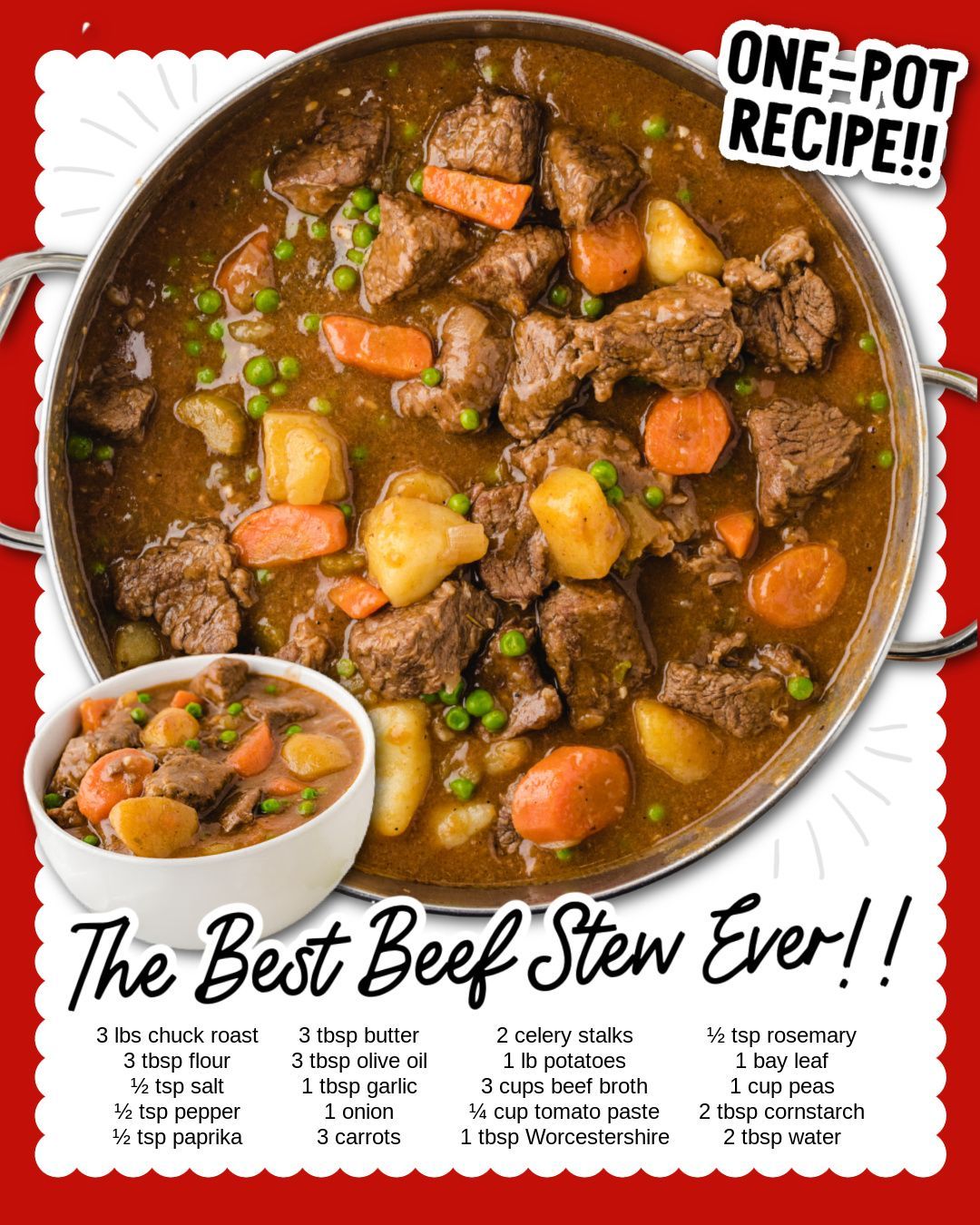
About an hour in, I add the potatoes. Waiting to add them prevents them from turning mushy, a mistake I made in an earlier attempt. After everything has simmered together for another 40–50 minutes, the beef becomes fork-tender and the vegetables soften beautifully. I mix the cornstarch with water to make a slurry and stir it into the pot to thicken the broth. A few minutes later, the stew transforms into a glossy, rich gravy. At the very end, I stir in peas for a pop of color and freshness. The final result is comforting, cozy, and impossibly delicious.
Pro Tips for Best Results
I tested this recipe three different ways—with low heat, medium heat, and even in the oven—and slow simmering on low heat gave the most tender, flavorful results. Beef stew is not a recipe to rush. The longer cooking time lets the collagen in the meat break down, resulting in that classic tender texture we all love.
Another thing I learned the hard way is that searing the beef properly matters. When I first made stew, I threw all the meat in at once without heating the pot enough, and the beef ended up gray and flavorless. Now, I always sear in batches with the pot properly heated. It takes a little more time, but the flavor payoff is enormous.
I also discovered that tomato paste is essential. I tested the recipe without it once, thinking it wouldn’t make a big difference, but the stew tasted noticeably flatter. Tomato paste adds depth, body, and the kind of umami that makes people wonder what secret ingredient you used.
And lastly, I always let the stew rest for about 10 minutes before serving. This gives the gravy time to settle and thicken further, and the flavors intensify in a way that makes each bite more comforting than the last.
Common Mistakes to Avoid
I made the mistake of dumping the beef straight into the pot without drying it first, and it instantly stopped searing and started steaming. Moisture is the enemy of browning—patting the beef dry before coating it in flour makes a huge difference in flavor.
Another mistake is adding the potatoes too early. I used to toss them in right at the beginning, but they turned into mush long before the stew was ready. Now I add them halfway through cooking, and they hold their shape perfectly while still becoming tender.
Skipping the searing step is something I regret whenever I get impatient. Searing doesn’t just color the meat; it deeply enhances the stew’s flavor. When I skipped it once, the stew tasted like boiled meat—not at all what you want. Always sear.
Finally, don’t over-thicken the stew. When I first tried using cornstarch, I added too much and ended up with a gluey texture. Adding the slurry slowly and letting it simmer for a minute before adjusting is the key to getting that perfect glossy consistency.(See the next page below to continue…)