
Avoid crowding the pan when browning the beef. If you dump all the beef in at once, the pan temperature plummets and the beef releases its juices, leading to boiled beef, not browned beef. Take the time to brown in batches. It feels like an extra step, but it’s the foundation of the entire dish’s flavor.
Do not use water instead of beef broth. The broth is what gives the gravy its rich, savory character. Water will give you a thin, bland sauce. If you’re in a true bind, you can use a combination of water and a high-quality beef bouillon paste, but proper broth is best.
Resist the urge to lift the lid and stir the beef constantly. Let it do its thing! Every time you lift the lid, you let out heat and steam, slowing down the cooking process. Trust the gentle simmer. Give it a gentle stir every 15-20 minutes to make sure nothing is sticking, but otherwise, leave it be.
Serving Suggestions
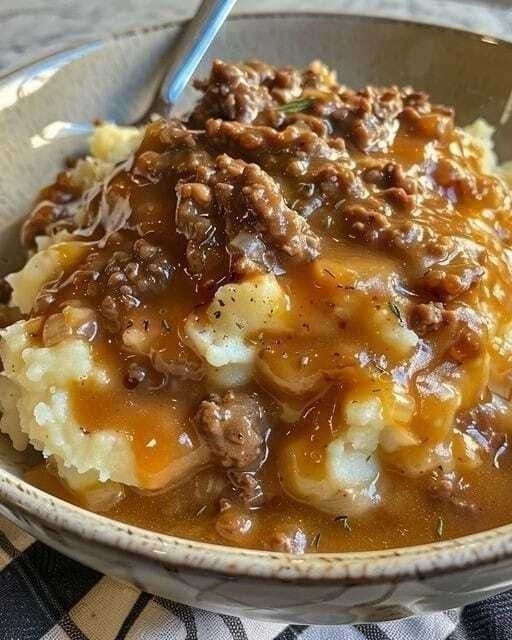
I love serving this family-style. I pile the fluffy mashed potatoes in a large, shallow bowl, make a well in the center, and ladle the beef and gravy right over the top. I garnish with a sprinkle of fresh chopped parsley. Let everyone serve themselves from the center of the table—it feels so welcoming and hearty.
For a more composed plate, I scoop a generous mound of mashed potatoes onto one side of a warm dinner plate, use a slotted spoon to place the beef and veggies next to it, and then spoon the gravy over everything. It’s a classic diner-style presentation that never gets old.
The only side dish you truly need is something simple and green to cut the richness. I always serve it with steamed green beans, roasted broccoli, or a simple arugula salad with a lemony vinaigrette. But honestly, this meal is so complete, it can absolutely stand on its own.
Variations & Customizations
For a “stroganoff” twist, stir in ½ cup of sour cream and a tablespoon of Dijon mustard into the gravy at the very end, off the heat. Serve it over egg noodles instead of mashed potatoes. It’s a creamy, tangy delight.
If you want to add more vegetables, diced carrots and celery are classic additions. Add them with the onions so they have time to soften. Frozen peas stirred in during the last 5 minutes of cooking add a lovely pop of color and sweetness.
For a deeper, more robust flavor, use a dark beer or a full-bodied red wine (like a Cabernet Sauvignon) to deglaze the pan. After cooking the roux, add ½ cup of wine or beer, let it bubble and reduce by half, then add the beef broth. It adds a wonderful complexity.
How to Store, Freeze & Reheat
Store leftovers in an airtight container in the refrigerator for up to 4 days. The flavors meld and improve, making the leftovers arguably better than the first serving. Store the mashed potatoes and beef/gravy separately for best texture.
This dish freezes exceptionally well. Freeze the cooled beef and gravy (without potatoes) in a freezer-safe container for up to 3 months. Thaw overnight in the refrigerator. The potatoes do not freeze well, so make those fresh when you reheat.
To reheat, gently warm the beef and gravy in a saucepan over medium-low heat, adding a splash of broth or water if it has thickened too much. Reheat the mashed potatoes in the microwave with a splash of milk, covered, stirring occasionally. Recombine on your plate.
Conclusion
This Beef and Gravy with Mashed Potatoes is more than a recipe; it’s a cornerstone of my kitchen, a reliable source of warmth and contentment. It’s the meal I make when I want to nourish both body and soul. I hope this recipe becomes a trusted, beloved classic in your home, bringing the same deep satisfaction and happy, full bellies as it has to mine. Now, go pat that beef dry—your ultimate comfort meal awaits.