
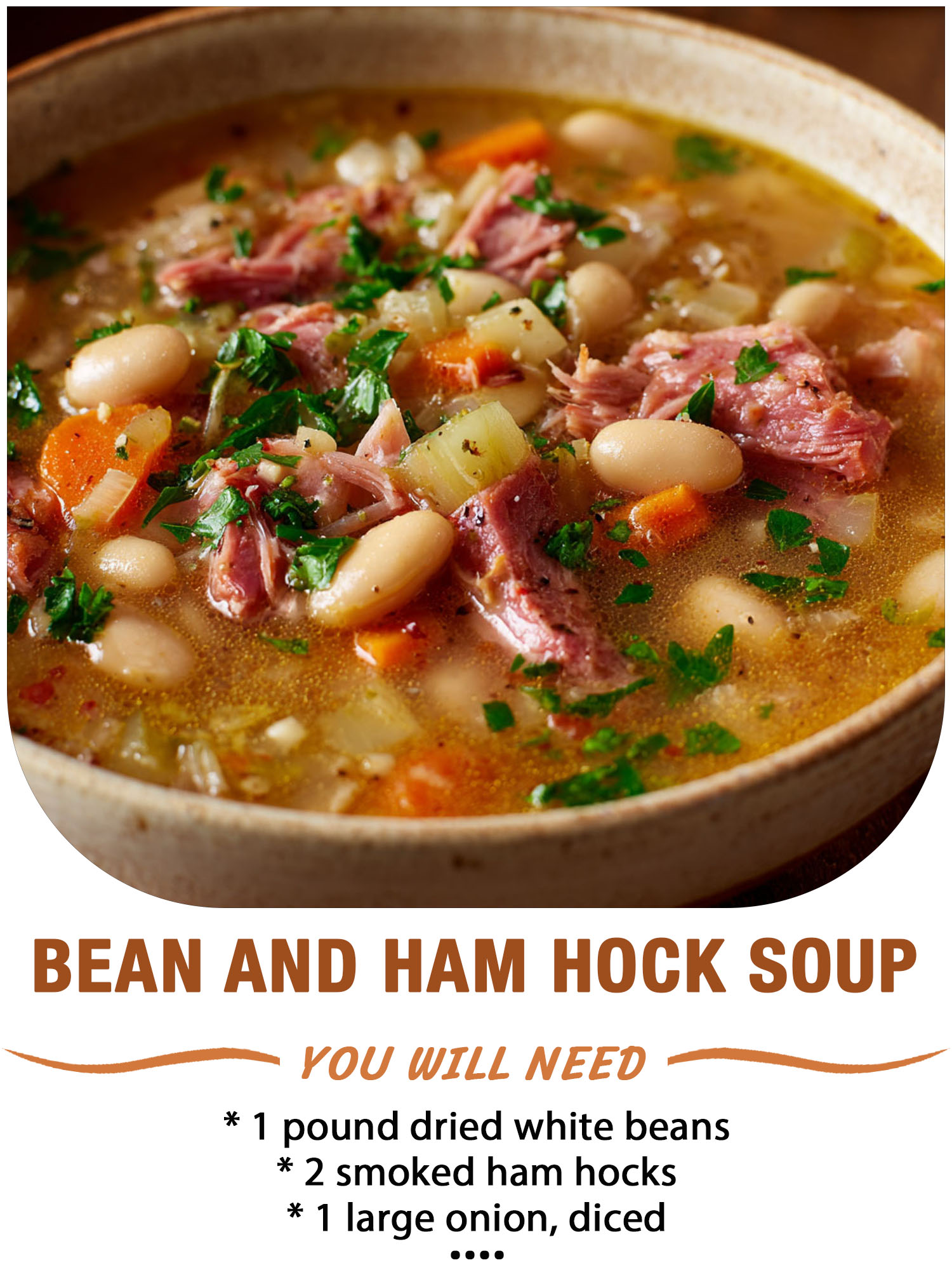
After about 2 hours, I check for doneness. The beans should be completely tender and creamy, and the meat on the ham hocks should be falling off the bone. Using tongs, I carefully transfer the hocks to a cutting board to cool slightly. At this stage, I taste the broth, but I do not add salt yet. The hocks are very salty, and their full flavor needs to release into the soup. Once the hocks are cool enough to handle, I pull all the meat off the bones, shred it, and discard the bones, skin, and excess fat. I return every bit of that tender, smoky meat to the pot. Now, and only now, do I taste for salt, adding it gradually as needed. I let the soup simmer for another 15-20 minutes so the shredded meat can infuse the broth.
Pro Tips for Best Results
For the creamiest, most intact beans, never let the soup reach a rolling boil after the initial start. A violent boil will cause the beans to bash against each other and the pot, breaking their skins and turning the soup cloudy and starchy. A bare simmer, with just a few lazy bubbles breaking the surface, is the goal. I keep my burner on the lowest setting and sometimes even use a heat diffuser.
I’ve tested the cooking method three different ways: stovetop only, slow cooker, and oven-braised. Oven-braising in a Dutch oven at 300°F (150°C) is the hands-down winner. The all-around, gentle, dry heat of the oven cooks the beans and renders the ham hock fat more evenly than the stovetop, with zero risk of scorching on the bottom. It’s my foolproof method for perfect results every single time.
To elevate the flavor even further, add a Parmesan rind. While the soup simmers, I toss in a leftover rind of Parmesan cheese. It dissolves slowly, adding a subtle, savory umami depth that makes the broth taste incredibly complex and rich. Remove any leftover bits before serving. It’s a zero-waste trick with maximum impact.
Common Mistakes to Avoid
My biggest first-time mistake was adding salt at the beginning. I seasoned the broth when I added the water, not thinking about the ham hocks. By the time the soup was done, the reduction of liquid and the salt from the hocks had made it inedibly salty. Don’t do what I did! Always wait until the very end, after you’ve removed the hocks and tasted the broth, to add any salt.(See the next page below to continue…)