
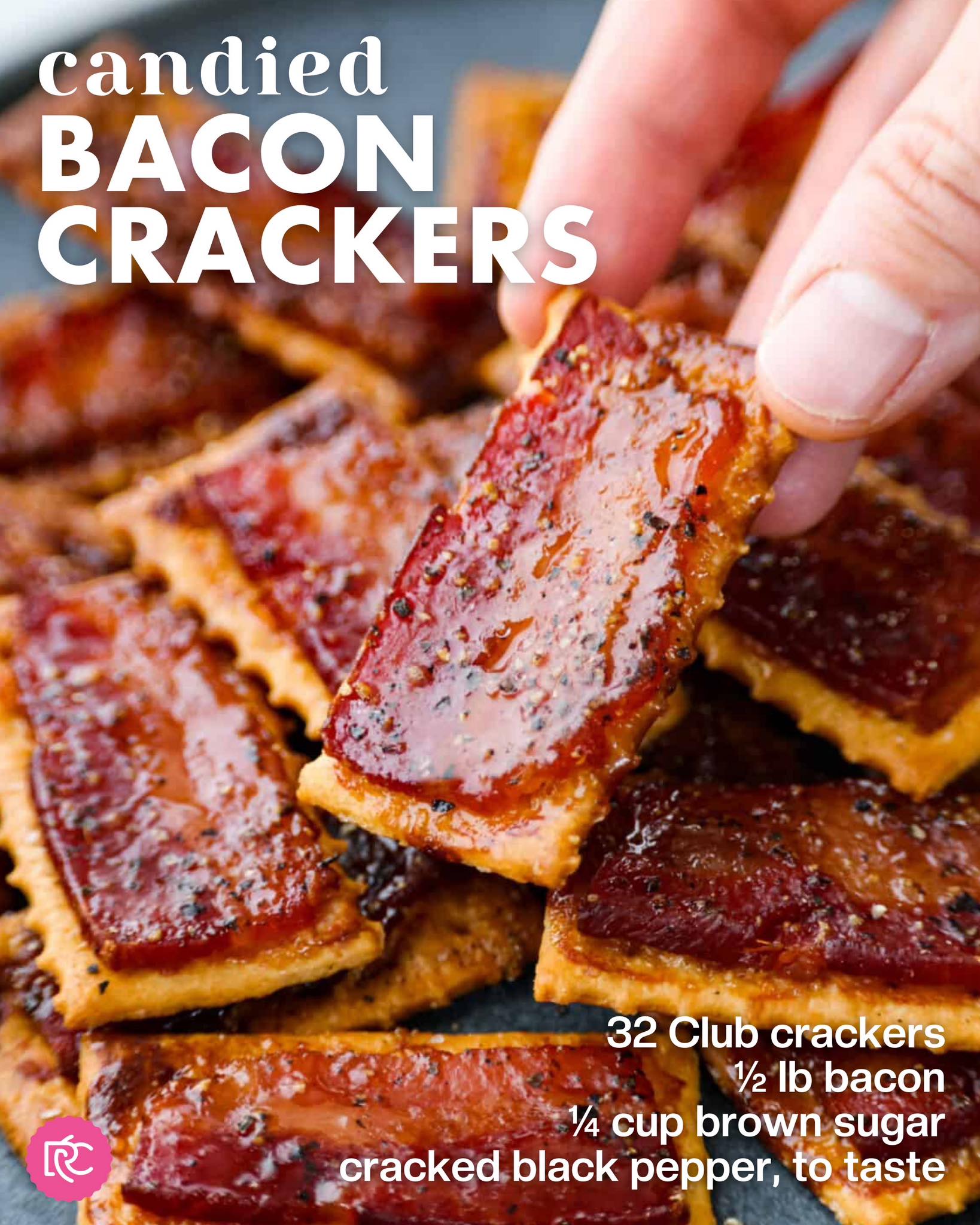
Bacon crackers are crisp, buttery crackers topped or wrapped with bacon and sprinkled with brown sugar (and often a little spice), then baked until the bacon is crisp and the sugar caramelizes into a sweet, salty, crunchy appetizer. They’re sometimes called “pig candy” or candied bacon crackers and are a quick four-ingredient party snack that vanishes fast at holidays, game days, and potlucks.
What are bacon crackers?
Bacon crackers start with a sturdy, buttery cracker—like Club, Town House, or Ritz—topped or wrapped with a strip of bacon and finished with a sprinkle of brown sugar before baking. As they bake, the bacon fat renders and crisps, the brown sugar melts into a bubbly caramel, and the cracker soaks up some of that bacon-y sweetness, turning it into a candied, bacon-infused base.
Some versions lay bacon flat on top of each cracker, while others wrap bacon all the way around the cracker, sometimes over Parmesan, cream cheese, or ranch-cheese filling for extra richness. Many recipes add a pinch of cayenne, crushed red pepper, or black pepper to balance the sweetness with a little heat, creating an addictive sweet–spicy–salty bite.
Equipment
- Rimmed baking sheet to catch bacon fat and melted sugar.
- Aluminum foil or parchment paper to line the pan for easier cleanup.
- Oven-safe wire rack to set over the pan so fat drips away and crackers crisp evenly.
- Sharp knife and cutting board to cut bacon slices into halves or thirds.
- Measuring spoons for brown sugar and spices.
- Tongs or spatula to move hot crackers from rack to cooling surface.
- Wire cooling rack (optional) to cool crackers and help them finish crisping.
Ingredients
Most bacon cracker recipes follow the same pattern: buttery crackers + bacon + brown sugar + optional spice.
Classic brown sugar bacon crackers:
- 1 sleeve buttery crackers (Club, Town House, or similar; about 24–36 crackers).
- 8–16 slices thin or regular-cut bacon, cut into halves or thirds (avoid thick-cut for better crisping).
- ⅓–1 cup light or dark brown sugar, divided over the crackers.
- Optional: pinch of black pepper, cayenne, or red pepper flakes.
Parmesan-wrapped bacon crackers:
- 1 sleeve Club crackers (about 38–45).
- 1 pound thin-sliced pepper bacon, cut in half.
- 1 cup dark brown sugar.
- 1 cup freshly grated Parmesan cheese.
Cream cheese bacon cracker “sandwiches”:
- Club crackers.
- 1 package bacon, cut in half.
- 8 oz cream cheese, softened.
- Ranch seasoning and shredded cheddar mixed into the cream cheese.
These quantities usually yield 24–45 bacon crackers per batch, depending on cracker count and how heavily you top them.
Step-by-step instructions
Bacon crackers use a simple assemble-and-bake method. The oven is preheated first, with recipes ranging from 250°F to 350°F; lower temps allow a longer bake that deeply caramelizes the sugar, while higher temps crisp bacon faster.
A rimmed baking sheet is lined with foil or parchment, and an oven-safe wire rack is placed on top to keep the crackers elevated above the rendered fat.
Crackers are arranged in a single, non-overlapping layer on the rack. Bacon slices are cut into halves or thirds so each piece is just long enough to cover or wrap a cracker. For topped crackers, a strip of bacon is laid flat on each cracker; for wrapped versions, the bacon is wrapped around the cracker and placed seam-side down on the rack.
Brown sugar is then added. In topping-style recipes, about ½–1 teaspoon of brown sugar is sprinkled on each bacon-topped cracker. In wrapped versions, brown sugar (and often Parmesan) is spooned onto the cracker first and held in place by the bacon. At this point, a pinch of cayenne, crushed red pepper, or black pepper can be added to each cracker for subtle heat.
The pan goes into the oven and bakes until the bacon is crisp and the sugar is melted and caramelized. Baking times vary: 300–325°F for about 20–40 minutes, 250°F for up to 1½–2 hours when bacon is fully wrapped, or 350°F for roughly 15–25 minutes with thinner bacon and just topping. The crackers are done when bacon looks browned and crisp and sugar is fully melted and glossy, but the crackers themselves are not burnt.
After baking, the crackers cool on the rack for several minutes so the sugar firms up and the bacon sets. Some recipes suggest using a spatula or tongs to loosen them gently while still warm so they don’t stick as they cool. Once cooled to room temperature, they can be served immediately or held for later.
Texture and flavor tips
Thin or regular-cut bacon works best because it crisps in the same time frame the crackers and sugar need; thick-cut bacon tends to stay chewy and can leave the crackers greasy. Choosing richer, buttery crackers like Club or Town House gives a more flavorful, crisp base that holds up well to the heat and toppings.
The amount and type of brown sugar influence sweetness and caramel depth. Light brown sugar yields gentler caramel, while dark brown sugar adds stronger molasses notes and deeper color. Using enough sugar to fully coat the bacon surface creates a true candied effect, but too much can slide off and burn on the pan; sticking close to about ½–1 teaspoon per cracker strikes a good balance.
Spice is optional but highly effective. A light dusting of cayenne, red pepper flakes, or fresh black pepper brightens the flavor and keeps the crackers from tasting one-note sweet. Baking on a rack over a foil-lined pan is another key tip—it lets fat drip away and air flow underneath, so the crackers get crisp instead of sitting in a puddle of grease and syrup.
Variations and flavor twists
Parmesan bacon crackers add a savory layer by sprinkling grated Parmesan over each cracker before adding bacon and brown sugar, or mixing Parmesan with the sugar. This creates a sweet-salty-cheesy crust under the bacon that feels a bit more gourmet. Some recipes skip sugar altogether and just use Parmesan for a purely savory bacon cracker.
Seasoning blends open up even more variations. Barbecue rub or BBQ seasoning over the sugar adds smoky, tangy notes. Combining brown sugar with cayenne or chipotle powder yields a classic sweet‑heat combo. Ranch seasoning and shredded cheddar mixed into cream cheese, sandwiched between two crackers, and then wrapped with bacon creates stuffed bacon crackers that eat like mini cheesy bacon bites.
Swapping in different cracker shapes or flavors changes the character too. Ritz, Town House, or even bow-tie-style crackers each bring slightly different textures and looks. For extra indulgence, you can add a thin slice of cheddar or a dab of pimento cheese on top of the cracker before the bacon and sugar for a melty cheese layer under the candied bacon.
Make-ahead, storage, and serving ideas
Bacon crackers work well with make-ahead prep. The crackers can be lined up on the rack, topped or wrapped with bacon, sprinkled with brown sugar and spices, then covered and refrigerated for several hours before baking. When it’s close to party time, the tray goes straight into the preheated oven, so you get hot, fresh crackers with minimal last-minute work.
After baking and cooling, bacon crackers are at their best the same day, but they can be stored in an airtight container at room temperature for about a day or two. If they soften, a brief reheat in a low oven can help re-crisp them. Some cooks prefer to refrigerate leftovers, then rewarm before serving to keep bacon food-safe and maintain texture.
On a party spread, bacon crackers pair nicely with cheese boards, veggie trays, and dips—especially ranch, onion, or bacon-ranch “crack dip.” They’re rich and salty-sweet, so balancing them with lighter, fresher items like raw vegetables or simple pickles makes the overall table feel less heavy. For game day, they sit comfortably alongside wings, meatballs, and cheese balls as one of the star finger foods.
Overall, bacon crackers are a high-reward, low-effort appetizer: a handful of ingredients, simple assembly, flexible flavor profile, and a crunchy, candied bacon payoff that fits perfectly into the modern “sweet, salty, and totally snackable” recipe style.