
Overbaking is another issue to watch for. Because the sheet pan is shallow, it cooks faster than traditional lasagna. If you let it go too long uncovered, the top will brown too much and the noodles may start to dry out around the edges. Keeping it tented with foil for most of the bake helps prevent this.
Finally, avoid cutting it while it’s piping hot. It will fall apart instantly, and you won’t get those perfect square servings. Letting it settle gives you clean layers and a better eating experience overall.
Serving Suggestions
I love serving this lasagna with something fresh and bright to balance the richness. A crisp salad with tomatoes, cucumbers, and a tangy vinaigrette pairs beautifully with the savory layers. Even a simple coleslaw adds great crunch and contrast.
If I’m hosting guests, I’ll often make garlic bread or buttery dinner rolls to go alongside it. Something about scooping up leftover sauce or cheese with warm bread just feels right with this dish. It makes the experience feel like a comforting dinner feast.
On casual nights, I’ll serve this with pickles on the side for a fun cheeseburger twist. The acidity cuts through the richness and gives you that classic fast-food flavor profile in a much more satisfying form. It’s surprising how well it rounds out the meal.
For family gatherings or game nights, I like setting out toppings—extra bacon, chopped tomatoes, shredded lettuce—for people to customize their slices. It turns dinner into a fun, interactive experience that everyone enjoys.
Variations & Customizations
One version I love making includes crispy tater tots on top instead of a full cheese topping. It turns the lasagna into a cheeseburger–tater casserole hybrid and adds an insanely good crunch. The kids devour this version without hesitation.
Another delicious variation is adding diced tomatoes or even a thin layer of ketchup and mustard mixed into the beef for an authentic cheeseburger flavor. It sounds strange at first, but the result tastes exactly like those diner-style burgers you crave.
If you enjoy spice, adding jalapeños or using pepper jack cheese instead of cheddar gives the lasagna a fun kick. I’ve tried adding hot sauce to the ricotta mixture too, and it blends surprisingly well.
For a lighter version, you can use ground turkey instead of beef, and it still tastes wonderfully hearty. Turkey actually absorbs seasoning exceptionally well, so the flavor stays bold while the dish becomes slightly leaner.
How to Store, Freeze & Reheat
When I make this lasagna ahead of time or store leftovers, I let it cool completely before transferring it to airtight containers. It keeps beautifully in the refrigerator for 3–4 days, and the flavors actually deepen overnight, making the leftovers even better.
For freezing, I like cutting the lasagna into squares and wrapping each piece tightly in plastic wrap, then in foil, and storing them in a freezer bag. It makes reheating individual portions incredibly convenient. The lasagna freezes well for up to 2 months without losing flavor or texture.
Reheating in the oven gives the best results. I place a slice on a small pan, cover it loosely with foil, and bake until warmed through. The foil helps keep moisture in, so the noodles don’t dry out. If I’m in a hurry, I’ll reheat in the microwave, but I usually add a sprinkle of extra cheese on top to freshen it up.
Avoid reheating uncovered in the oven for too long because the top can overbrown. And if you’re reheating from frozen, thaw overnight first for the best texture—frozen-solid slices tend to heat unevenly otherwise.
Nutrition Information
This is definitely a comfort-food dish, so it’s hearty and filling, with balanced amounts of protein, fat, and carbohydrates. The ground beef provides a good dose of protein, while the cheeses add both calcium and richness. The noodles contribute the classic lasagna structure and energy-sustaining carbs.
Even though this dish is indulgent, it’s surprisingly satisfying in a way that keeps you from needing huge portions. The mix of protein and fat helps keep you full longer, and the shallow sheet pan design naturally creates thinner layers compared to deep-dish lasagna.
You can make small adjustments if you want to lighten it slightly—such as using ground turkey, reduced-fat cheese, or skipping the optional pickles—but honestly, I embrace this recipe for what it is: a flavorful, comforting, cozy meal that feels like a warm hug.
Everything in moderation, and this lasagna is absolutely worth every bite when you’re craving something cheesy and hearty.
FAQ Section
Can I prepare this lasagna ahead of time?
Yes! You can assemble it fully and refrigerate it for up to 24 hours. Just add about 10 extra minutes to the bake time since it will be cold going into the oven.
Do I need to boil the lasagna noodles?
No, the oven-ready noodles hydrate perfectly from the beef broth and sauce in the pan. They soak up flavor as they bake, which is one of the best parts of this recipe.
Can I use regular lasagna noodles instead?
You can, but you’ll need to boil them first. Oven-ready noodles keep the process simple and prevent overcooking, especially on a sheet pan.
Can I make this without bacon?
Yes, but the bacon adds a smoky depth that really makes the dish shine. If you omit it, consider adding a dash of smoked paprika to mimic that flavor.
Can I add vegetables?
Absolutely. Mushrooms, finely diced bell peppers, or even shredded zucchini work beautifully. Just sauté them first so they don’t release too much moisture while baking.
Conclusion
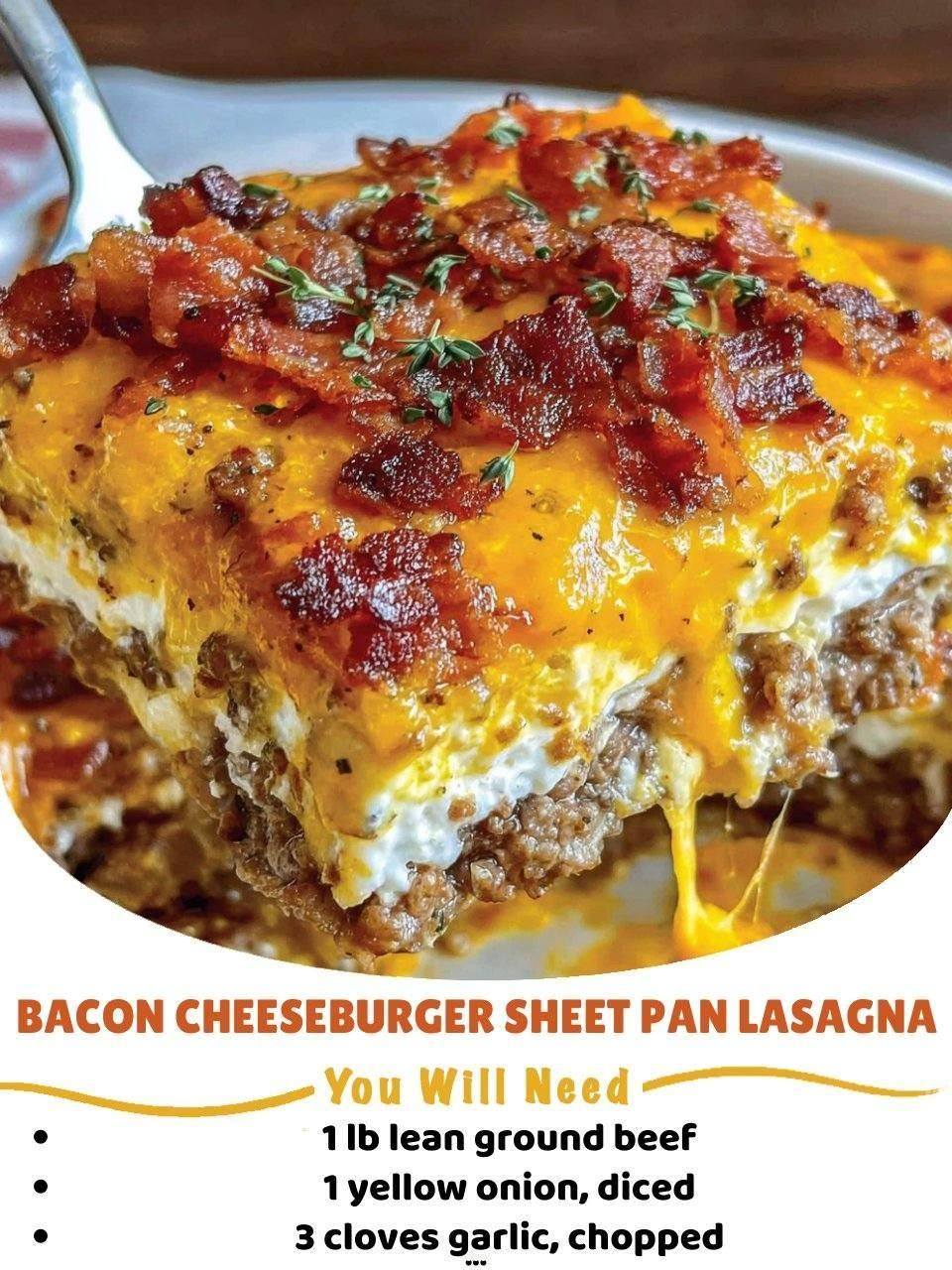
This Bacon Cheeseburger Sheet Pan Lasagna has become one of my most requested meals because it blends comfort, creativity, and pure cheesy indulgence into every bite. It’s the perfect recipe for busy nights, gatherings with friends, or anytime you want a dinner that feels special without requiring complicated prep. Every layer delivers bold flavor, and the sheet pan method guarantees even cooking and irresistible crispy edges. I hope you enjoy making—and devouring—this recipe as much as I do, and that it becomes a favorite in your own kitchen too.