
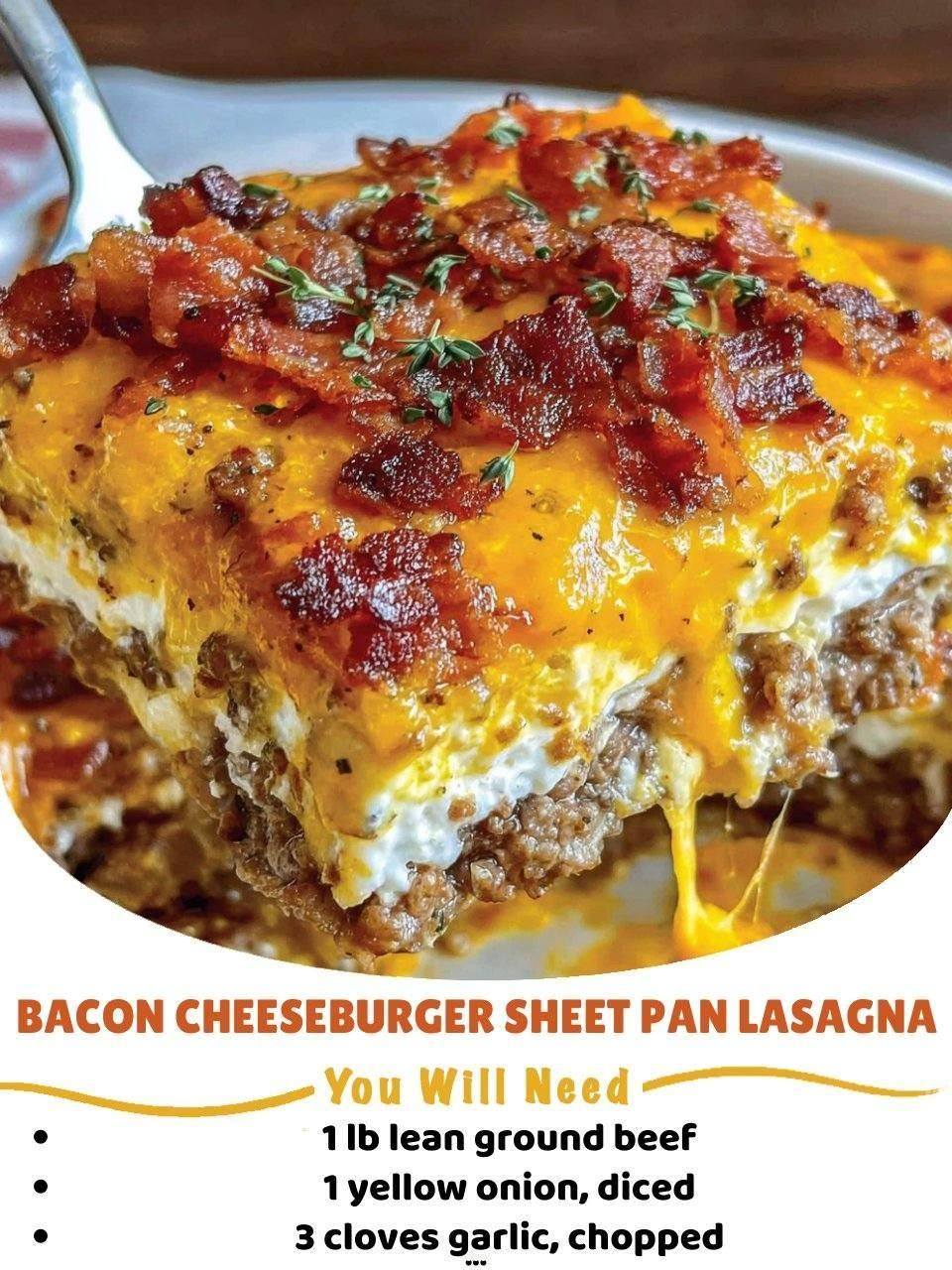
Next, I mix the ricotta, sour cream, and egg together in a bowl. This becomes the creamy, tangy middle layer that balances all the savory meat and cheese on top. I always whisk the mixture thoroughly to avoid pockets of unmixed egg—it helps everything bake smoothly and sets just right. While I’m preparing the layers, I lay out my sheet pan and spray it lightly with cooking spray so the noodles don’t stick.
Now comes the fun part: layering. I start by spreading a thin layer of sauce or broth across the bottom to help soften the noodles. Then I place the first row of lasagna noodles directly onto the sheet pan, breaking pieces as needed to fit them snugly. I spoon half of the meat mixture over the noodles, add dollops of the ricotta mixture, sprinkle a handful of cheddar and mozzarella, and finish the layer with some bacon crumbles. I repeat the process until everything is used, finishing with a generous mountain of cheese and bacon across the top.
I cover the entire sheet pan with foil and let it bake so the noodles soften and everything melds together. In the final 10–15 minutes, I remove the foil to allow the cheese to bubble and brown. That moment when the foil comes off is always so satisfying—the cheese is molten, the bacon is sizzling, and the smell practically pulls everyone into the kitchen. I let it rest for a few minutes before cutting into squares so the layers stay intact and each slice looks as irresistible as it tastes.
Pro Tips for Best Results
I tested this recipe three different ways before landing on the version I make now, and one of the biggest lessons I learned was to keep the beef mixture juicy. Dry beef equals dry lasagna, and because sheet pan lasagna has more surface area, moisture evaporates quickly. Adding beef broth (or even a splash of water in a pinch) ensures the noodles soften properly and the finished dish stays tender.
Another trick I swear by is using a mix of cheddar and mozzarella instead of sticking to one cheese. Mozzarella gives you that stretchy, melty pull that makes every piece feel luxurious, while cheddar brings the sharp, classic cheeseburger flavor. Combining them gives the perfect balance of taste and texture.
I also found that not overloading the ricotta layer helps avoid sogginess. When I added too much once, the lasagna became overly creamy and the noodles didn’t hold their structure. Keeping the ricotta layer thin but flavorful makes each bite delicious without weighing down the dish.
Lastly, let the lasagna rest before cutting. I know it’s tempting—I rush this step more often than I’d like to admit—but even five minutes of resting time lets the cheese settle and the layers firm up. Those first few slices are always the reward for that brief moment of patience.
Common Mistakes to Avoid
One mistake I made early on was using raw onions directly in the lasagna layer without sautéing them. They turned crunchy and sharp instead of soft and savory. Taking the extra few minutes to cook them with the beef makes a huge difference in flavor and texture.
Another common misstep is using too little cheese on top. I promise, this is not the dish to be shy with cheese. The top layer becomes like a cheesy crust that brings everything together, and skimpy cheese creates a lackluster finish. Don’t skip the bacon on top either—it gets beautifully crisp in the oven and adds a ton of flavor.(See the next page below to continue…)