
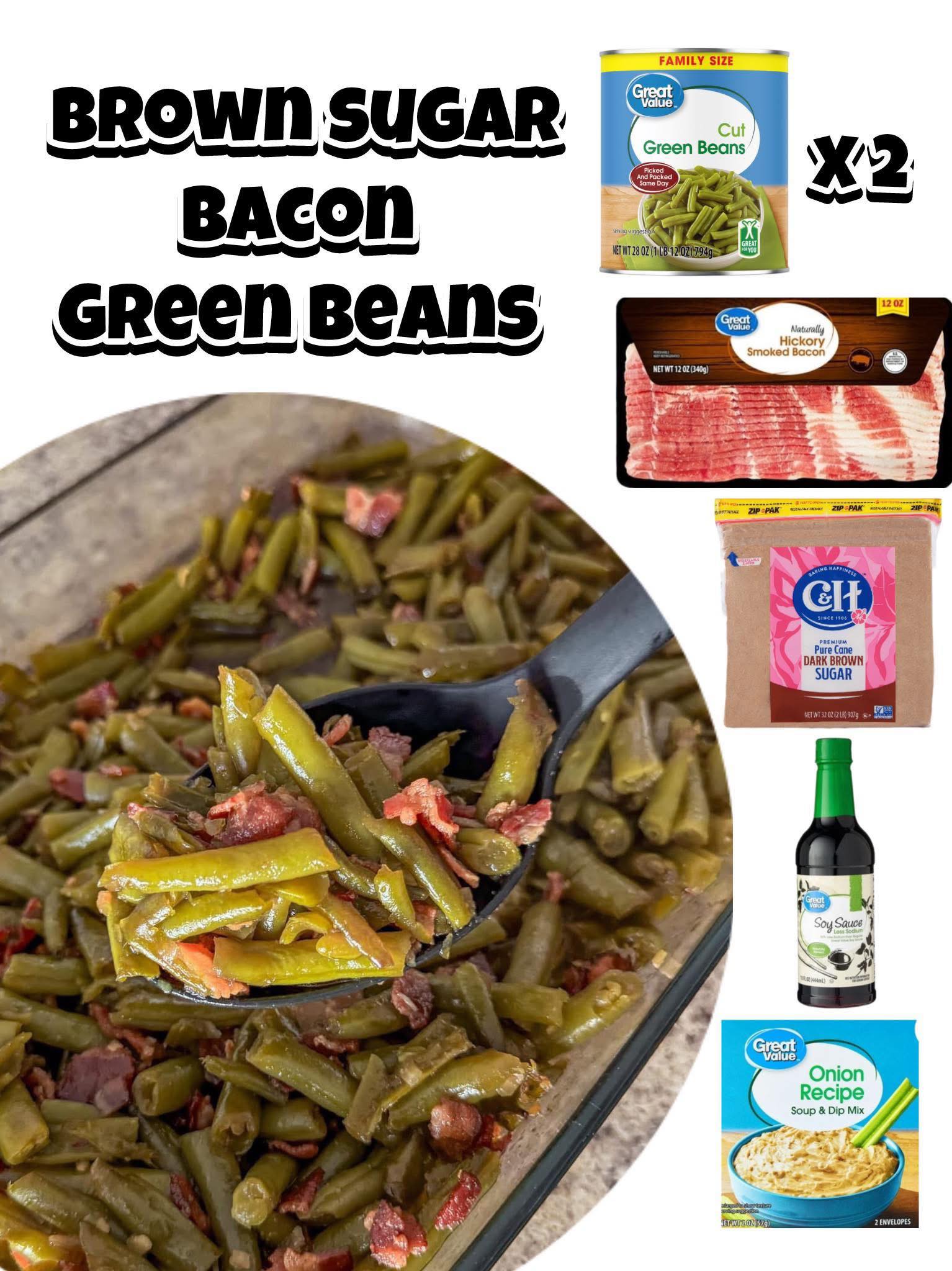
With the sauce ready, I pour the drained green beans into a baking dish. I always prefer draining them well because excess moisture can water down the glaze, and I want every bean coated in that sweet and savory mixture. I sprinkle the onion soup mix over the top and then pour the hot brown sugar sauce over everything. As I stir, I watch the green beans transform into something shiny, coated, and already so fragrant that I find myself tempted to taste it before it even goes into the oven.
Finally, I scatter the cooked bacon pieces across the top and slide the dish into the oven. As it bakes, the sauce thickens, the beans absorb all that flavor, and the bacon infuses even deeper into the mix. When I pull it out, the dish is bubbling gently at the edges, the glaze clings perfectly to every bean, and the bacon adds that beautiful pop of color and crunch. It’s one of those dishes that looks humble but tastes like something you spent far longer making.
Pro Tips for Best Results
I tested this recipe a handful of different ways, and the best tip I can share is to cook the bacon low and slow. Rushing it over high heat burns the edges before the fat fully renders, and you lose some of that smoky richness that carries through the entire dish. Perfect bacon makes perfect green beans in this recipe—trust me on that.
Another tip I learned through trial and error is to drain the green beans extremely well. The first time I made this, I didn’t drain them enough, and the sauce ended up thinner and less sticky than what I wanted. When the beans are drained completely, they absorb the caramelized glaze beautifully and develop a deeper flavor. I sometimes even pat them lightly with paper towels if they seem overly wet.
If you want a deeper, richer glaze, let the brown sugar cook an extra minute in the bacon drippings before adding the soy sauce. That caramelization creates a deeper color and a slightly toasted sweetness that feels more complex. It’s a tiny step but makes a big difference in the final dish.
Lastly, don’t be afraid to taste the glaze before pouring it over the beans. Everyone’s bacon is a bit different in saltiness, and brown sugar varies in sweetness. Tasting first lets you adjust—maybe a pinch more soy sauce or just a little extra sugar—so the balance is exactly what you want.
Common Mistakes to Avoid
I made the mistake once of using thick-cut bacon, and while I love thick-cut bacon for breakfast, it doesn’t work as well here. It doesn’t crisp enough, and the pieces stay too chewy inside the green beans. Regular-cut bacon gives the best crisp and distributes easily throughout the dish.
Another mistake is skipping the onion soup mix or replacing it with plain onion powder. Onion powder simply doesn’t add the depth or savory richness that the soup mix does. The soup mix adds herbs, seasoning, and umami that ties everything together. Without it, the dish loses that signature “slow-cooked” taste.
Using fresh green beans is another common pitfall. I’ve tried it, and while fresh beans are wonderful in many recipes, they don’t absorb the glaze the same way canned beans do. They stay firmer and don’t get that melt-in-your-mouth tenderness that makes this dish shine. Fresh beans also require longer cooking, which can throw off the texture of the bacon.(See the next page below to continue…)