
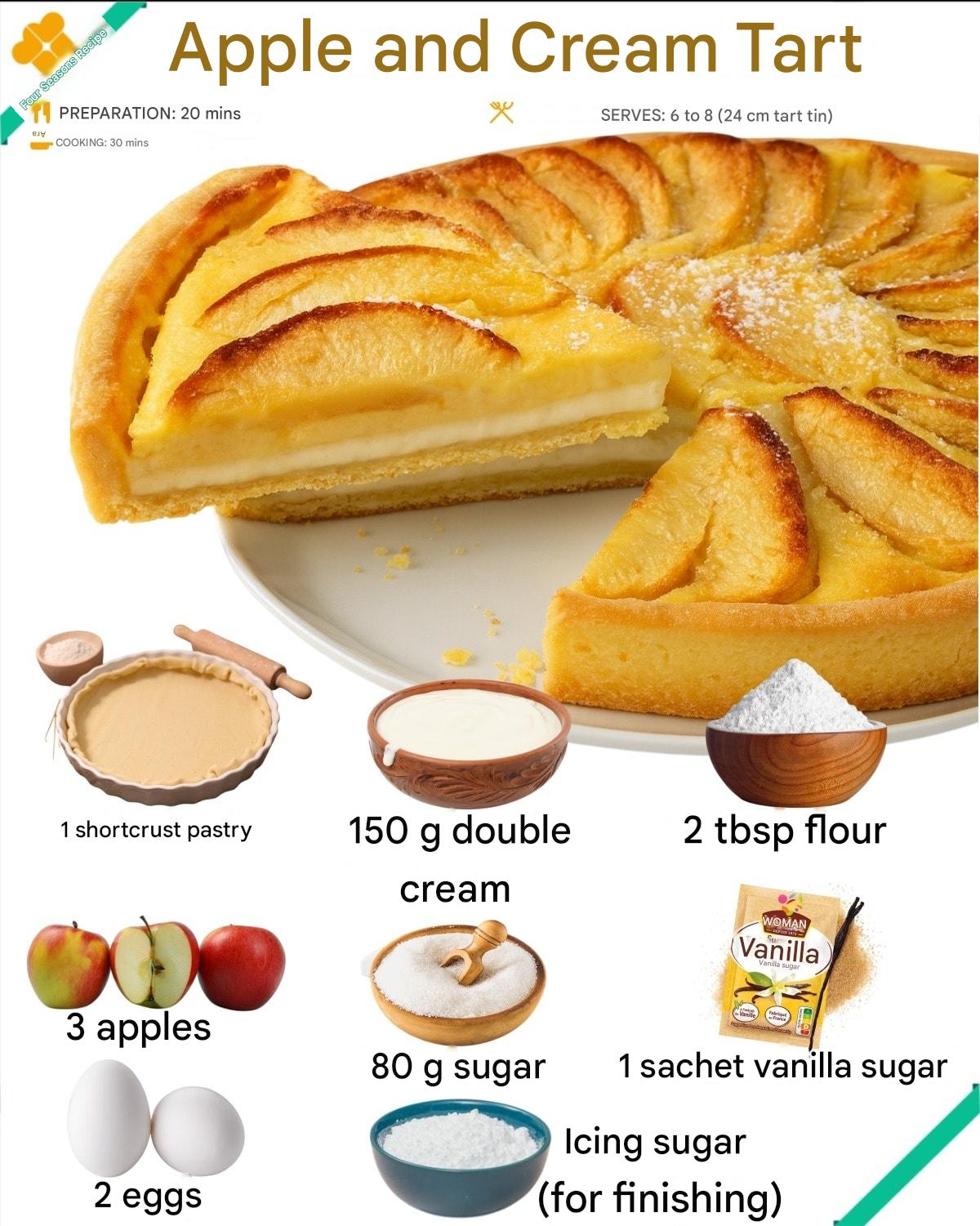
I pour the cream mixture into the crust, arrange the apples on top, and bake until the filling is just set and lightly golden. I always watch closely during the last ten minutes, because overbaking turns the cream grainy. When it’s done, the center should still have a slight wobble.
Pro Tips for Best Results
I tested this tart with both room-temperature and cold ingredients, and room-temperature eggs and cream blend far more smoothly. Cold ingredients tend to create lumps, which affect the final texture. Letting them sit out for a bit makes a noticeable difference.
Here’s what I learned the hard way: too much flour makes the filling heavy. Two tablespoons are enough to set the cream without turning it into custard. Trust the measurements, even if the mixture feels thin at first.
I also discovered that preheating the oven fully matters more than you’d expect. A hot oven helps the cream set evenly from the start instead of separating. When I rushed this step, the texture suffered.
Finally, let the tart cool before slicing. I know it’s tempting, but cutting too early causes the filling to ooze. Cooling allows everything to settle into clean, beautiful layers.
Common Mistakes to Avoid
The first mistake I made was using apples that were too juicy, which released excess moisture into the tart. This made the base soggy and diluted the cream filling. Choosing firmer apples prevents that problem entirely.
Another mistake is overloading the tart with apples. I once thought more apples meant more flavor, but it actually weighed down the filling and prevented proper setting. A balanced apple layer works much better.
Overbaking is another common issue. I’ve left this tart in too long before, thinking more color meant better flavor. Instead, it dried out the cream. Slightly pale is better than overdone here.(See the next page below to continue…)