
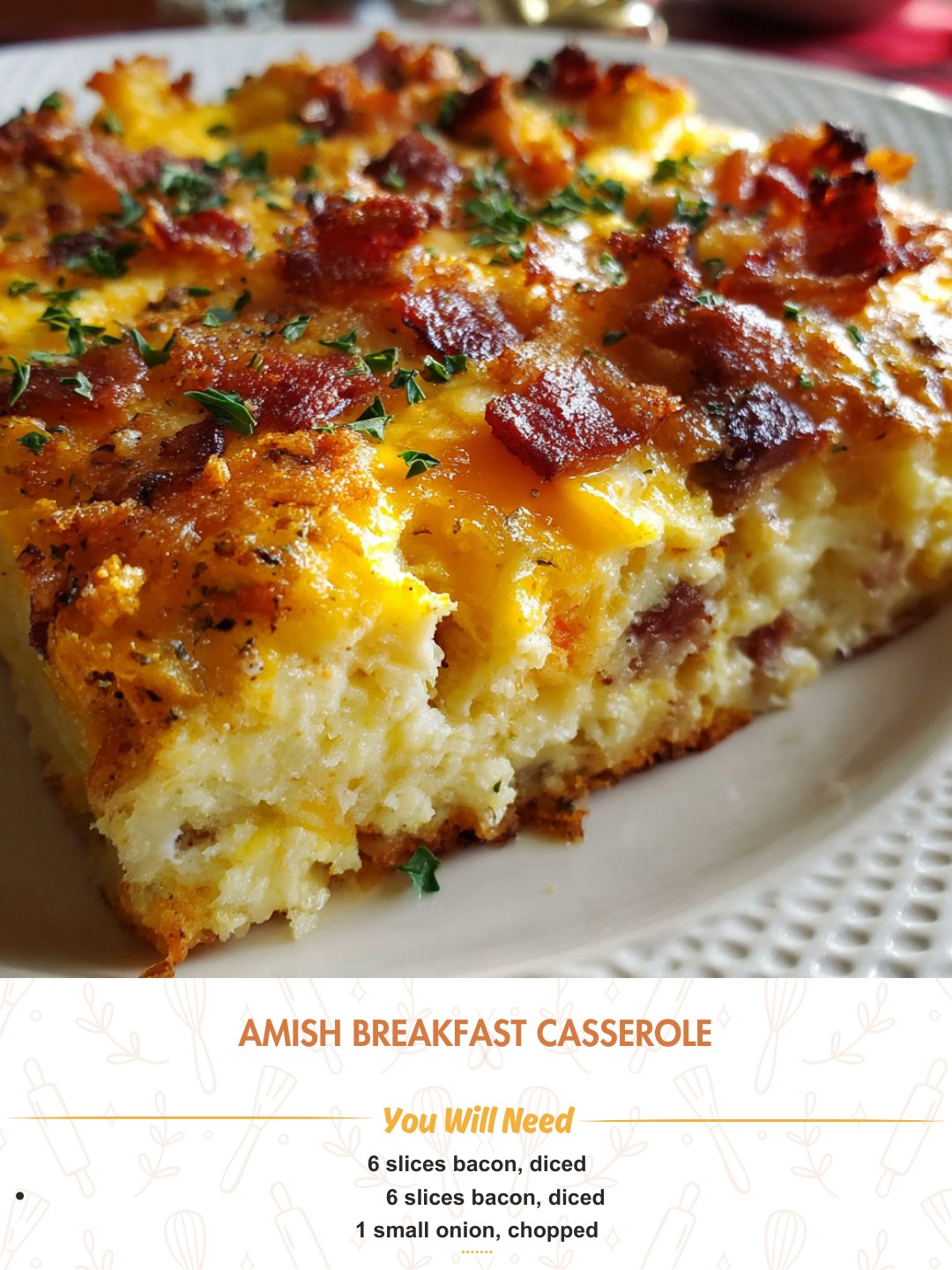
I discovered the Amish Breakfast Casserole at a cozy bed and breakfast years ago, and the quest to recreate its hearty, comforting perfection became a personal mission. I remember the rich, savory scent of bacon and onions sizzling in my cast iron skillet, a foundation of flavor that promised a good day. As I layered the simple ingredients—potatoes, cheese, eggs—my kitchen began to smell like a country diner at sunrise. The patient hour in the oven felt like a slow, delicious build-up. When I finally pulled out that golden, bubbling pan and scooped out a serving, the first bite—a harmonious, savory blend of creamy egg, crispy potato, salty bacon, and melted cheese—felt like a warm, satisfying hug. It’s been my secret weapon for feeding a crowd ever since.
Why You’ll Love This Recipe
You will love this recipe because it’s the ultimate make-ahead, no-fuss, crowd-feeding breakfast. It’s hearty enough to sustain a morning of work or play, endlessly adaptable to what you have in your fridge, and it fills your home with the most welcoming aroma. It turns simple, humble ingredients into a comforting, cohesive dish that feels like a gift to yourself and anyone you share it with. From my oven to yours, I promise this casserole is a reliable path to a perfect, stress-free morning meal.
Ingredients
- 6 slices bacon, diced (or 1 cup diced ham)
- 1 small onion, chopped
- 1 (30 oz) bag frozen shredded hash brown potatoes, thawed (about 6 cups)
- 2 cups shredded cheddar cheese, divided
- 1 cup shredded Swiss or Monterey Jack cheese
- 6 large eggs
- 2 cups whole milk
- 1 teaspoon salt
- 1/2 teaspoon black pepper
- 1/2 teaspoon dry mustard powder (this is the secret flavor booster!)
- 1/4 teaspoon garlic powder
- Optional: 1/2 cup chopped bell peppers, sliced mushrooms, or spinach
Let’s talk ingredients. Frozen shredded hash browns are the key here—they’re pre-cooked and provide the perfect structure; fresh grated potatoes hold too much moisture. Using a mix of cheeses (sharp cheddar and something melty like Swiss) creates depth of flavor. The dry mustard powder is my non-negotiable tip; it doesn’t taste like mustard, but it adds a subtle, savory tang that makes the egg custard taste incredible. Don’t skip it; it makes a huge difference. Thaw your hash browns completely and squeeze out any excess water to avoid a soggy casserole.(See the next page below to continue…)
Equipment Needed
- 9×13 inch baking dish
- Large skillet
- Large mixing bowl
- Whisk
- Measuring cups and spoons
- Aluminum foil
Step-by-Step Instructions
First, I build the flavor base. In my large skillet over medium heat, I cook the diced bacon until it’s crispy and has rendered its fat. I use a slotted spoon to remove the bacon to a paper towel-lined plate, leaving about a tablespoon of the glorious bacon fat in the pan. Into that fat, I add my chopped onion (and bell pepper if I’m using it) and cook until soft and translucent, about 5 minutes. The smell at this stage—smoky bacon and sweet onion—is the foundation of the whole dish. I set the cooked veggies aside.
Next, I assemble the casserole in my greased 9×13 dish. I spread the thawed, drained hash browns in an even layer on the bottom. Then, I sprinkle the cooked bacon, onions, and any other veggies evenly over the potatoes. Now for the cheese! I sprinkle both kinds of shredded cheese over everything, reserving about 1/2 cup of cheddar for the top. I make sure the distribution is even so every bite gets a little of everything.
Now, I make the custard. In my large mixing bowl, I whisk the eggs vigorously until they’re well beaten and slightly frothy. Then, I whisk in the milk, salt, pepper, dry mustard powder, and garlic powder. I whisk for a good minute to ensure it’s perfectly smooth and emulsified. I’ve tried just stirring it, and whisking really does create a lighter, more uniform custard. I carefully pour this mixture evenly over the layered ingredients in the baking dish. I use a fork to gently poke and prod, encouraging the custard to seep down into all the nooks and crannies.(See the next page below to continue…)
Finally, I finish and bake. I sprinkle the reserved 1/2 cup of cheddar cheese over the top. Then, I cover the dish tightly with aluminum foil. This is crucial—it allows the casserole to cook through gently without over-browning the top too early. I bake it in a preheated 350°F (175°C) oven for 45 minutes covered. Then, I remove the foil and bake for another 20-30 minutes uncovered, until the top is beautifully golden brown, the edges are bubbling, and a knife inserted in the center comes out clean. I let it rest for 10 minutes before serving—this allows it to set perfectly for clean slices.
Pro Tips for Best Results
Thaw and drain your hash browns thoroughly. I spread them on a clean kitchen towel, roll it up, and give it a good squeeze over the sink. Removing as much water as possible is the single best thing you can do to ensure a casserole that’s creamy, not watery. I learned this the hard way with a soggy first attempt.
Let the casserole rest after baking. I know it’s tempting to dive right in, but those 10 minutes are when the custard finishes setting. Cutting into it too soon will cause it to be runny and fall apart. Patience gives you perfect, neat squares.
Use a tester to check for doneness. The top will look done before the center is fully set. Insert a butter knife or toothpick into the center—if it comes out clean, with no wet egg mixture, it’s ready. If it’s wet, give it 5 more minutes uncovered.
Assemble it the night before for the ultimate easy morning. After layering everything in the dish, cover it tightly and refrigerate overnight. In the morning, let it sit on the counter for 20-30 minutes while the oven preheats, then bake as directed, adding maybe 5-10 extra minutes if it’s still cold from the fridge.
Common Mistakes to Avoid
My biggest early mistake was using raw, grated potatoes. They released so much water during baking that the casserole never set properly, resulting in a soupy, separated mess. The pre-cooked, frozen hash browns are specifically designed to hold their structure. Trust the process.(See the next page below to continue…)
Another error is not seasoning the custard adequately. Eggs and milk need a good amount of seasoning. The dry mustard powder is part of this, but don’t be shy with the salt and pepper. Taste your custard mixture before pouring—it should taste pleasantly seasoned, not bland.
Overbaking the casserole leads to dry, rubbery eggs. Once the center is set and a knife comes out clean, it’s done. The residual heat will continue to cook it a little as it rests. An overbaked casserole loses its lovely creamy texture.
Forgetting to cover it for the first part of baking. If you bake it uncovered the whole time, the top will brown too much and potentially burn before the center is cooked through. The foil cover ensures gentle, even cooking from the center out.
Serving Suggestions
I love serving this right from the baking dish, cut into big squares. It’s a complete meal on its own, but I always offer hot sauce, salsa, and sour cream on the side for people to customize their plate. A dash of hot sauce cuts through the richness perfectly.
For a classic brunch spread, I serve it alongside a platter of fresh fruit like melon and berries, and a basket of warm, buttered biscuits or toast. The fresh, sweet fruit provides a wonderful contrast to the savory, hearty casserole.
It also makes fantastic leftovers, served warm or even at room temperature. I’ve packed squares in lunchboxes or enjoyed a slice as a quick, protein-packed snack straight from the fridge—it’s surprisingly good cold, too.
Variations & Customizations
For a sausage version, swap the bacon for 1 pound of breakfast sausage, browned and crumbled. The sage flavor in breakfast sausage is a wonderful change. A drained can of diced green chilies added with the onions makes a great Southwest twist.
Make it vegetarian by omitting the bacon and sautéing a mix of mushrooms, spinach, and onions instead. You might want to add an extra 1/2 teaspoon of salt to compensate for the lost saltiness of the bacon.
For a “Denver” style, use diced ham instead of bacon and add a cup of finely diced green and red bell peppers when you cook the onions. It’s a colorful and flavorful twist that everyone recognizes and loves.
How to Store, Freeze & Reheat
Leftovers can be stored, covered, in the refrigerator for up to 4 days. The flavors meld and it remains delicious. I often make it specifically to have ready-made breakfasts for the week.
This casserole freezes beautifully. Bake and cool it completely, then cut into portions. Wrap each portion tightly in plastic wrap and foil, or place in a freezer-safe container. Freeze for up to 2 months.
To reheat, thaw overnight in the fridge if frozen. Warm individual portions in the microwave, or reheat larger pieces in a 325°F oven, covered with foil, until heated through (about 20-30 minutes). The oven method best preserves the texture.
Conclusion
The Amish Breakfast Casserole is a testament to the power of simple, wholesome ingredients coming together to create something greater than the sum of its parts. It’s a dish built on practicality that results in pure comfort. I hope you bring it into your own kitchen and experience the same reliable satisfaction—the ease of preparation, the mouthwatering smell as it bakes, and the deeply nourishing first bite. It’s more than a recipe; it’s a warm, delicious start to any day.