
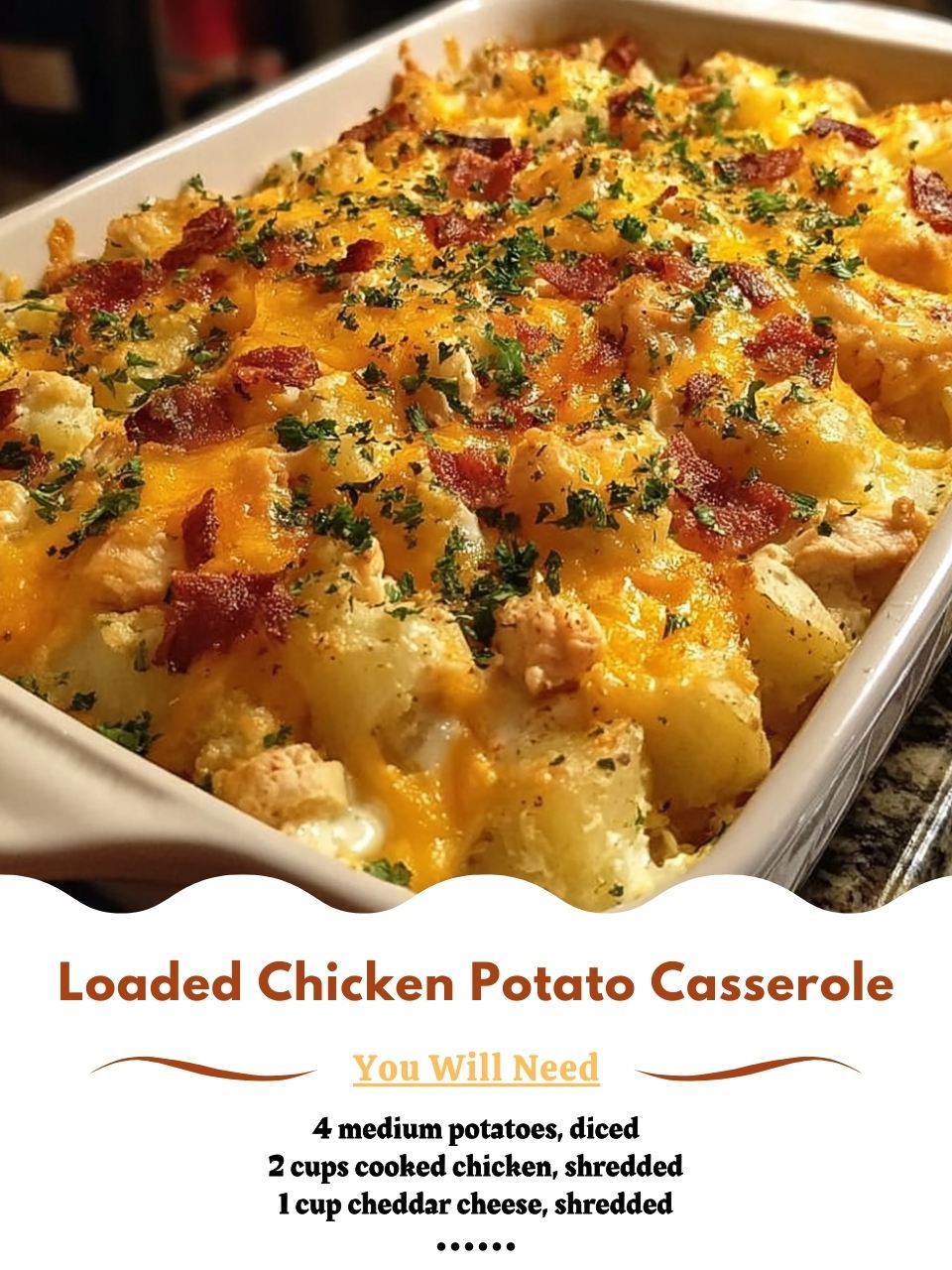
The moment I pulled my first Loaded Chicken Potato Casserole from the oven, I knew I’d stumbled onto something special. It was a chilly Sunday evening, the kind that begs for a meal that warms you from the inside out. My kitchen was filled with the incredible, savory aroma of roasting potatoes, herbs, and melting cheese—a smell so comforting it felt like a physical hug. As I scooped out that first steamy portion, revealing layers of tender potatoes, savory chicken, and a creamy, cheesy sauce all baked under a golden, bubbly topping, I watched my family’s eyes light up. This wasn’t just dinner; it was a bowl of pure, uncomplicated joy, a one-dish wonder that tasted like it took all day but came together with beautiful simplicity. It’s the recipe I turn to when I need a guaranteed smile at the table.
Ingredients
- 4 medium russet potatoes (about 2 lbs), diced into ½-inch cubes
- 2 cups cooked chicken, shredded or diced (rotisserie chicken is perfect)
- 1 ½ cups shredded sharp cheddar cheese, divided
- 1 cup sour cream
- ½ cup milk (whole or 2%)
- 1 (10.5 oz) can condensed cream of chicken soup
- 6 strips bacon, cooked crisp and crumbled, divided
- ½ cup finely diced yellow onion
- 2 cloves garlic, minced
- 1 tablespoon olive oil or melted butter
- 1 teaspoon garlic powder
- ½ teaspoon smoked paprika
- ½ teaspoon black pepper
- ¼ teaspoon salt (adjust to taste)
- For garnish: sliced green onions or chopped fresh chives
Let’s talk ingredients, because a few smart choices elevate this from good to unforgettable. First, the potatoes: I use russets. Their high starch content gives that perfect fluffy texture inside while the edges get nicely golden. Don’t peel them! The skins add texture, nutrients, and a wonderful rustic feel—just give them a good scrub. For the chicken, a store-bought rotisserie chicken is my secret weapon for deep flavor and ease. The cream of chicken soup and sour cream are the heart of the creamy sauce; they create a rich, cohesive base that doesn’t separate. And the smoked paprika? Don’t skip it. It adds a subtle, smoky depth that makes the whole dish taste more complex. Trust me, it makes a huge difference.
Equipment Needed
- 9×13 inch baking dish
- Large mixing bowl
- Medium mixing bowl
- Skillet (for bacon and onions)
- Sharp knife and cutting board
- Measuring cups and spoons
- Mixing spoon or spatula
- Aluminum foil
Your equipment list is all about practicality. The 9×13-inch dish is non-negotiable—it gives the potatoes enough space to cook evenly without steaming into mush. I prefer a ceramic or glass dish because it promotes lovely browning on the edges. A large mixing bowl is essential for tossing the potato cubes with oil and seasonings; you want them well-coated. Cooking the bacon and onions in the same skillet is a pro-move I always do: the bacon fat left behind cooks the onions and garlic to savory perfection, infusing them with incredible flavor. Finally, having aluminum foil on hand is key. I cover the dish for the first part of baking to trap steam and tenderize the potatoes, then remove it to get that gorgeous, crispy-cheesy top.
Step-by-Step Instructions
I always start by preheating my oven to 375°F (190°C) and greasing my 9×13 baking dish. This is my quiet moment before the flavorful chaos begins. I scrub my potatoes thoroughly (keeping the skins on for that lovely texture) and dice them into ½-inch cubes. Consistency here is key—similar-sized pieces cook evenly. I toss the potato cubes in a large bowl with the olive oil, garlic powder, smoked paprika, pepper, and salt until every piece is glistening and coated in spices. Then, I pour them into the prepared baking dish in a fairly even layer. The scent of the spices already makes my kitchen smell amazing.
While the potatoes start their journey (I pop them in the oven, uncovered, for about 20 minutes to give them a head start on cooking), I turn to the skillet. I cook the bacon until crisp, then set it aside on paper towels. In that glorious, rendered bacon fat, I sauté the diced onion until it’s soft and translucent, about 5 minutes. In the last minute, I add the minced garlic, stirring constantly until fragrant—you don’t want it to burn. This step, using the bacon fat, is what builds a deep, savory foundation for the whole casserole. It’s a trick I learned the hard way after making a bland version with plain oil.(See the next page below to continue…)