
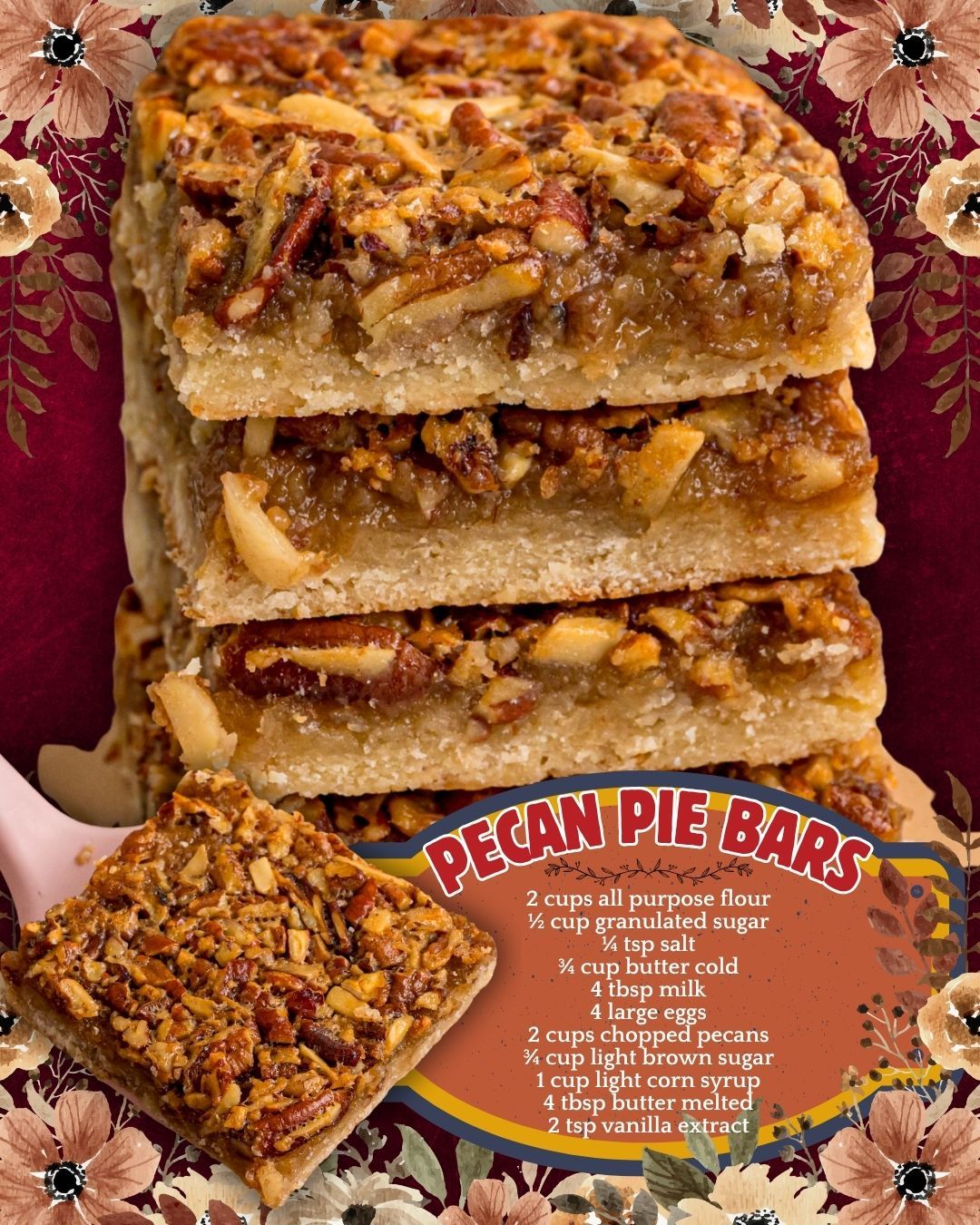
The very first time I made PECAN PIE BARS, my kitchen smelled like buttery shortbread and caramelized pecans, and I knew instantly I was in trouble—the good kind. I remember sliding the pan into the oven and feeling that wave of warm, nutty sweetness rise up, reminding me of holiday dinners and family gatherings. When the bars cooled and I cut into them, the filling was gooey, glossy, and thick, just like a perfect pecan pie but so much easier. Every time I bake them now, I still get that same little burst of excitement because I know exactly how amazing they’re going to taste.
Why You’ll Love This Recipe
You’ll love this recipe because it delivers all the flavor and texture of classic pecan pie without the hassle of rolling dough or worrying about a soggy bottom—these bars slice beautifully, travel easily, and make you feel like a baking hero with almost no effort.
Ingredients
For the Crust
- 1 cup unsalted butter, softened
- ⅔ cup granulated sugar
- 2 cups all-purpose flour
- ¼ teaspoon salt
For the Filling
- 3 large eggs
- 1 cup light corn syrup
- 1 cup granulated sugar
- 2 tablespoons unsalted butter, melted
- 1 teaspoon vanilla extract
- 2 cups chopped pecans
One thing I love about these ingredients is how simple they are. The crust uses classic shortbread components—butter, sugar, flour, and salt—and becomes the perfect sturdy base for the gooey filling. I strongly recommend using unsalted butter because it gives you more control over the flavor; salted butter can make the crust taste sharper than intended. For the filling, light corn syrup is essential for that glossy, chewy consistency, though you can substitute half with maple syrup for deeper flavor. Fresh pecans make a big difference too—old or stale pecans lose their richness and crunch, so always check the freshness before using them.
Equipment Needed
- 9×13-inch baking pan
- Parchment paper
- Mixing bowls
- Hand mixer or whisk
- Rubber spatula
- Measuring cups and spoons
- Cooling rack
A 9×13-inch baking pan is ideal because these bars need enough surface area to bake evenly without the filling pooling too thickly. Parchment paper is a lifesaver—it lets you lift the entire slab out of the pan, which makes slicing much easier and cleaner. A hand mixer helps cream the crust effortlessly, although a sturdy whisk can do the job if your butter is really soft. A rubber spatula makes spreading both the crust and the filling smoother, and measuring tools keep everything accurate. I also recommend cooling these on a rack so the bars firm up evenly from the bottom to the top.
Step-by-Step Instructions
Whenever I make pecan pie bars, I start with the crust because it sets the foundation for everything. I cream the butter and sugar together until they’re pale and fluffy, then add the flour and salt. The dough comes together quickly and feels soft and sandy in my hands. Pressing it into the pan is surprisingly satisfying—you want it even but not compacted too tightly or the crust can harden. As it bakes, the kitchen fills with that incredible buttery shortbread scent that makes you want to peek inside the oven even though you don’t need to.
While the crust bakes, I whisk the eggs, corn syrup, sugar, melted butter, and vanilla together. The mixture becomes glossy and smooth, and I always pause to admire how silky it looks before folding in the pecans. I’ve learned to chop the pecans by hand instead of buying pre-chopped ones; pre-chopped pieces are often too fine or dusty, and that affects the final texture. Once the filling is ready, I let it sit for a minute to reduce bubbles.
When the crust comes out of the oven, it’s lightly golden and smells heavenly. This is where timing matters—I’ve learned the hard way not to pour the filling onto a blazing hot crust. Giving it just five minutes to settle prevents the egg mixture from overcooking too quickly on the bottom. Then I pour the filling evenly over the crust, using a spatula to nudge the pecans into a uniform layer. The moment the pan goes back into the oven, the mixture starts bubbling gently, and you can tell the magic is happening.(See the next page below to continue…)