
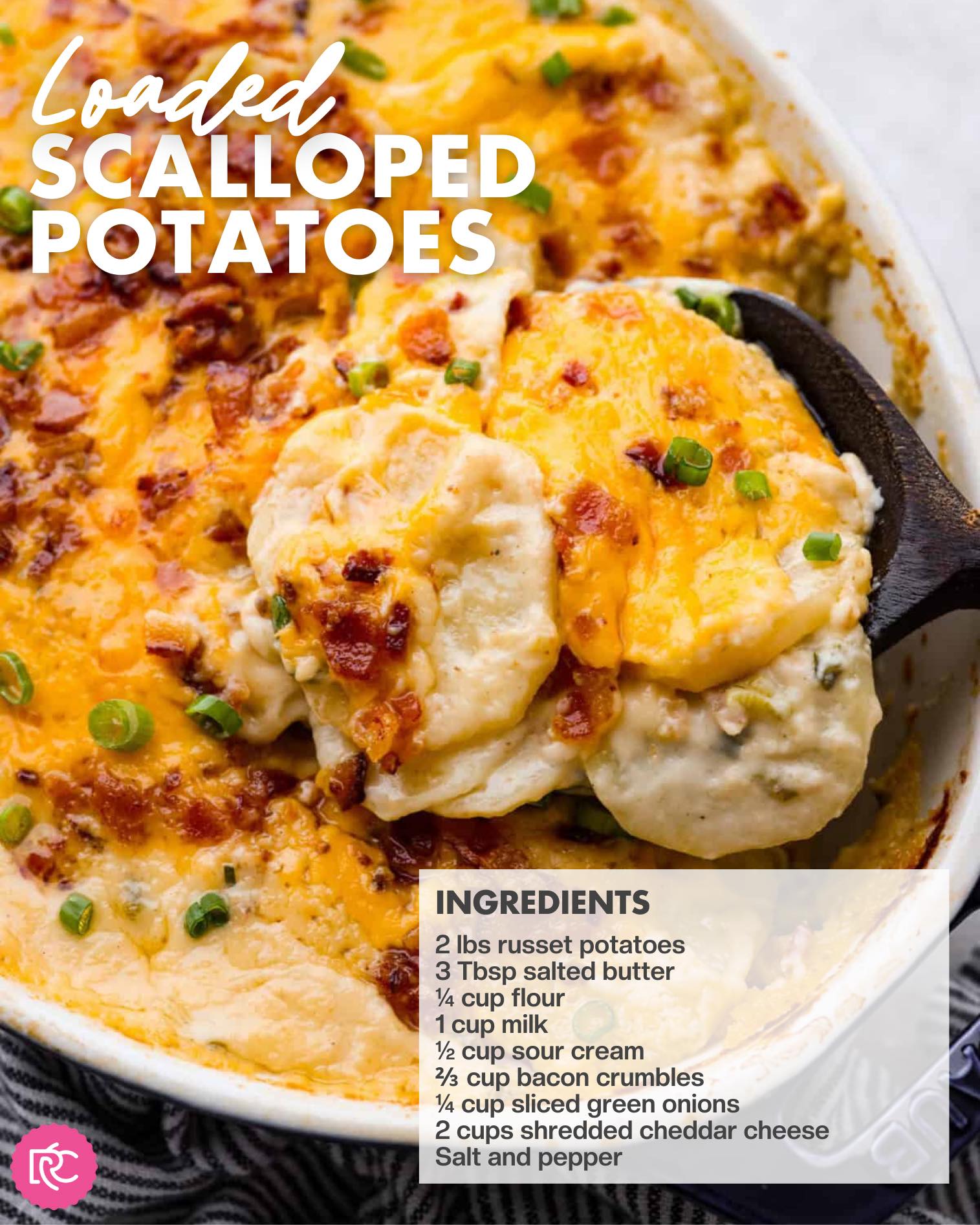
Loaded Scalloped Potatoes are ultra‑creamy, layered potatoes baked in a rich cheese sauce and “loaded” with classic baked potato toppings like crispy bacon, cheddar, and chives. They take traditional scalloped potatoes and turn them into a decadent, fully loaded side dish that can easily steal the spotlight at holidays, Sunday dinners, or potlucks.
What are Loaded Scalloped Potatoes?
Classic scalloped potatoes are thinly sliced potatoes baked in a creamy sauce, often with cheese, until the potatoes are tender and the top is golden and bubbly. Loaded scalloped potatoes keep that base but add layers of crisp bacon, extra cheese, and usually green onions or chives, echoing a loaded baked potato in casserole form. The potatoes are sliced thin—typically about ⅛–¼ inch—so they cook evenly and soak up the sauce, which is built from a roux (butter and flour) whisked with milk, cream, and broth, then enriched with cheese.
Most recipes rely on either Yukon Gold or russet potatoes layered in a baking dish with cheese and bacon, over which the hot cheese sauce is poured before baking. Some versions stir sour cream or Greek yogurt into the sauce for a tangy, loaded‑baked‑potato flavor, while others add ranch seasoning, caramelized onions, or a touch of nutmeg for depth. The bake time is typically around an hour covered plus additional time uncovered to brown the top, resulting in meltingly tender potatoes with a crisp, cheesy crust.
Equipment
- 9×13‑inch baking dish (or similar 3‑quart casserole) for layering and baking the potatoes
- Large saucepan to make the roux and cheese sauce
- Large skillet for cooking bacon (and optionally caramelizing onions)
- Mandoline slicer or sharp chef’s knife for slicing potatoes evenly
- Cutting board for potatoes, onions, and herbs
- Mixing bowls for holding sliced potatoes, cheese, and bacon
- Whisk for making a smooth roux and sauce
- Aluminum foil to cover the baking dish during the first phase of baking
Ingredients
Loaded scalloped potato recipes are all about layering comfort ingredients: potatoes, a creamy cheese sauce, bacon, and toppings. Exact amounts vary, but recipes look very similar across sources.
Base potatoes and sauce:
- 3 pounds potatoes, thinly sliced (Yukon Gold or russet)
- 4–6 tablespoons unsalted butter
- 3–4 tablespoons all‑purpose flour
- 2–3 cups whole milk and/or heavy cream (some use a mix of milk and cream or milk and broth)
- 1–2 cups low‑sodium chicken broth (optional, used in many sauces to add flavor without being too heavy)
- 2–3 cloves garlic, minced
- ½–1 teaspoon kosher salt, plus more to taste
- ½ teaspoon black pepper
- Pinch of ground nutmeg (optional, classic in cream sauces)
Cheese, bacon, and “loaded” extras:
- 2–3 cups shredded cheese, often sharp cheddar plus Gruyère or mozzarella
- 6–10 slices bacon, cooked crisp and crumbled (about ½–1 cup)
- ¼–½ cup chopped green onions or chives for garnish
- ½–1 cup sour cream or Greek yogurt (optional, stirred into sauce or poured over layers)
- 1–2 teaspoons ranch seasoning or dried herbs (optional, for bacon‑ranch variations)
- 1–2 medium onions, thinly sliced and caramelized (optional, for added sweetness and depth)
These ingredients create a casserole that serves roughly 8–10 people as a side, depending on portion size and what else is on the table.
Step-by-step instructions
Loaded scalloped potatoes are built in layers, and the process falls into three parts: cook the bacon (and onions if using), make the cheese sauce, then assemble and bake. First, the oven is preheated, typically to 350–400°F (175–200°C), and the baking dish is greased or sprayed with nonstick spray. This ensures the potatoes don’t stick and the sauce doesn’t burn where it meets the pan.
Bacon usually comes first because it needs to be cooked and crumbled before assembly. In a large skillet over medium heat, bacon slices are cooked until crisp, then drained on paper towels and crumbled once cool enough to handle. Some recipes sauté thinly sliced onions in a bit of bacon fat or olive oil until golden and caramelized, which adds a sweet, savory layer reminiscent of French onion soup. The bacon fat left in the skillet can either be reserved for another use or partially used to build the sauce for extra flavor, though many recipes start the sauce in a clean saucepan with butter to control richness.
Next, the cheese sauce is made. In a large saucepan, butter is melted over medium heat, and minced garlic is briefly sautéed until fragrant. Flour is then sprinkled over the butter and garlic and whisked to form a roux, cooking for 1–2 minutes to eliminate raw flour taste. Warm milk, cream, and/or broth are slowly added while whisking continuously to avoid lumps. The mixture is cooked, stirring, until it thickens into a smooth sauce that coats the back of a spoon.
Once the sauce has thickened, it is seasoned with salt, pepper, and optional nutmeg or herbs. The pan is removed from the heat and cheese is stirred in, typically about half to two‑thirds of the total shredded cheese, until melted and smooth. In some loaded versions, sour cream or Greek yogurt is folded into the sauce or whisked with the milk before adding, which adds tang and extra creaminess, very similar to a loaded baked potato topping. If ranch seasoning is used, it is usually whisked into the sauce at this point so its flavor is evenly distributed.
While the sauce is working, potatoes are prepped. Potatoes are washed, peeled (or left with skins on for a rustic look), and sliced into ⅛–¼‑inch rounds using a mandoline or a sharp knife. Uniform thickness is crucial: thin slices cook faster and more evenly, ensuring the potatoes become tender during bake time.
Assembly happens in layers in the prepared baking dish. Some recipes spread a thin layer of cheese sauce on the bottom of the dish first to prevent sticking. A layer of potato slices is arranged in slightly overlapping rows, covering the bottom. A portion of the cheese sauce is poured over the potatoes, then a sprinkle of shredded cheese and a handful of crumbled bacon are scattered on top. If caramelized onions are used, they’re often layered in with the bacon and cheese.
This layering is repeated—potatoes, sauce, cheese, bacon—until all ingredients are used, finishing with a layer of sauce and a generous blanket of cheese on top, plus some bacon reserved for the final layer. Freshly ground pepper can be added between layers, and some recipes sprinkle a bit of cheese between every potato layer to ensure cheese in every bite. The dish is then covered tightly with foil, which traps steam and helps the potatoes cook through.
Baking typically happens in two stages. The covered casserole bakes for about 45–60 minutes, depending on slice thickness and oven temperature, until the potatoes are mostly tender when pierced with a knife. The foil is then removed and the dish returns to the oven for another 20–30 minutes, allowing the top to brown, the cheese to bubble, and any excess moisture to evaporate, concentrating the flavors. Some recipes finish with a brief broil to crisp the top and edges to a deep golden brown—this needs careful watching to avoid burning.
Once done, the casserole is taken out of the oven and allowed to rest for 10–15 minutes. This resting time is important: it lets the cheese sauce thicken and set slightly so the potatoes hold together when scooped or sliced. Just before serving, chopped green onions or chives and any remaining bacon are sprinkled over the top.
Texture and flavor tips
Loaded scalloped potatoes live or die on texture: the potatoes should be fully tender and creamy, not crunchy or grainy, and the sauce should be rich and smooth, not greasy or separated. Using starchy potatoes like russets gives the creamiest texture because they release starch that helps thicken the sauce, but Yukon Golds hold their shape better and have a naturally buttery flavor. Many recipes choose Yukon Golds for an ideal balance of structure and creaminess.
Even, thin slicing is crucial for consistent cooking. Thicker slices or uneven cuts can leave some pieces underdone while others fall apart. A mandoline set to about ⅛ inch is a popular tool to ensure every slice matches. If potatoes are very starchy or you worry about browning, some cooks briefly soak slices in cold water and pat them dry before layering, though many loaded recipes skip this step since the extra starch helps thicken the sauce.
The cheese sauce benefits from careful roux technique and gradual liquid addition. Cooking the flour in butter for at least a minute removes raw flour taste; slowly whisking in warm milk and broth prevents lumps and helps the sauce thicken smoothly. Adding cheese off the heat or over very low heat keeps it from becoming grainy or separating—especially when using sharp cheddar, which can break if boiled.
Flavor‑wise, bacon and a mix of cheeses do a lot of heavy lifting. Using a combination like sharp cheddar plus something meltier and nutty (Gruyère, mozzarella, or a cheese blend) gives both flavor and stretch. Seasoning each potato layer lightly with salt and pepper in addition to seasoning the sauce ensures the casserole isn’t bland in the center. Tang from sour cream or Greek yogurt brightens the richness and makes the dish feel more like a loaded baked potato. Fresh chives or green onions at the end cut through the heaviness and add fresh, oniony bite.
Variations and add-ins
Loaded scalloped potatoes are a great base for flavor variations. A bacon‑ranch version uses ranch seasoning or a homemade blend (dill, parsley, chives, garlic powder, onion powder) in the sauce and may add extra sour cream, amplifying that classic bacon‑ranch profile. Some recipes add diced ham, cooked chicken, or sausage to turn the casserole into a one‑dish main instead of a side.
Caramelized onions are another popular add‑in; slowly cooking thin onions until deep golden and sweet, then layering them between the potatoes, enriches the dish and gives a French‑onion‑meets‑loaded‑potato vibe. A spicy twist can come from adding thinly sliced jalapeños or a sprinkle of cayenne or chipotle powder to the sauce. For extra cheesiness, some cooks add cream cheese into the sauce, which makes it thicker and more indulgent.
Lighter versions sometimes cut back on heavy cream and use more milk or even evaporated milk, with Greek yogurt for creaminess and tang. Others incorporate cauliflower slices or florets with the potatoes to reduce carbs while preserving the overall feel of the dish. Gluten‑free adaptations swap the flour for a gluten‑free thickener like cornstarch or a 1:1 gluten‑free flour blend, following the same roux method.
Make-ahead, storage, and serving ideas
Loaded scalloped potatoes are well‑suited to holidays and gatherings because they can be assembled ahead and baked later. Many sources suggest fully assembling the casserole, covering it tightly, and refrigerating for up to 24 hours before baking; you may need to add a little extra bake time if starting from cold. Another strategy is to par‑bake the dish covered until the potatoes are just tender, then cool and refrigerate, finishing uncovered the next day to brown and heat through.
Leftovers reheat well and often taste even better as the flavors meld. The casserole can be cooled, covered, and refrigerated for 3–4 days. Individual portions reheat nicely in the microwave, while larger portions can be warmed in the oven at a moderate temperature (around 325°F/165°C) until hot, covered loosely with foil to prevent over‑browning. Some people freeze scalloped potato casseroles, although the texture of potatoes can become slightly softer after freezing; wrapping tightly and reheating gently helps maintain quality.
On the table, loaded scalloped potatoes pair naturally with roasted meats (ham, turkey, roast beef), grilled steaks, chicken, and simple veggie sides. They’re a natural fit for holiday menus like Thanksgiving, Christmas, and Easter, where they can stand in for or accompany mashed potatoes. Because they’re so rich, many cooks keep other sides lighter—green beans, salads, or roasted vegetables—to balance out the plate.
As a recipe style, Loaded Scalloped Potatoes embody modern comfort food: familiar, indulgent ingredients, make‑ahead friendly, visually impressive layers, and all the flavors of a loaded baked potato baked into a creamy, cheesy casserole that consistently draws recipe requests.