
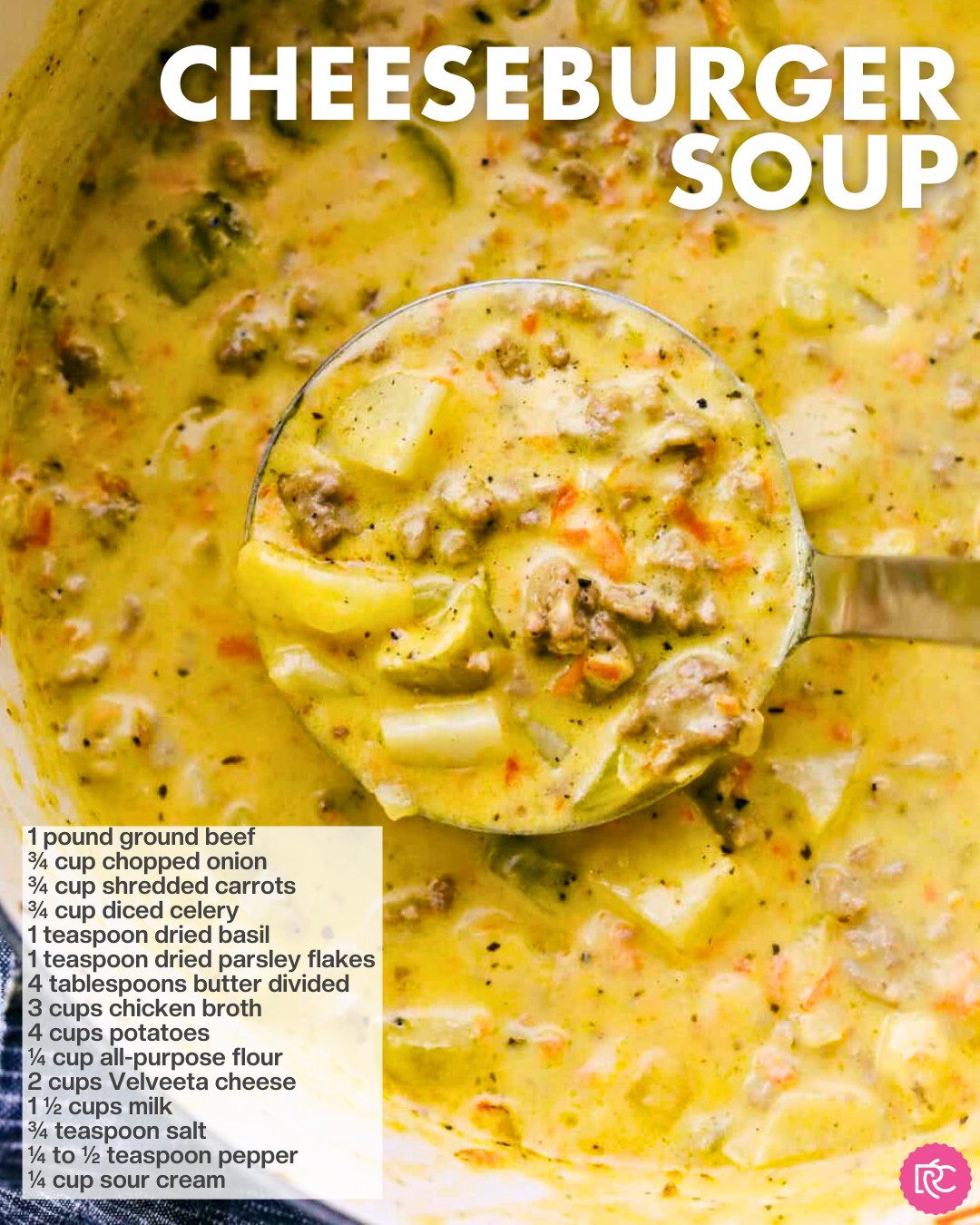
Cheeseburger soup is a thick, creamy, potato-and-ground-beef soup that tastes like a classic cheeseburger in a bowl—loaded with seasoned beef, tender potatoes, carrots, celery, and plenty of melted cheese. It’s rich, hearty comfort food that’s perfect for cold nights, game day, or whenever you want all the flavors of a cheeseburger in a cozy, spoonable form.
What is cheeseburger soup?
Cheeseburger soup takes everything you expect on a burger—ground beef, cheese, onions, pickles/“fixings,” and sometimes even bacon and fries—and builds it into a creamy, chowder-like soup. Most recipes start with browned ground beef, sautéed onion, carrot, and celery (the “soup trio”), and diced potatoes simmered in broth, then finished with a creamy cheese sauce or roux-thickened base.
The broth is often enriched with milk or half-and-half and thickened either with a butter-and-flour roux or slurry, then loaded with cheddar or processed cheese like Velveeta for a smooth, velvety texture. Sour cream or heavy cream stirred in at the end adds tang and extra richness that mimic the flavor of burger sauce.
Equipment
- Large heavy-bottomed pot or Dutch oven (5–6 quart) for browning beef and simmering the soup.
- Large skillet (optional) if you prefer to brown the beef separately.
- Wooden spoon or spatula for breaking up and stirring the ground beef.
- Cutting board and sharp knife for dicing potatoes and chopping onions, carrots, and celery.
- Measuring cups and spoons for liquids, flour, seasoning, and cheese.
- Small saucepan or skillet for making a separate roux in some recipes.
- Ladle for serving the soup.
- Optional slow cooker if you want to transfer the browned beef and veggies and let it simmer hands-off.
Ingredients
Most cheeseburger soup recipes share the same core: ground beef, potatoes, onion, carrot, celery, broth, dairy, and cheese.
Base ingredients (Princess Pinky Girl–style potato cheeseburger soup):
- 1 lb ground beef.
- ½ cup chopped onion.
- ½ cup shredded carrot.
- ½ cup diced celery.
- 3 cups chicken broth or stock.
- 3–4 cups potatoes, diced small (often Yukon gold or russet).
- 4 tablespoons butter, divided.
- ¼–⅓ cup all-purpose flour for the roux or thickener.
- 2–3 cups milk or half-and-half (often whole milk; some use a milk/cream combo).
- 2–3 cups shredded cheddar cheese or 16 oz processed cheese (Velveeta), cubed.
- ½–1 cup sour cream or heavy cream for extra richness at the end.
Seasonings:
- 1 teaspoon salt (plus more to taste).
- ½ teaspoon black pepper.
- ½ teaspoon garlic salt or garlic powder.
- 1 teaspoon dried basil and/or parsley in some versions.
- 1 teaspoon mustard (yellow or Dijon) or a splash of Worcestershire for burger-like depth (optional).
- ½ teaspoon paprika or onion powder (optional).
Optional toppings and “burger fixings”:
- Shredded cheddar cheese.
- Cooked crumbled bacon.
- Diced pickles or pickle relish (for true cheeseburger flavor).
- Green onions or chives.
- Sesame seed buns or toasted hamburger buns on the side, or croutons.
Step-by-step instructions
Cheeseburger soup is usually made on the stovetop in three main phases: cook the beef and veggies, simmer with potatoes and broth, then thicken and add cheese and dairy.
First, the ground beef is browned. In a large pot over medium-high heat, ground beef is cooked, breaking it up with a spoon until no longer pink; excess fat is drained off. Some recipes season the beef at this stage with salt, pepper, garlic powder, or burger-style seasoning. The browned beef is then removed to a plate and set aside while the vegetables cook.
In the same pot, butter or oil is added, and onion, carrots, and celery are sautéed until softened, about 3–5 minutes. Garlic, if used, is stirred in and cooked until fragrant (about 30 seconds). Dried herbs like basil and parsley may be added at this point so they bloom in the fat and coat the vegetables.
Next, potatoes and broth are added. Chicken broth (or sometimes beef broth) is poured into the pot along with the diced potatoes and the cooked ground beef.
The mixture is brought to a boil, then reduced to a simmer, covered, and cooked until the potatoes are tender—usually about 10–15 minutes, stirring occasionally. Some recipes advise gently breaking up a few potatoes with a spoon or masher to help thicken the soup naturally.
While the potatoes simmer, a roux or thickening mixture is prepared. In a separate small skillet or saucepan, the remaining butter is melted and flour is stirred in, cooking for 1–5 minutes until bubbly and lightly golden to remove raw flour taste. This roux is then whisked into the simmering soup, which is brought back to a gentle boil and cooked for a couple of minutes until slightly thickened. Other recipes skip a separate pan and simply sprinkle flour directly over the sautéed vegetables, cooking briefly before adding broth and milk.
After thickening, dairy and cheese are added. Milk, half-and-half, or cream is poured into the pot and stirred in. Shredded cheddar or cubed processed cheese is added and stirred over low heat until fully melted into the soup, creating a rich, cheesy base. The soup should never be boiled hard after the cheese goes in; gentle heat prevents curdling or graininess.
Finally, sour cream or heavy cream is stirred in off the heat for added tang and richness. Seasonings are adjusted—salt, pepper, garlic salt, mustard, or Worcestershire can be tweaked to taste so the soup tastes like a well-seasoned cheeseburger.
The finished cheeseburger soup is ladled into bowls and topped with shredded cheese, crumbled bacon, chopped pickles, green onions, or even a small dollop of sour cream. It’s often served with crusty bread, rolls, or toasted hamburger buns for dunking.
Texture and flavor tips
A great cheeseburger soup should be thick, creamy, and hearty, not thin or greasy. Using a lean but not ultra-lean ground beef (like 90–95%) helps reduce excess fat while still giving beefy flavor. Draining off rendered fat after browning the beef keeps the soup from becoming oily.
Dicing potatoes into small, evenly sized cubes (¼–½ inch) helps them cook quickly and evenly and release some starch to naturally thicken the soup. Yukon gold or other waxy potatoes hold their shape better than russets, which can fall apart more easily—but russets contribute extra starch, which can be useful for thickness.
For the cheese, freshly shredded cheddar often melts more smoothly than pre-shredded, which can contain anti-caking agents. Many family-style recipes use Velveeta or similar processed cheese because it melts into a very smooth, creamy base without clumping. Keeping the heat low when adding cheese and dairy and avoiding boiling after they go in is key to preventing separation.
Small “burger flavor” touches like mustard, Worcestershire sauce, paprika, and pickles can make the soup taste more convincingly like a cheeseburger. A spoonful of sour cream at the end adds subtle tang that mimics burger sauce or mayo.
Variations and add-ins
Cheeseburger soup is highly adaptable. One of the most common variations is healthier or “extra veggie” versions, which increase the amount and variety of vegetables—adding more carrots, celery, onions, and even cauliflower rice or extra greens while reducing cheese or cream slightly. Some recipes use lean ground turkey instead of beef to lighten things up.
Bacon cheeseburger soup variations include bacon cooked in the pot first, with the fat used to sauté the vegetables and build a roux, then crumbled bacon stirred in or used as a garnish. Dill pickles or pickle relish stirred into the soup at the end or used as a topping give a classic burger tang.
For a “loaded” cheeseburger soup, toppings like shredded lettuce, diced tomatoes, crumbled bacon, and extra cheese can be added to each bowl, similar to loading up a burger. Some recipes add ketchup and mustard directly to the broth for a fast-food-style flavor profile.
Low-carb adaptations reduce or omit potatoes and sometimes use cauliflower florets or riced cauliflower as the main vegetable base, along with a creamier broth. Gluten-free versions use cornstarch, arrowroot, or another starch instead of a wheat flour roux.
There are also slow-cooker and Instant Pot versions. In slow-cooker recipes, ground beef is browned first, then added to the crock with potatoes, veggies, broth, and seasonings to cook for several hours before cheese and dairy are stirred in near the end. Instant Pot methods brown the beef and sauté veggies using the sauté function, then pressure-cook the potatoes and broth for a short time before switching to sauté again to add cheese and cream.
Make-ahead, storage, and serving ideas
Cheeseburger soup reheats well, which makes it a good meal-prep or make-ahead option. Many recipes suggest that the flavors deepen after a day in the refrigerator. To make ahead, the soup can be cooked completely, cooled, and stored in airtight containers in the fridge for 3–4 days. Gentle reheating over low to medium heat while stirring helps keep the cheese from separating; if it thickens too much on standing, a splash of milk or broth can loosen it.
Freezing is possible but can be a bit trickier because dairy-based soups sometimes change texture. Many cooks recommend freezing before adding sour cream or extra cream, then adding those after thawing and reheating. Thaw in the refrigerator and reheat gently, stirring often.
For serving, cheeseburger soup is hearty enough to be the main course. Serving it with crusty bread, garlic toast, or toasted hamburger buns for dipping emphasizes the “burger” theme. A simple side salad or roasted vegetables can lighten the plate. On game day, it fits nicely alongside sliders, nachos, or wings as the “comfort food in a bowl” option.
As a recipe style, cheeseburger soup is exactly what modern comfort-food fans love: nostalgic flavors, everyday ingredients, one-pot cooking, tons of customization options, and a thick, cheesy, stick-to-your-ribs texture that feels like a hug in a bowl.