
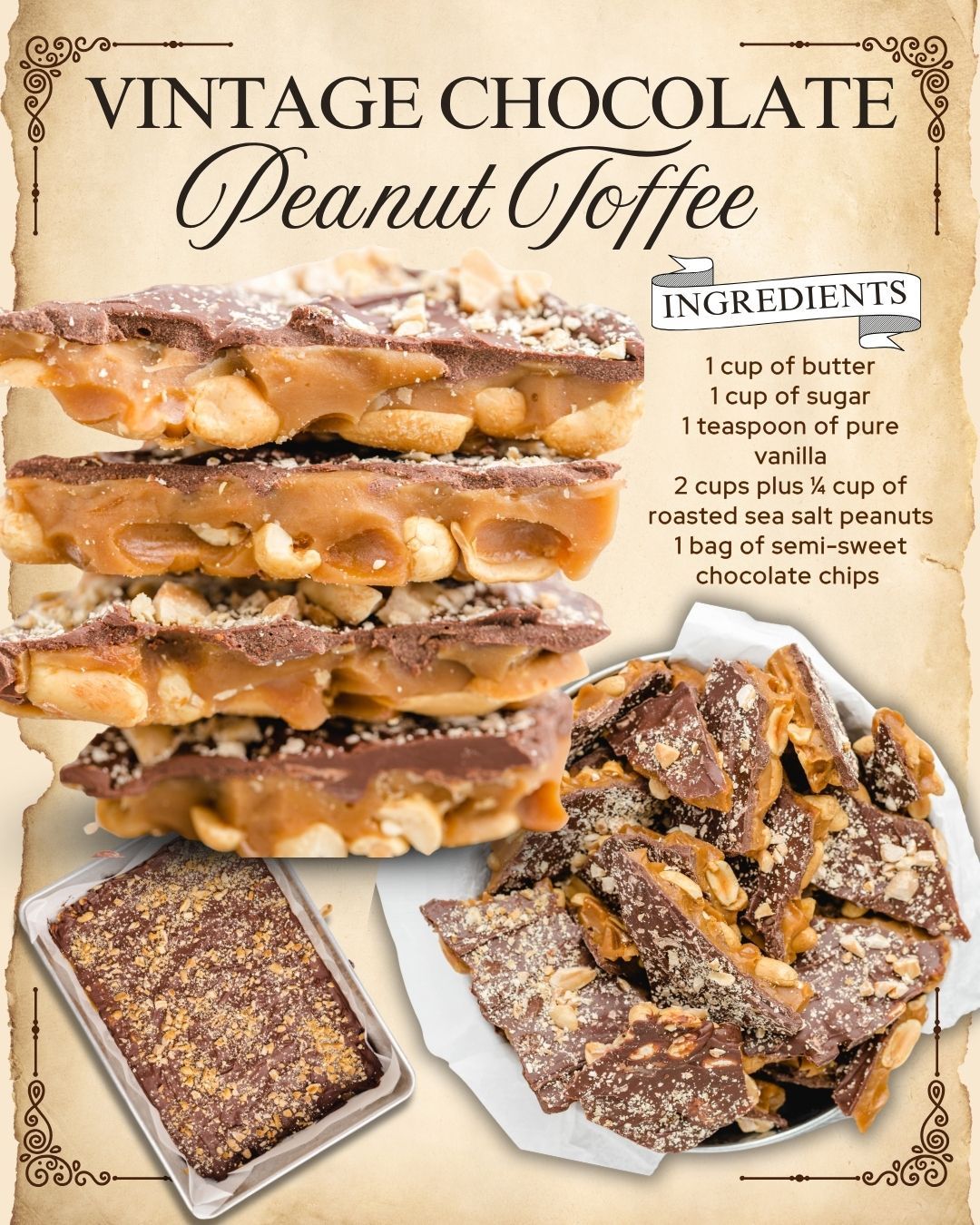
This style of Chocolate Peanut Toffee starts with a base of peanuts instead of crackers, so the nuts are fully embedded in the toffee layer and every piece is packed with crunch. Roasted, salted peanuts are scattered over the bottom of a parchment-lined pan, then a simple mixture of butter, sugar, and vanilla is simmered on the stove until it thickens, darkens, and turns a deep caramel color. That hot toffee is poured over the peanuts and spread into an even layer; as it cools slightly, semi-sweet chocolate chips are sprinkled over the surface, allowed to melt from the residual heat, and then spread into a glossy chocolate topping.
Once the chocolate is smooth, more chopped peanuts are tossed over the top for extra texture and a visual cue of what’s inside. After the pan cools to room temperature and chills in the fridge until firm, the slab is broken into irregular pieces. The result is an addictive combination of buttery caramel crunch, nutty saltiness, and a sweet chocolate finish that feels like a cross between peanut brittle, toffee bark, and a candy bar.
Equipment
- 9×13-inch baking pan or similar size dish to form and chill the toffee slab
- Parchment paper to line the pan and make it easy to lift and break the candy
- Medium saucepan (at least 2–3 quart) for cooking the butter and sugar mixture
- Wooden spoon or heatproof spatula for stirring the toffee as it simmers
- Measuring cups and spoons for butter, sugar, vanilla, peanuts, and chocolate chips
- Offset spatula or regular spatula for spreading hot toffee and melted chocolate
- Sharp knife (optional) if you prefer cutting squares instead of breaking pieces
- Refrigerator space to chill and fully set the candy
Ingredients
Base chocolate peanut toffee (no-cracker version):
- 1 cup (226 g) unsalted butter
- 1 cup (200 g) granulated sugar
- 1 teaspoon pure vanilla extract
- 2 cups roasted sea salt peanuts, plus ¼ cup chopped peanuts reserved for topping (total 2¼ cups)
- 1 bag (about 12 oz / 340 g) semi-sweet chocolate chips
Optional variations:
- Pinch of salt in the toffee mixture if using unsalted peanuts
- Milk chocolate chips instead of semi-sweet for a sweeter finish
- Dark chocolate chips for a more intense, less sweet candy
A related “cracker toffee” or “Christmas crack” style uses crackers as a base instead of just peanuts, but keeps the same butter–sugar toffee and chocolate-on-top idea. Saltine or matzo crackers are lined in the pan, toffee is poured over, then chocolate and peanut butter are added before chilling and breaking into bark. That version is similar in taste but leans more toward bark-style candy than pure peanut toffee.
Instructions and steps
To make Chocolate Peanut Toffee, the pan is prepared first so it’s ready as soon as the toffee reaches the right stage. A 9×13-inch pan is lined with parchment paper, allowing some overhang on the long sides to act as handles.
Two cups of roasted sea salt peanuts are spread evenly across the bottom of the lined pan, forming a single layer that will be held together by the toffee later. If any peanuts are very large, they can be lightly crushed so the surface is more even.
Next comes the toffee. In a medium saucepan, butter, granulated sugar, and vanilla are combined over medium heat. The mixture is stirred as the butter melts and the sugar begins to dissolve, and then it is brought to a gentle simmer.
At this point, stirring is reduced to occasional, steady stirring while the mixture bubbles; recipes emphasize watching carefully so the sugar doesn’t scorch around the edges. Over 7–8 minutes of simmering, the mixture gradually thickens, turns a deeper caramel color, and becomes more cohesive, changing from separated butter-and-sugar to a smooth, glossy toffee that flows from the spoon in a continuous ribbon.
Some recipes rely purely on visual cues like “deep caramel color” and “ribbon from the spoon,” while others suggest using a candy thermometer and cooking the mixture to hard crack stage (around 300°F / 150°C) for a firmer snap. In this simple version, a thermometer isn’t strictly required; careful monitoring of color and texture is enough. Once the toffee reaches a rich caramel hue and a thicker consistency, the pan is removed from the heat.
Immediately, the hot toffee is poured over the peanuts in the prepared pan. Using an offset spatula or heatproof spatula, it is spread quickly and carefully so it covers the peanuts from edge to edge, pressing the toffee down slightly to ensure it flows between the peanuts and anchors them in place. The mixture begins to firm fairly quickly as it cools, so this spreading step needs to happen right away for an even layer.
While the toffee is still hot, a full bag of semi-sweet chocolate chips is poured evenly over the surface. The pan is left undisturbed for 2–3 minutes, allowing the heat from the toffee to soften and melt the chocolate chips. After that short rest, the chocolate is spread into a smooth, even layer with an offset spatula, covering the toffee entirely.
The remaining ¼ cup of peanuts is chopped lightly and sprinkled over the melted chocolate, pressing them very gently so they adhere. This top layer adds extra crunch and a decorative finish. At this point, optional toppings such as a light sprinkle of flaky sea salt can be added to enhance the sweet–salty balance.
The pan is left at room temperature until it cools completely, which can take about 2 hours depending on the environment. Once it reaches room temperature, the pan is transferred to the refrigerator to fully firm up the toffee and chocolate, making it easier to break into clean, crisp pieces.
After chilling, the parchment is lifted out, the slab is placed on a cutting board, and the toffee is either broken by hand into irregular shards or cut with a sharp knife into squares or bars.
The finished Chocolate Peanut Toffee is stored in an airtight container, with layers separated by parchment if stacked. It keeps well at cool room temperature or in the refrigerator for at least a week, staying crunchy and flavorful.
Tips for success
Because toffee involves cooking sugar, a few details make a big difference in texture. Using real butter instead of margarine helps the toffee set properly and deliver a rich, clean flavor; several sources specifically call for “real butter” for best results.
Maintaining a steady medium heat during cooking avoids scorching the sugar, and resisting the urge to crank the heat higher helps prevent separation or burning. If the mixture appears slightly separated while it cooks, gentle, occasional stirring and continued simmering usually bring it back together as the water cooks off and the sugar caramelizes.
For the peanuts, roasted sea salt peanuts provide built-in seasoning and a deeper nutty flavor than raw nuts. If using unsalted peanuts, adding a pinch of salt to the toffee mixture or sprinkling flaky salt over the chocolate layer can recreate that sweet–salty contrast.
Choosing good-quality chocolate chips improves the final taste; semi-sweet is the standard, but dark chocolate chips can cut sweetness, and milk chocolate chips make the candy taste more like a candy bar.
Letting the pan cool fully before chilling prevents condensation from forming under the parchment, which can make the bottom slightly tacky. When breaking the toffee, small pieces are usually better than very large ones—they’re easier to eat, pack into gift tins, and share on cookie trays.
Variations
Chocolate Peanut Toffee is very adaptable, and small changes can give you different textures and flavor profiles. One common shift is to swap some or all of the peanuts for other nuts; almonds, cashews, pecans, or mixed nuts all work well with the butter toffee and chocolate.
A mixed-nut version feels like an upscale toffee bark, while all-cashew or all-pecan versions lean more toward classic nut toffee.
For a “cracker toffee” spin, saltine crackers, graham crackers, or matzo are lined in the pan under the toffee instead of just peanuts. In those recipes, the butter and sugar mixture is poured over the cracker layer, baked briefly to set, then topped with chocolate and sometimes peanut butter before chilling and breaking.
Adding a drizzle of melted peanut butter swirled into the hot chocolate layer creates a peanut butter chocolate saltine toffee that has similar flavors but more of a bark-like, layered structure.
Some dairy-free or allergy-minded versions substitute plant-based butter and dairy-free chocolate, and use different nuts or seeds for those avoiding peanuts. Others fold toffee bits or chopped peanut butter cups into the chocolate layer for extra richness.
Presentation-wise, holiday sprinkles, crushed candy canes, or colored sugar can be sprinkled over the melted chocolate to turn the toffee into a more festive bark for Christmas or other celebrations.
Regardless of the specific tweaks, the structure stays the same: peanuts (or other nuts) in the pan, a simple cooked butter–sugar toffee poured over, a layer of melted chocolate on top, and a chill before breaking into crunchy, chocolate-covered pieces of Chocolate Peanut Toffee.