
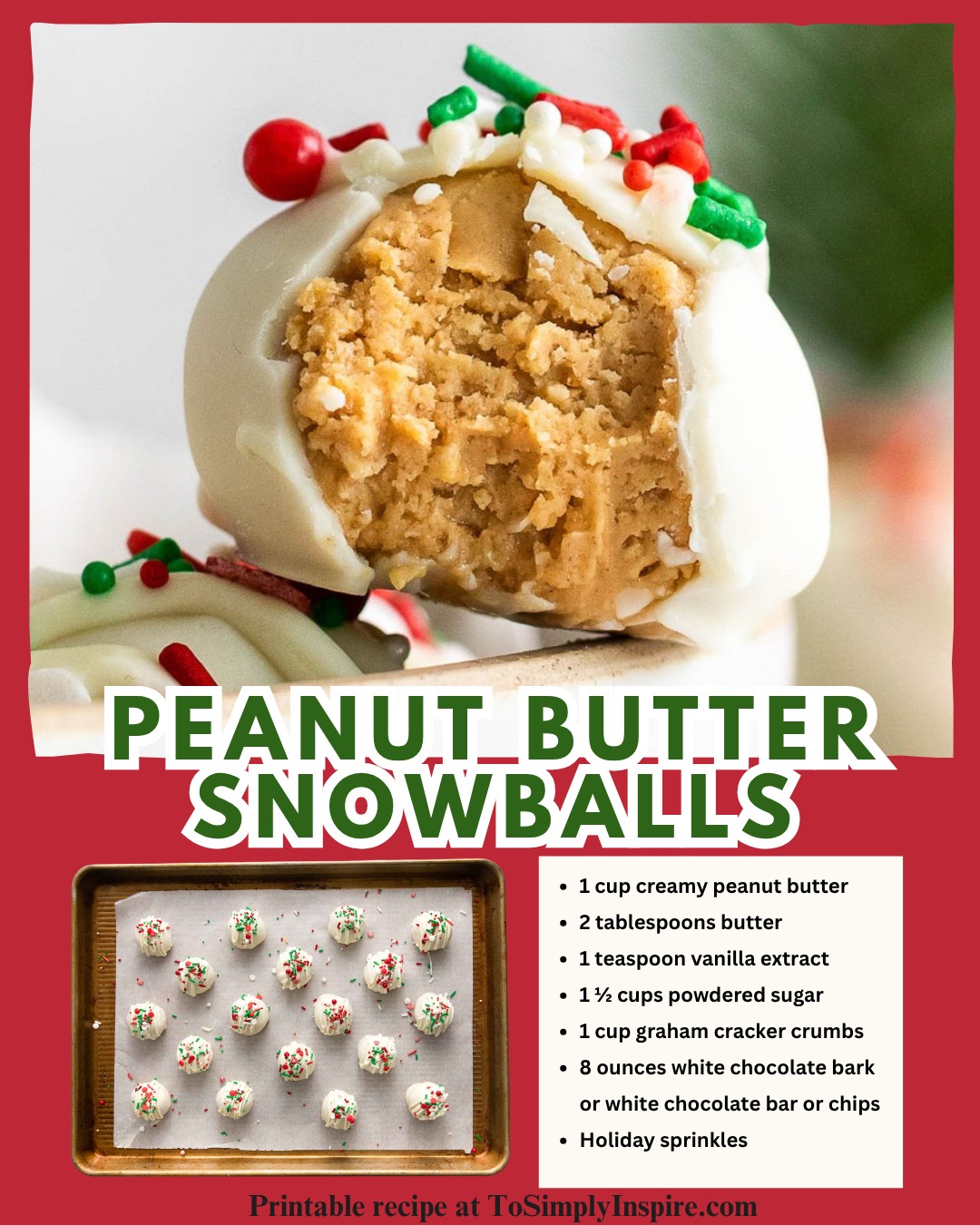
At their core, Peanut Butter Snowballs are all about turning a simple peanut butter mixture into a truffle-style candy. Creamy peanut butter is combined with powdered sugar and a bit of butter until it becomes a thick, pliable dough that you can roll into balls without it sticking to your hands. Those balls are chilled until firm and then dipped in melted white chocolate or vanilla candy coating, which hardens into a thin shell that looks like snow and adds a sweet, creamy snap around the peanut butter center.
The process is fast and forgiving—no tempering chocolate, no boiling sugar, and no baking. The mixture itself uses everyday ingredients you likely already have on hand, and the finished candies stay fresh for days in the fridge or freezer. Decorative finishes like sanding sugar, coconut, or sprinkles let you match them to any winter or holiday theme, but the flavor is classic: peanut butter and white chocolate in an easy, poppable bite.
Equipment
- Large mixing bowl for combining peanut butter, powdered sugar, and butter
- Hand mixer or sturdy spatula to beat the mixture into a smooth, thick dough
- Measuring cups and spoons for peanut butter, sugar, and butter
- Small cookie scoop or tablespoon for portioning uniform balls
- Baking sheet lined with parchment paper or wax paper for chilling and setting
- Microwave-safe bowl or double boiler for melting white chocolate or almond bark
- Forks, toothpicks, or candy-dipping tools to dip balls and tap off excess coating
- Refrigerator and/or freezer space to firm up the centers and set the coating
Ingredients
Base peanut butter snowballs (classic white-chocolate coating):
- 1 cup creamy peanut butter (no-stir style works best)
- 2 cups powdered sugar (confectioners’ sugar), sifted if lumpy
- 4 tablespoons (¼ cup) unsalted butter, softened (most recipes use 3–6 tablespoons; 4 is a reliable middle ground)
- 1 teaspoon vanilla extract (optional, but adds depth)
- 1 pound (16 oz / about 450 g) white chocolate chips, white candy melts, or vanilla almond bark, chopped if in blocks, for dipping
- 1–2 teaspoons vegetable oil or coconut oil (optional, to thin the melted coating if needed)
- Sprinkles, sanding sugar, or finely chopped peanuts for garnish (optional)
Graham-cracker variation (more structure and a subtle crunch):
- 2 cups creamy peanut butter
- 4 cups powdered sugar, divided (about 3½ cups for the dough, the rest for dusting or rolling if desired)
- 1 cup (2 sticks) unsalted butter, softened
- 1½ cups graham cracker crumbs, very finely crushed
These amounts typically make about 24–40 snowballs, depending on the size of each rolled ball.
Step-by-step instructions
The first step is to form the peanut butter dough. In a large mixing bowl, the peanut butter and softened butter are combined and beaten together until smooth and creamy. This ensures the fats are evenly blended before adding sugar so there are no streaks of plain butter or peanut butter in the final mixture. Powdered sugar is then added, usually in two or three additions, beating or stirring after each until incorporated.
At first, the mixture looks crumbly and dry, but as the sugar fully hydrates in the fats, it comes together into a thick, cohesive dough that holds its shape when squeezed. Vanilla extract can be stirred in once the sugar is partially mixed to distribute it evenly.
The texture is important here. The dough should feel firm enough to roll into balls without sticking aggressively to your hands but not so stiff that it cracks. If it feels sticky or too soft, a bit more powdered sugar is worked in, a tablespoon at a time; if it feels crumbly and dry, a teaspoon or two of additional peanut butter can bring it back together. In the graham-cracker version, softened butter and powdered sugar are creamed first, then peanut butter and graham crumbs are folded in until completely combined, giving a more textured dough.
Once the dough is smooth and cohesive, a baking sheet is lined with parchment or wax paper. Using a small cookie scoop or a tablespoon, portions of dough are scooped and dropped onto the sheet, then rolled between the palms to form neat, round balls about 1 inch in diameter.
Keeping the size consistent helps them chill and coat evenly. If your kitchen is warm, working with a portion of dough at a time and leaving the rest in the bowl can keep things easier to handle.
The tray of rolled balls is then chilled to firm them up. Many recipes suggest refrigerating for at least 30–60 minutes or freezing for about 20–30 minutes, until the centers feel quite solid when touched. This chilling step is crucial, because it prevents the balls from softening and falling apart when they’re dipped in warm coating.
While the centers chill, the white chocolate or candy coating is melted. White chocolate chips, white candy melts, or chopped almond bark are placed in a microwave-safe bowl and microwaved in 20–30 second bursts at 50% power, stirring thoroughly between each, until fully melted and smooth.
Alternatively, the bowl can be set over a pan of gently simmering water (double boiler) to melt more slowly and evenly. If the melted coating seems thick and heavy, a teaspoon or two of vegetable or coconut oil is stirred in to thin it slightly so it flows smoothly over the candy.
When both components are ready, only a few chilled peanut butter balls are removed from the fridge or freezer at a time so they stay firm. Each ball is gently placed on a fork or pierced with a toothpick and dipped into the melted white chocolate, turning to coat completely.
The fork or toothpick is lifted and tapped against the side of the bowl to let excess coating drip off, creating a thin, even layer instead of a thick, heavy shell. The coated ball is then placed back on the lined baking sheet by sliding it off with another fork or tapping the toothpick gently.
If you’re using sprinkles, sanding sugar, coconut, or chopped nuts for decoration, they are added immediately while the coating is still wet and tacky. For a snowy effect, some recipes roll the freshly dipped balls directly in shredded coconut or powdered sugar, giving them a fluffy, snow-dusted appearance. Others prefer a minimalist look and leave them plain white, maybe with just a tiny drizzle of contrasting chocolate on top.
Once all the balls are dipped and decorated, they are left at room temperature until the coating firms up, usually 20–40 minutes, or placed back into the refrigerator for 15–30 minutes to set more quickly. When the coating is fully hardened and no longer tacky, the Peanut Butter Snowballs can be transferred to an airtight container.
Layers are separated with parchment or wax paper if necessary to prevent sticking. Stored in the refrigerator, they keep their texture and flavor for several days; they also freeze well for longer storage, and many people enjoy them straight from the fridge or freezer.
Flavor variations and add-ins
Peanut Butter Snowballs are easy to customize with small tweaks to the filling and coating. A simple way to adjust the flavor is by changing the sweetness and salt balance. Using slightly less powdered sugar creates a less sweet, more pronounced peanut butter center, while a pinch of fine salt or a sprinkle of flaky salt on top helps cut through the sweetness of the white chocolate.
Vanilla extract adds warmth and depth, and a touch of honey or maple syrup can bring a hint of caramel-like flavor, though too much liquid can soften the dough and requires more sugar or crumbs to compensate.
Texturally, adding graham cracker crumbs or finely crushed pretzels to the peanut butter mixture gives the centers a bit more structure and a subtle crunch. Finely chopped nuts—such as peanuts, pecans, or almonds—can be folded into the dough as well, or used as a garnish on top of the coating for extra crunch and a visual cue to the flavor inside. For a candy-bar vibe, mini chocolate chips or chopped toffee bits can be mixed into the peanut butter base.
The coating is another place to play. While white chocolate or vanilla almond bark is what gives these treats their snowy look, milk chocolate or semisweet chocolate can be used instead for a more traditional chocolate–peanut butter combination.
Some bakers dip in white chocolate and then drizzle with dark chocolate, or do the opposite, for a two-tone effect. Colored candy melts—such as red and green for Christmas or pastels for spring—can turn the same base recipe into a themed truffle for other holidays.
There are also “healthier” Peanut Butter Snowball variations that focus on whole-food ingredients. These versions might use natural peanut butter, oat flour or almond flour instead of large amounts of powdered sugar, and dark chocolate for coating, sometimes sweetened with maple syrup or honey rather than refined sugar. Unsweetened coconut flakes, chopped nuts, or cocoa powder often replace sprinkles as decoration.
No matter which direction you take them—classic, crunchy, chocolate-dipped, or slightly more wholesome—the basic structure remains the same: a rich peanut butter mixture shaped into balls, thoroughly chilled, and dipped in a smooth coating to create bite-size Peanut Butter Snowballs. That simple method delivers a tray of candies that look impressive, taste indulgent, and fit seamlessly into any winter dessert spread.
Make-ahead, storage, and serving tips
Peanut Butter Snowballs are particularly well-suited to make-ahead schedules, which is a huge advantage during busy holidays. The peanut butter centers can be rolled and chilled a day or two before dipping; simply keep the undipped balls covered in the refrigerator and then coat them in white chocolate closer to serving time. Once fully dipped and set, the finished candies will keep in an airtight container in the refrigerator for at least 5–7 days without losing their texture.
For longer storage, the snowballs can be frozen. Arrange them in a single layer on a baking sheet to freeze until solid, then transfer to a freezer-safe bag or container with parchment between layers to prevent sticking.
They can be enjoyed directly from the freezer for a firmer bite or thawed in the refrigerator for a few hours before serving. Because the coating is already set, they typically don’t sweat excessively when thawed, especially if kept cold and uncovered until the surface temperature stabilizes.
When serving, these candies look best slightly chilled or at cool room temperature. On a dessert platter, they pair well with chocolate-heavy treats (like fudge, brownies, or chocolate truffles) because the white coating adds visual contrast.
For gifting, placing a few snowballs in mini paper candy cups within a tin or box keeps them from jostling and adds a polished touch. If your environment is very warm, storing them in the fridge until just before serving helps the coating stay firm and the centers keep their shape.
From a practical perspective, Peanut Butter Snowballs are also forgiving with timing. The dough doesn’t overproof or dry out like a baked good might, and both chilled centers and finished candies are flexible about when they’re served.
That makes them an excellent “anchor” recipe in a holiday treat lineup—something you can cross off early, knowing it will still taste just as good days later.
Altogether, this recipe style delivers exactly what people want from a festive no-bake treat: simple ingredients, easy steps, make-ahead convenience, and a nostalgic peanut butter flavor dressed up in a snowy, holiday-ready package.