
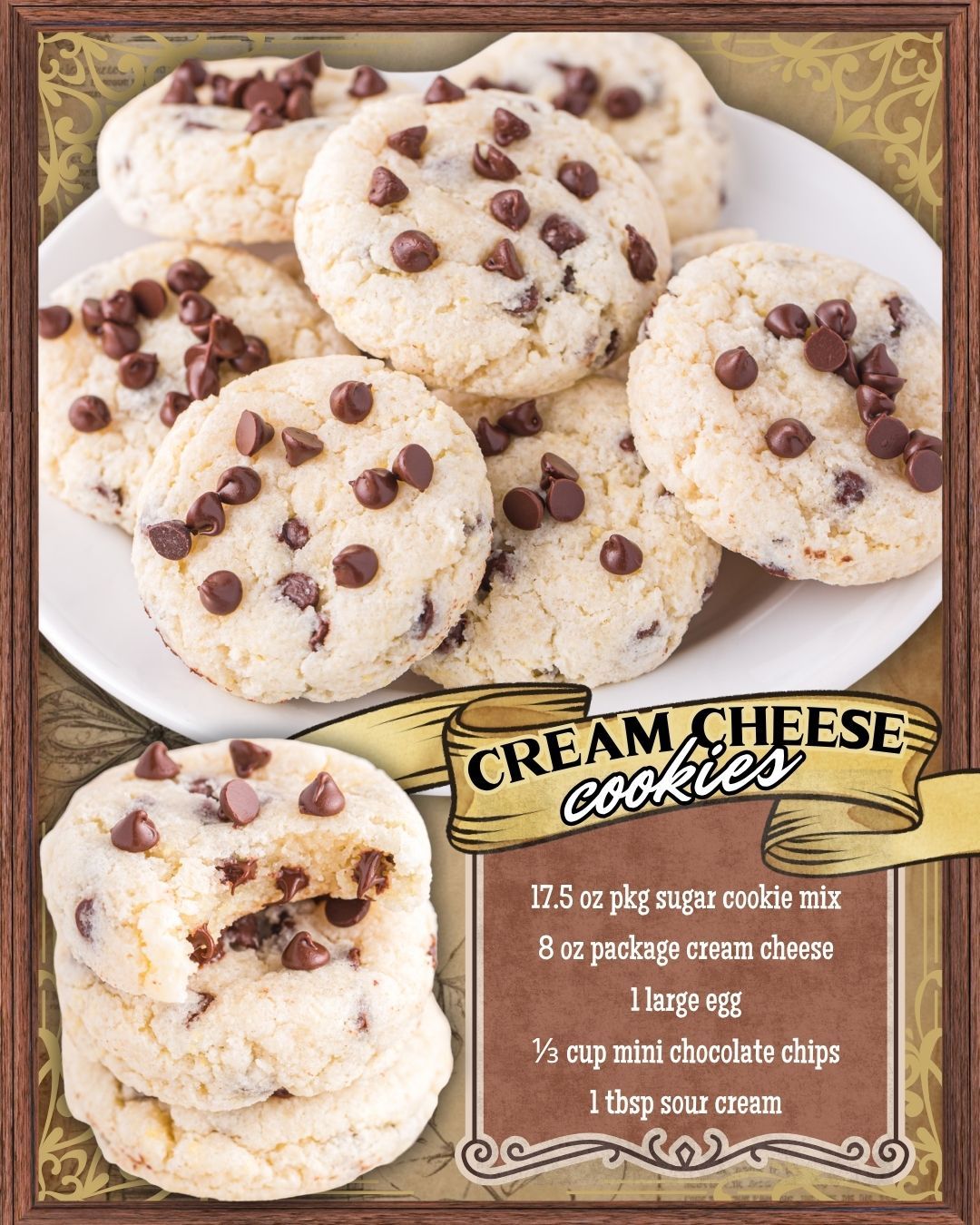
Cream cheese in cookie dough does more than add flavor; it changes the texture. By replacing part of the butter with cream cheese, bakers get a dough that bakes up softer, with a fine, tender crumb and a subtle tang that balances sweetness.
The mixing method usually mirrors standard cookies: butter and cream cheese are creamed with sugar until light and fluffy, then egg and vanilla are beaten in, followed by flour and leavening just until combined. Some recipes roll the dough balls in sugar for a sparkly crust, others flatten and frost them with a simple glaze, and holiday versions are rolled and cut like classic sugar cookies, then decorated.
Because cream cheese helps cookies stay soft for days, cream cheese cookies are a favorite for Christmas cookie trays, cookie exchanges, and make‑ahead dessert spreads. There are also flavored spins—cinnamon‑sugar cream cheese cookies, cream cheese chocolate chip cookies, and strawberry cream cheese cookies that taste like cheesecake in cookie form.
Equipment
- Large mixing bowl or the bowl of a stand mixer to cream together butter, cream cheese, and sugar.
- Hand mixer or stand mixer with paddle attachment to properly beat the fats until light and fluffy.
- Medium bowl for whisking together dry ingredients (flour, baking powder or baking soda, salt, and sometimes cornstarch).
- Measuring cups and spoons for accurate flour, sugar, and leavening measurements.
- Rubber spatula for scraping down the bowl and folding in any mix‑ins like chocolate chips or fruit.
- Cookie scoop (often 1–1½ tablespoons) to portion consistently sized cookies.
- Baking sheets lined with parchment paper or silicone baking mats to prevent sticking and promote even browning.
- Wire cooling racks for cooling baked cookies before glazing or frosting.
- Optional rolling pin and cookie cutters if making cream cheese sugar cookie cutouts.
- Small bowl and whisk for mixing simple glazes or cream‑cheese‑based frosting.
Ingredients (with measurements)
Base cream cheese cookie (drop style):
- ½ cup (113 g) unsalted butter, softened.
- 4 oz (113 g) full‑fat cream cheese, softened.
- 1 cup (200 g) granulated sugar.
- 1 large egg, room temperature.
- 1 teaspoon vanilla extract (or vanilla plus almond extract to taste).
- 2¼–2½ cups (270–300 g) all‑purpose flour.
- ½ teaspoon baking powder or baking soda (depending on the recipe).
- ¼–½ teaspoon salt.
- Extra granulated sugar for rolling dough balls (optional, for a sparkly crust).
Christmas cream cheese sugar cookies (frosted):
- 1 cup (227 g) unsalted butter, softened.
- 8 oz (226 g) cream cheese, softened.
- 1½–2 cups (300–400 g) granulated sugar.
- 1 large egg.
- 1–2 teaspoons vanilla extract; some include lemon zest in the dough.
- 3–3¼ cups (360–390 g) all‑purpose flour.
- 1–1½ teaspoons baking powder.
- ½ teaspoon salt.
Simple glaze or cream cheese frosting for topping:
- 1–2 cups (115–230 g) powdered sugar.
- 2–4 tablespoons milk or cream for a pourable glaze.
- Or 8 oz (226 g) cream cheese + ½ cup (113 g) butter + 2 cups powdered sugar + 2 teaspoons vanilla for a thick frosting.
Flavored variations:
- Cream cheese chocolate chip cookies add chocolate chips, brown sugar, sometimes cornstarch.
- Strawberry cream cheese cookies add fresh strawberries, lemon juice, and white chocolate chips.
- Cinnamon cream cheese cookies add cinnamon in the dough and a cinnamon‑sugar coating.
These ingredient sets yield about 24–48 cookies, depending on scoop size and whether you’re making drop cookies or small cutouts.
Instructions and steps
Cream cheese cookie dough is made much like standard cookie dough, but the butter and cream cheese are creamed together first. In a large bowl, softened butter and cream cheese are beaten with a mixer on medium to medium‑high speed until the mixture is smooth and fluffy, usually 1–3 minutes.
This step is crucial: proper creaming incorporates air, giving the cookies lift and a tender crumb instead of dense, heavy discs. The mixture should look lighter in color and slightly expanded in volume when ready.
Next, sugar is added. Granulated sugar (and brown sugar, if the recipe uses it) is beaten into the butter‑cream‑cheese mixture until fully combined and creamy. Scraping down the sides and bottom of the bowl ensures no streaks of unincorporated cream cheese remain.
Then, egg and vanilla extract are added and mixed until just combined; over‑beating after adding egg is not necessary and can encourage excess spreading.
In a separate bowl, the dry ingredients are whisked together—flour, baking powder or baking soda, salt, and sometimes cornstarch (which can help create a softer, thicker cookie).
The dry mixture is then added to the wet mixture in two or three additions with the mixer on low speed, mixing only until no streaks of flour remain. Overmixing at this stage can develop gluten and make the cookies tough instead of tender, so recipes emphasize mixing “just until combined.”
If the cookies include mix‑ins like chocolate chips, chopped strawberries, or sprinkles, those are folded in last with a spatula. Cream cheese chocolate chip cookies, for example, have the chocolate added at the end, while strawberry versions fold in flour‑dusted berries gently to avoid smashing them and making the dough too wet. Cinnamon cream cheese cookies may go straight to chilling and rolling in cinnamon sugar without extra add‑ins.
Chilling is sometimes recommended. Some cream cheese cookie recipes are designed as no‑chill (especially quick drop cookies), but many benefit from 30–60 minutes of chilling to firm the dough, which helps control spreading and intensify flavor.
Dough that feels very soft or sticky is a good candidate for a chill. Cutout cream cheese sugar cookies are almost always chilled as discs of dough before rolling, making them easier to handle and helping cut shapes hold their edges in the oven.
For drop cookies, the oven is preheated (typically 325–375°F / 165–190°C), baking sheets are lined with parchment, and dough is scooped into mounds using a cookie scoop. Some recipes call for rolling each scoop into a ball, then rolling in granulated sugar (or cinnamon sugar) before placing on the baking sheet.
For flatter, more uniform cookies, the tops of dough balls may be gently pressed with the bottom of a glass or with fingers to slightly flatten before baking.
For cutout cream cheese sugar cookies, chilled dough is rolled out on a lightly floured surface to about ¼‑inch thickness, cut into shapes with cookie cutters, and placed on baking sheets. These cookies hold their edges well due to the cream cheese and correct flour ratio, making them popular for decorated Christmas cookies and decorated sugar cookies in general.
Baking times vary with size and style but typically range from 8–12 minutes. Smaller cookies or lower‑temperature bakes (like 330–350°F) often take 10–12 minutes, while small, high‑temp batches at 375°F may be done in 9–11 minutes.
Visual cues are consistent: edges should be set and just barely golden; centers often still look slightly pale and soft when removed from the oven. Overbaking can dry out cream cheese cookies, so recipes emphasize pulling them when they’re just set.
After baking, cookies rest on the baking sheet for a few minutes to firm up, then are transferred to wire racks to cool completely. Once cool, they can be glazed or frosted if desired.
A simple glaze of powdered sugar and milk/cream is whisked until smooth and spooned or dipped onto the cookies; cream‑cheese‑based frosting (cream cheese, butter, powdered sugar, vanilla) can be piped or spread on top for extra richness. Sprinkles, colored sugar, or crushed candy canes are often added while the frosting or glaze is still wet for festive decoration.
Cream cheese cookies—especially those with frosting—are often stored in airtight containers with parchment between layers.
Many bakers recommend refrigerating frosted cream cheese cookies for food safety and to keep frosting firm, then bringing them to room temperature before serving. Unfrosted cream cheese cookies can generally be kept at room temperature for several days and stay soft thanks to the cream cheese in the dough.
Variations
Cream cheese cookies are extremely versatile, and there are many popular spins beyond simple vanilla. Some recipes add cornstarch and extra chocolate chips for ultra‑soft cream cheese chocolate chip cookies; cornstarch helps keep them thick and plush, and cream cheese gives them a cheesecake‑like undertone.
Strawberry cream cheese cookies use a similar base but incorporate fresh strawberries and white chocolate, giving a fruity, cheesecake‑inspired cookie that stays moist and slightly cake‑like.
Cinnamon‑forward versions include cinnamon cream cheese cookies and “meltaway” cream cheese cookies. In these, cinnamon may be mixed into the dough, and the balls are rolled in cinnamon sugar before baking, yielding cookies that are soft, cake‑like inside with a lightly crisp, spiced crust outside.
Meltaway cream cheese cookies go even further: some formulas use more butter and cornstarch with just a bit of cream cheese for very delicate, sandy cookies that almost dissolve on the tongue, finished with a fluffy cream cheese frosting.
Cutout cream cheese sugar cookies add a bit of cream cheese and sometimes lemon zest to classic sugar cookie dough, giving them more flavor and tenderness while still holding their shape well when cut. These are often decorated with buttercream or cream‑cheese frosting and used as Christmas cookies or birthday cookies. Because the dough is less prone to spreading, detailed cutters—snowflakes, trees, animals—show clearly after baking.
There are also shortcut cream cheese cookie recipes using packaged sugar cookie mix: a bag of cookie mix is combined with cream cheese, egg, a bit of sour cream, and chocolate chips to create quick, soft cookies with cheesecake flavor and chewy texture.
These are especially popular with busy bakers who want cream‑cheese‑style cookies without measuring dry ingredients.
On the richer side, some recipes sandwich cream cheese filling in the center of cookies (like strawberry cream cheese cookies with a cream cheese core) or swirl a cream‑cheese mixture into brownie‑like cookie dough. Others add citrus zest (lemon or orange) and sometimes extracts like almond for a more complex flavor profile, turning them into cream cheese citrus sugar cookies.
Regardless of variation, the base principles stay the same:
- Cream butter and cream cheese together thoroughly.
- Add sugar, then egg and flavorings.
- Mix in flour and leavening just until combined.
- Chill as needed, portion, and bake until just set.
That method reliably produces soft, flavorful cookies with a creamy crumb that sets cream cheese cookies apart from ordinary sugar cookies.