
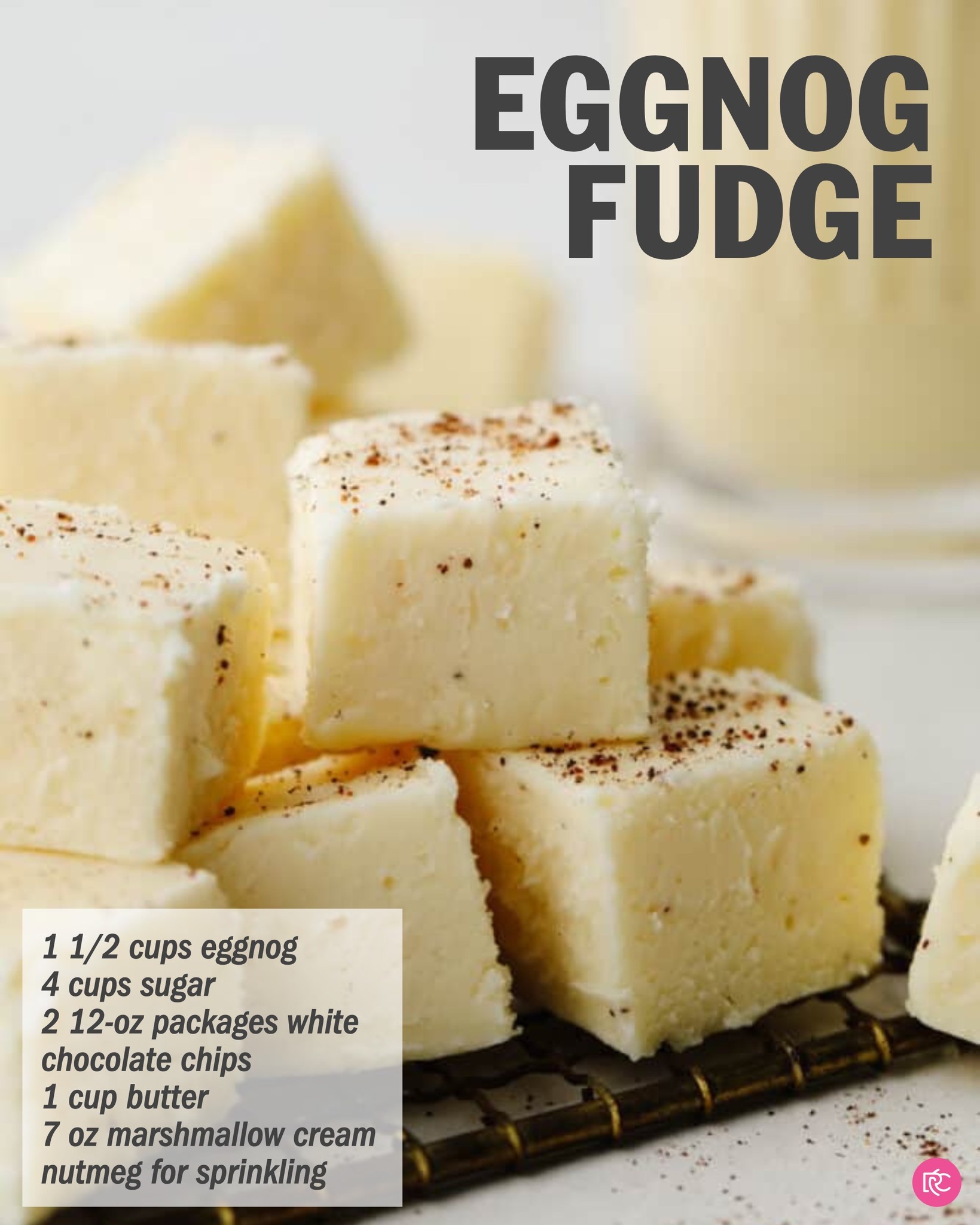
Most eggnog fudge recipes follow the same basic idea: sugar, butter, and eggnog are simmered together on the stovetop to make a hot syrup, then that mixture is poured over or cooked with white chocolate and marshmallow crème, which create a smooth, creamy, stable fudge base.
Vanilla and nutmeg (and sometimes a hint of rum or rum extract) layer in the classic eggnog flavors, while the white chocolate and marshmallow cream ensure the fudge sets up nicely once poured into a pan and cooled. The result is a pale, ivory fudge with flecks of nutmeg and a subtle eggnog flavor that’s sweet but not overpowering, and it slices cleanly into squares that hold their shape on a holiday platter.
Equipment
- Heavy‑bottomed medium or large saucepan.
- Wooden spoon or heat‑safe spatula for stirring.
- Candy thermometer (highly recommended, especially if you’re not using a marshmallow‑cream “fantasy fudge” base).
- 8×8‑inch or 9×9‑inch square baking pan, lined with parchment or foil and lightly greased.
- Heat‑safe bowl if using a method where hot syrup is poured over chocolate instead of cooking it together.
Ingredients
This version blends popular stovetop eggnog fudge formulas that use sugar, butter, eggnog, white chocolate, marshmallow crème, and nutmeg.
- 2–3 cups granulated sugar (many recipes use about 2–3 cups; fantasy‑style versions often use closer to 3 cups).
- ½–¾ cup eggnog (full‑fat eggnog is preferred for best texture and set).
- ½–¾ cup butter, cut into pieces (recipes range from ½ cup to ¾ cup).
- 11–12 ounces white chocolate chips or finely chopped white chocolate.
- 1 (7‑oz) jar marshmallow crème or marshmallow fluff.
- 1–2 teaspoons vanilla extract.
- ¼–½ teaspoon ground nutmeg (plus extra for sprinkling on top).
- Optional ½ teaspoon rum extract or 1–2 tablespoons dark or spiced rum for a boozy eggnog note.
- Optional holiday sprinkles for decorating the top.
Instructions And Steps
Start by preparing the pan and measuring out all ingredients. Line an 8‑inch or 9‑inch square baking pan with parchment paper or foil, leaving some overhang on the sides so you can lift the fudge out easily later.
Lightly grease the lining if your recipe suggests it; this helps prevent sticking. Measure and have ready the white chocolate chips, marshmallow crème, vanilla, nutmeg, and any rum or rum extract, because once the hot syrup reaches temperature you’ll need to work quickly.
In a heavy‑bottomed saucepan, combine the sugar, butter, and eggnog. Place the pan over medium to medium‑high heat and stir constantly as the butter melts and the sugar begins to dissolve into the eggnog.
Continue stirring until the mixture comes to a full rolling boil—bubbling vigorously across the entire surface, not just around the edges. Attach a candy thermometer to the side of the pan if you’re using one, making sure the tip is submerged in the liquid but not touching the bottom of the pan.
Boil the mixture, stirring constantly to prevent scorching, until it reaches about 234°F (soft‑ball stage) for marshmallow‑cream style recipes, or up to around 238–240°F for slightly firmer fudge, depending on your recipe’s instruction.
Several recipes emphasize maintaining the boil for about 4–5 minutes and stirring the whole time, even if you’re not using a thermometer, to ensure the fudge sets properly. The mixture will thicken and become glossy as it boils.
Once the syrup reaches the target temperature, immediately remove the pan from the heat. Working quickly, add the white chocolate chips to the hot mixture and stir vigorously until the chocolate melts completely and the mixture is smooth.
Next, add the marshmallow crème, vanilla extract, ground nutmeg, and rum or rum extract if using. Stir and fold until everything is thoroughly combined, the marshmallow cream is fully incorporated, and the fudge mixture is thick, creamy, and no longer shiny on the surface.
This step is crucial; mixing until the sheen disappears is a common cue in fantasy fudge recipes that indicates the fudge is ready to pour and will set with a good texture.
Pour the fudge mixture into the prepared pan, using a spatula to scrape it all out of the pot and smooth it into an even layer. Tap the pan gently on the counter a few times to work out any large air bubbles and level the surface.
If desired, sprinkle a little extra nutmeg over the top for a speckled look and extra flavor, or add holiday sprinkles for a festive finish. Let the fudge cool completely at room temperature until it is firm; depending on the recipe and your kitchen temperature, this can take several hours.
Some bakers like to transfer the cooled pan to the refrigerator to speed up firming and make slicing easier, but chilling is not always required as long as it feels fully set.
Once the fudge is completely cool and firm to the touch, lift it out of the pan using the parchment or foil overhang and place it on a cutting board. Use a sharp knife to cut the slab into small squares, about 1‑inch or even smaller, since eggnog fudge is quite rich and sweet.
Clean the knife with a warm cloth between cuts if you want especially neat edges. Arrange the squares on a tray for serving or pack them into airtight containers for gifting or storing.
Tips And Tricks
Most eggnog fudge recipes recommend using full‑fat eggnog, not low‑fat or nonfat, for best texture and set. The fat content contributes to the fudge’s creaminess and helps it firm up; low‑fat eggnog can make the fudge softer or more prone to not setting properly. Using a heavy‑bottomed pot and stirring constantly while the mixture boils are also key to preventing scorching, since sugar, dairy, and eggnog can burn quickly on high heat.
A candy thermometer makes the process more foolproof by letting you hit the correct temperature for soft‑ball stage; undercooking can result in fudge that never quite sets, while overcooking can make it dry or crumbly.
If you don’t have a thermometer, closely follow your recipe’s timing (like a rolling boil for exactly 5 minutes) and visual cues. Stirring the hot mixture until the chocolate and marshmallow cream are fully melted and the fudge loses its shine is another critical step; stopping too soon can affect texture.
Eggnog fudge keeps well in an airtight container at cool room temperature or in the fridge. Many sources suggest refrigerating it if your kitchen is warm, as cooler storage helps keep the fudge firm and easier to slice and serve.
It also freezes well—once cut, you can layer the squares with parchment in a freezer container and freeze them for several weeks. Let them come to room temperature before serving for the best texture.
Whether you follow a classic fantasy‑style formula or a slight variation, Eggnog Fudge delivers a creamy, white‑chocolate‑and‑nutmeg bite that captures the flavor of holiday eggnog in candy form, making it a standout addition to Christmas dessert trays and homemade gift boxes.