
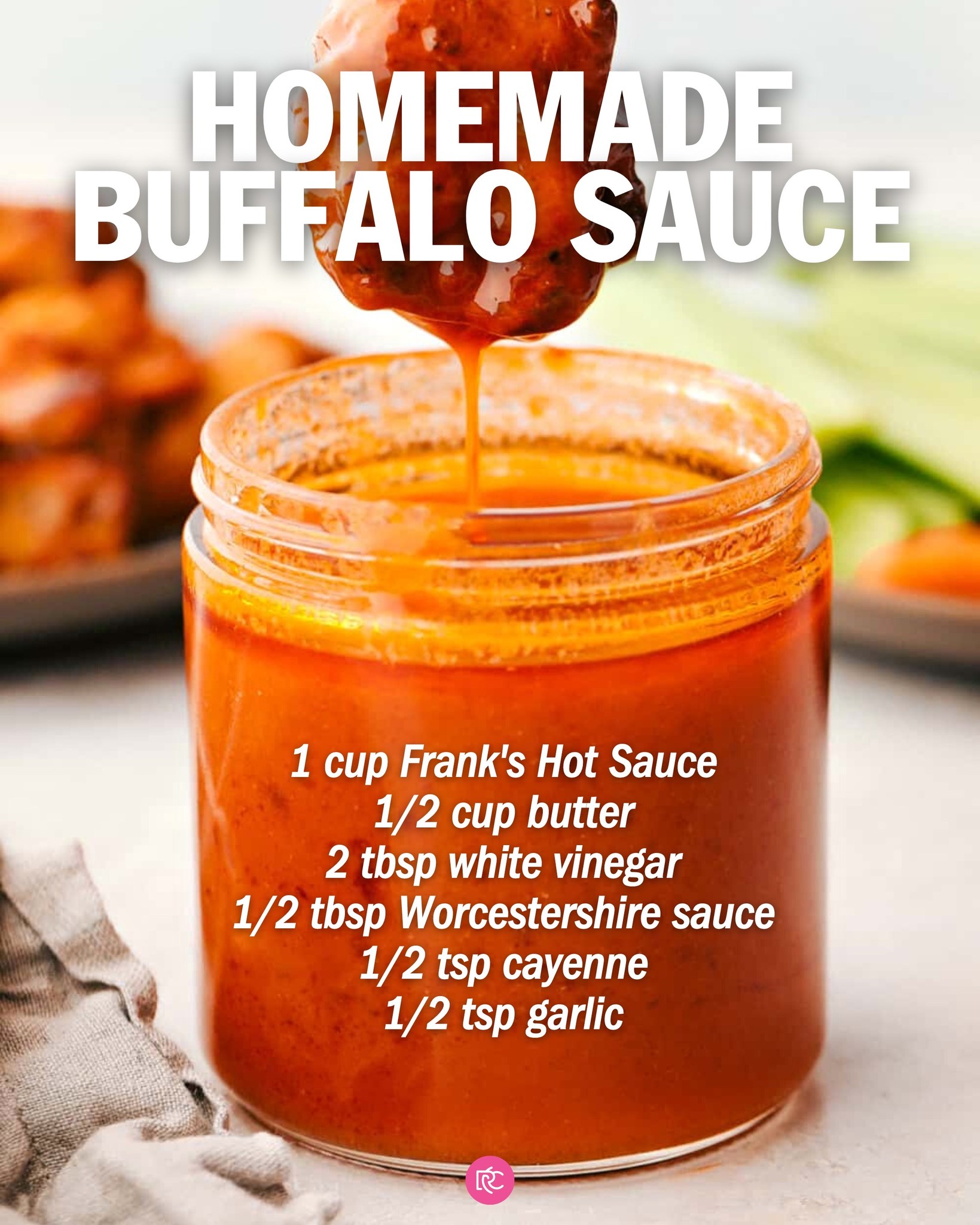
Classic Buffalo sauce started with essentially two ingredients—hot sauce and butter—but most modern homemade versions add a few extras for balance and complexity. A Louisiana‑style cayenne hot sauce like Frank’s RedHot is warmed with melted butter, then sharpened with a splash of white vinegar, deepened with Worcestershire sauce, and rounded out with garlic powder and extra cayenne until the ingredients emulsify into a smooth, orange‑red sauce.
The butter softens the harsh edges of the hot sauce, gives the sauce body and a velvety mouthfeel, and helps it cling to wings or whatever you toss it with. The vinegar brightens and cuts through the fat, the Worcestershire adds a subtle savory, almost meaty depth, and the cayenne lets you adjust the heat beyond what’s in the bottled sauce alone.
Some recipes stir in a little honey, brown sugar, or maple syrup for a sweet‑heat glaze, and a few even add smoked paprika or onion powder for a more layered flavor, but the core profile stays bold, tangy, and peppery, very much in the spirit of the original Buffalo wing sauce from Buffalo, New York.
Equipment
- Small or medium saucepan.
- Whisk.
- Measuring cups and spoons.
- Heat‑safe container or jar for storage.
Ingredients
- 1 cup cayenne pepper hot sauce (Frank’s RedHot or similar Louisiana‑style sauce).
- ½ cup (1 stick) unsalted butter.
- 2–3 tablespoons white vinegar.
- ½ tablespoon to 1 teaspoon Worcestershire sauce.
- ½ teaspoon garlic powder.
- ¼–½ teaspoon cayenne pepper, to taste.
- Optional 1–3 tablespoons honey or other sweetener.
- Salt to taste, added only if needed.
Ratios vary slightly between recipes. Some lean a little heavier on butter for a milder, richer, more buttery sauce that appeals to people who don’t like things too spicy. Others emphasize the hot sauce side for a punchier, bar‑style wing sauce.
But structurally, nearly all homemade versions follow this template: cayenne hot sauce plus melted butter, sharpened with vinegar and rounded with garlic and Worcestershire, with optional sweetener and extra cayenne to fine‑tune the flavor.
Instructions And Steps
Start by melting the butter gently. Place the butter in a small or medium saucepan over medium‑low heat and cook just until it is completely melted, stirring occasionally so it melts evenly. You do not want to brown or clarify the butter here; Buffalo sauce is traditionally made with plain melted butter, and browning it changes the flavor significantly.
If it starts foaming aggressively or turning golden, reduce the heat. If you are using honey or another sweetener and want it fully dissolved and blended, several recipes suggest adding it with the butter as it melts so it dissolves smoothly.
Once the butter is melted, add the hot sauce and liquid seasonings. Pour the cup of hot sauce into the pan with the melted butter, then add the white vinegar and Worcestershire sauce. Sprinkle in the garlic powder and cayenne pepper.
Begin whisking immediately and continuously for a minute or so to bring the butter and hot sauce together into a uniform, emulsified mixture. You want to eliminate any obvious separation where a pool of butter sits on top of the hot sauce. If you didn’t add honey earlier, whisk it in now until there are no streaks and the sauce looks completely smooth.
Bring the mixture up to a gentle simmer over medium heat. You’re aiming for the point where you can see small bubbles forming around the edges of the pan or a consistent stream of steam rising from the surface, but you don’t want the sauce at a rolling boil. As the sauce warms, keep whisking occasionally.
This keeps the ingredients suspended evenly and helps prevent the butter from separating out. The brief simmer—usually a total of 3–7 minutes on the heat, depending on the specific recipe—not only helps the flavors meld together into a cohesive taste, but also slightly thickens the sauce so it clings better to wings and other foods.
After a few minutes of gentle simmering, taste the sauce carefully. Many recipes call for this tasting step so you can adjust the balance before taking it off the heat. If you want more heat, you can stir in a pinch or two more cayenne pepper, or even a splash of extra hot sauce.
If the sauce tastes too sharp or vinegary for your liking, whisk in another tablespoon or two of butter to soften the edges, or add another spoonful of honey to round out the acidity and heat. Check the salt level last.
Because most cayenne hot sauces and Worcestershire both contain significant salt, many sources recommend holding off on extra salt until the very end, and often you may find it doesn’t need any additional salt at all.
Once you’re happy with the taste and consistency, remove the pan from the heat. Let the Buffalo sauce cool for a few minutes until it is warm rather than piping hot. It should still be very fluid and glossy.
This is the ideal stage for tossing with freshly cooked, piping‑hot wings: pour some sauce into a large bowl, add the hot wings, and toss until everything is thoroughly coated in a shiny layer of Buffalo goodness.
For dipping, you can either serve the sauce warm right away or let it cool further; as it cools, the butter will thicken the sauce slightly, giving it a more clingy, dip‑like texture. If you plan to store the sauce, transfer it to a clean jar or container once it has cooled to room temperature, seal it, and refrigerate.
Most homemade Buffalo sauce recipes note that it will keep well in the fridge for at least 1–2 weeks and often up to about a month, thanks to the high acid content and the fact that the hot sauce is already a preserved product.
It will firm up considerably as the butter re‑solidifies in the refrigerator, so when you’re ready to use it again, gently rewarm it on the stovetop over low heat or in short microwave bursts, whisking until it returns to a smooth, pourable state.
Tips And Tricks
Using the right style of hot sauce is one of the most important details. Traditional Buffalo sauce uses a Louisiana‑style cayenne pepper sauce like Frank’s RedHot because it is relatively thin, moderately spicy, and tangy with a clean, straightforward flavor that melds well with butter.
If you swap in a thicker, sweeter, or smoky hot sauce—such as a chipotle sauce or a sriracha‑style sauce—the flavor profile and consistency of the finished Buffalo sauce will change substantially. You can certainly experiment, but if you want that classic Buffalo flavor, stick to a cayenne‑based hot sauce.
Gentle heat is another key. If you boil the sauce hard or cook it on high heat for too long, the butter can separate and leave a greasy layer floating on top of the hot sauce instead of staying smoothly emulsified.
If your sauce does separate slightly after cooling, rewarming it gently and whisking vigorously will usually bring it back together; some cooks even pulse it briefly with an immersion blender to restore a perfectly smooth texture, especially when honey or other sweeteners are involved.
The richness and heat are both highly adjustable. To make a milder Buffalo sauce, increase the amount of butter slightly and use the lower end of the cayenne range, relying mostly on the bottled hot sauce for heat.
For a more intense, fiery sauce, reduce the butter just a bit, add more cayenne, or choose a hotter cayenne‑based sauce while keeping the overall ratios similar. Vinegar amount is another lever: less vinegar yields a softer, more buttery sauce, while more vinegar creates a sharper, more puckery Buffalo sauce that cuts through rich foods more aggressively.
If you like a touch of sweetness—especially for grilled wings, chicken thighs, or Buffalo shrimp—stirring in honey, brown sugar, or maple syrup as some recipes suggest can give you a shiny glaze that caramelizes lightly on the heat.
A tiny pinch of smoked paprika or onion powder can add complexity without making the sauce taste like barbecue. For a dairy‑free version, several modern recipes replace butter with a neutral oil or vegan butter, though the texture and flavor will differ slightly; in that case, emulsifying well becomes even more important.
However you tweak it, Homemade Buffalo Sauce comes together in minutes and gives you full control over heat, richness, and tang, making it a versatile staple for wings, sandwiches, pizzas, wraps, grain bowls, and even roasted vegetables—anywhere you want that unmistakable spicy, buttery Buffalo kick without being tied to a store‑bought bottle.