
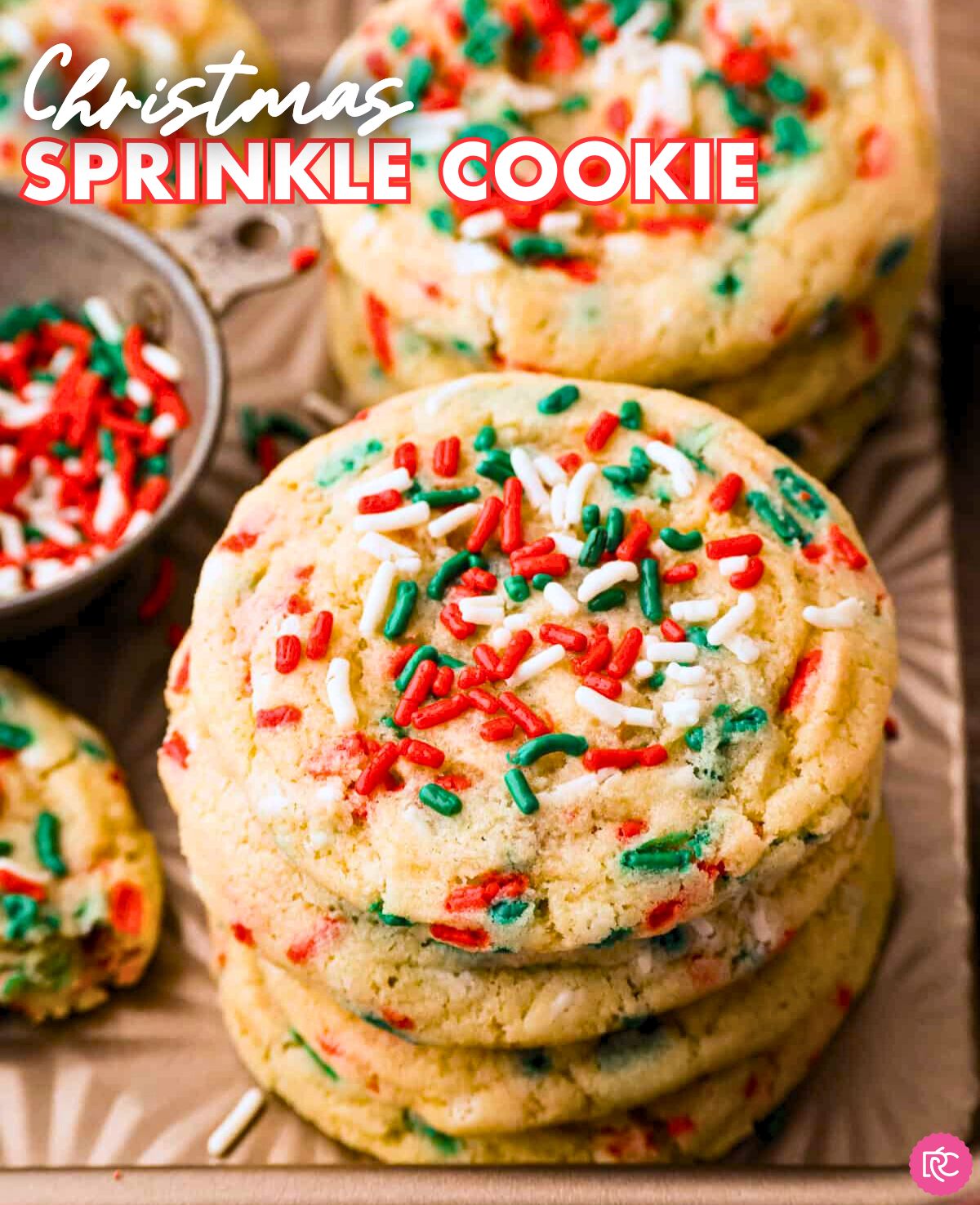
Christmas Sprinkle Cookies usually start with a classic sugar cookie dough built from butter, sugar, egg, flour, leavening, and vanilla, often with a touch of almond extract to give that nostalgic bakery‑style flavor. The dough is mixed until soft and smooth, then folded with red and green sprinkles—usually jimmies or a mix of jimmies and nonpareils—so the color is baked right in.
The dough is scooped into balls, sometimes rolled in granulated or sanding sugar for a sparkly finish, and baked just until set around the edges and soft in the center. Because the sprinkles are part of the dough instead of simply sprinkled on top, the cookies come out of the oven already decorated and photo‑ready without any frosting or icing, which is a huge time saver during busy holiday baking.
Equipment
- Large mixing bowl and a hand mixer or stand mixer with the paddle attachment for creaming the butter and sugar and mixing the dough.
- Medium bowl for whisking together the dry ingredients like flour, baking powder, baking soda, and salt.
- Baking sheets lined with parchment paper or silicone baking mats so the cookies bake evenly and don’t stick.
- Cookie scoop (around 2 tablespoons in size) or a regular spoon for portioning the dough into evenly sized balls.
- Wire cooling racks to cool the cookies after baking so the bottoms don’t become soggy from sitting on hot pans.
Ingredients
This version follows the pattern of soft Christmas sprinkle sugar cookies that stay thick and chewy with a slightly crisp edge.
- 1 cup (2 sticks / 225 g) unsalted butter, softened to room temperature so it creams easily.
- 1–1¼ cups (200–250 g) granulated sugar, which sweetens and helps create the soft texture.
- ¼ cup (50 g) light brown sugar (optional but common), which adds extra moisture and a bit of caramel flavor for chewier cookies.
- 1 large egg at room temperature, the main binder that helps the cookies hold together.
- 1 egg yolk (optional), often added in soft‑batch recipes for extra richness and chew.
- 2 teaspoons vanilla extract for classic sugar‑cookie flavor.
- ½–1 teaspoon almond extract (optional but very popular); a small amount gives that recognizable holiday bakery flavor without overpowering the vanilla.
- 2½–2¾ cups (300–340 g) all‑purpose flour, spooned and leveled so the cookies don’t turn out too dense.
- 1½–2 teaspoons baking powder to help the cookies puff slightly and stay soft.
- ½ teaspoon baking soda, which encourages a bit of spread and browning so the cookies don’t stay too pale.
- ½ teaspoon salt (up to ¾ teaspoon fine sea salt if you like a stronger sweet‑salty balance).
- ½–1 cup Christmas sprinkles (red and green jimmies plus nonpareils or sanding sugar), folded into and/or rolled on the dough so every cookie is full of color.
- About ¼ cup extra granulated sugar or colored sanding sugar for rolling the dough balls (optional, but gives a sparkly surface and light crunch).
Instructions And Steps
Start by mixing the dough base. Place the softened butter in a large mixing bowl. Add the granulated sugar and brown sugar (if using), then beat the mixture on medium speed with a hand mixer or stand mixer until it becomes light in color and fluffy in texture, usually about 2–4 minutes.
This creaming process is important because it incorporates air into the butter and helps make the cookies soft and tender instead of dense. Scrape down the sides of the bowl as needed so everything mixes evenly.
Add the egg and optional yolk to the creamed butter and sugar mixture. Beat on medium speed until the eggs are fully incorporated and the mixture looks smooth and creamy again. Pour in the vanilla extract and almond extract, then mix on low‑medium speed just until blended.
At this stage the mixture should smell like a classic sugar cookie dough base, and you want it to be smooth but not over‑mixed.
In a separate medium bowl, whisk together the all‑purpose flour, baking powder, baking soda, and salt. Whisking distributes the leavening and salt evenly, preventing pockets of baking powder or soda and helping the cookies rise and spread properly.
Once the dry ingredients are combined, add them to the wet mixture in two or three additions, mixing on low speed after each addition. Stop mixing as soon as the flour disappears and the dough looks uniform; over‑mixing at this point can develop gluten and make the cookies tougher. The dough should be soft, thick, and just slightly sticky.
Now it’s time to add the holiday color. Pour the Christmas sprinkles into the bowl and gently fold them into the dough with a spatula or on low mixer speed until they’re evenly dispersed. Many bakers like to use jimmies (long, rod‑shaped sprinkles) inside the dough because they bleed less color and keep their shape, saving delicate nonpareils and sanding sugar for rolling the outside.
If the dough feels very soft, especially in a warm kitchen, cover the bowl and chill it in the refrigerator for at least 30–60 minutes. Chilling isn’t always mandatory, but it’s recommended in several recipes to keep the cookies thick, limit spreading, and concentrate the flavors.
When you’re ready to bake, preheat the oven to 350°F (175°C). Line baking sheets with parchment paper or silicone baking mats so the cookies release easily and cook evenly. Using a cookie scoop or spoon, portion the dough into balls that are about 2 tablespoons each (a medium scoop).
Roll each scoop between your hands to form a smooth ball. For extra sparkle and a slightly crisp exterior, roll each ball in granulated sugar or colored sanding sugar until lightly coated, then place it on the prepared baking sheet.
If desired, you can also roll or press the tops into additional sprinkles for a more heavily sprinkled look. Space the dough balls about 2–3 inches apart because they will spread a bit as they bake.
Bake the cookies one sheet at a time in the preheated oven for about 8–11 minutes, depending on size and your oven. Watch for visual cues: the edges should look set and just barely golden, while the centers should still look soft and slightly underdone.
If you bake until the centers look fully set in the oven, the cookies may end up dry once they cool. Remove the baking sheet from the oven and let the cookies cool on the hot pan for 5–10 minutes; this allows them to finish cooking gently and firm up without overbaking. After they’ve had a chance to set, transfer the cookies to a wire rack to cool completely.
Once the cookies are completely cool, they’re ready to serve or store. Stack them on a Christmas cookie tray, arrange them in tins or boxes for gifting, or store them in an airtight container at room temperature for several days; many recipes say they stay soft and chewy for about 3–5 days.
For longer storage, you can freeze the baked cookies in an airtight container or freezer bag, with parchment between layers, for a few months, then thaw at room temperature when you’re ready to serve. You can also freeze balls of dough (without rolling in sugar) and bake them straight from frozen, adding an extra minute or two to the baking time.
Tips And Tricks
Cream the butter and sugars thoroughly. Proper creaming introduces air into the dough, which contributes to the soft, slightly puffy texture of the cookies; several recipes emphasize that skimping on this step leads to flatter, denser cookies.
Use room‑temperature butter that yields easily when pressed but isn’t greasy or melted—too cold and it won’t cream properly, too warm and the cookies can spread too much.
Measure the flour carefully by spooning it into the cup and leveling it off rather than scooping directly from the bag. Too much flour can make the cookies cakey and dry, while too little can make them spread too thin. Chilling the dough is a powerful tool: even 30 minutes in the fridge helps firm the butter and controls spreading, which is especially useful if your dough seems soft or your kitchen is warm.
When mixing in sprinkles, use jimmies for the bulk of the dough—nonpareils tend to bleed color more, which can tint the dough if heavily mixed.
Save nonpareils for rolling or for lightly pressing into the tops if you love their texture and look. Rolling the dough balls in sugar or colored sanding sugar adds sparkle and a subtle crunch that makes the cookies feel more festive and bakery‑style.
Baking just until the edges are set and the centers still look soft is the biggest key to achieving that soft, chewy texture. The cookies will look underdone when you pull them, but they continue cooking from residual heat on the baking sheet.
Letting them rest on the pan for several minutes before moving them prevents them from breaking and allows them to firm up gradually. If you like perfectly round cookies, you can “cookie scoot” right after they come out of the oven: use a round cookie cutter or a small bowl to gently swirl around each hot cookie, nudging the edges into a neat circle.
Variations
Christmas Sprinkle Cookies are highly adaptable. The easiest tweak is changing the sprinkle colors to suit different holidays and events—red and pink for Valentine’s Day, green and gold for St. Patrick’s Day, pastel colors for Easter, red and blue for patriotic holidays, or rainbow sprinkles for birthdays and everyday fun.
You can also adjust the flavor profile: increase the almond extract for a stronger almond‑bakery vibe, or replace some of the vanilla with peppermint extract to create peppermint sprinkle cookies that fit Christmas even more.
Add‑ins are another fun variation. White chocolate chips pair especially well with Christmas sprinkles and appear in some soft sprinkle cookie recipes as a way to give extra sweetness and texture. You can also try mixing in chopped peppermint bark or crushed candy cane pieces for a peppermint‑bark cookie version, adding them along with the sprinkles but being careful not to over‑mix.
For a subtle spice note, a small pinch of cinnamon or nutmeg can make the cookies feel even cozier without turning them into full‑on spice cookies.
Size is flexible too. For standard cookies, 2‑tablespoon dough balls are common, but you can make mini cookies with 1‑tablespoon scoops to get more pieces per batch—great for cookie boxes and buffets—just reduce the bake time by a couple of minutes. Alternatively, make larger bakery‑style cookies with 3‑tablespoon scoops and extend baking time slightly to keep the centers soft. You can even press the baked cookies together with buttercream frosting to create sprinkle cookie sandwich cookies for an extra‑indulgent treat.
However you customize them, Christmas Sprinkle Cookies deliver that classic soft sugar‑cookie bite plus cheerful crunch and color from the sprinkles, making them an easy, reliable staple in any holiday baking lineup—from casual family trays to curated cookie exchange boxes.