
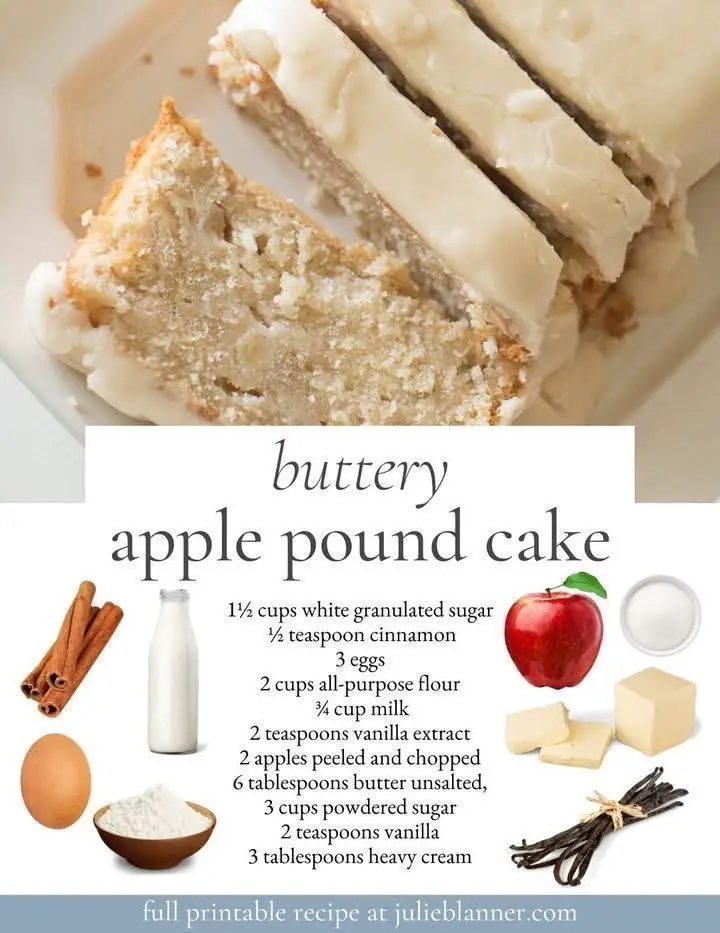
Apple Pound Cake starts with a classic pound‑cake style batter—creamed butter and sugar, eggs, and flour—sometimes enriched with sour cream or milk for extra moisture. Fresh apples are peeled and diced or lightly sautéed, then folded into the thick batter along with warm flavors like cinnamon and vanilla before being baked low and slow in a loaf or bundt pan.
Once baked, you can keep it simple with a dusting of powdered sugar or finish with a buttery vanilla or caramel‑style glaze that seeps into the top of the cake. The result is a cozy, fall‑friendly pound cake that’s perfect with coffee or as an after‑dinner dessert.
Equipment
- 9×5‑inch loaf pan OR 10–14 cup bundt pan, well greased and floured or sprayed.
- Mixing bowls (one large, one medium).
- Electric hand mixer or stand mixer with paddle attachment.
- Rubber spatula for scraping and folding in apples.
- Cutting board and sharp knife for peeling and chopping apples.
Ingredients
Batter quantities below are sized for one standard loaf or a small bundt (you can scale up for a larger bundt pan). This blends a butter‑based pound cake with plenty of apples.
Cake
- 1 cup (2 sticks / 225 g) unsalted butter, softened to room temperature.
- 1½ cups (300 g) granulated sugar.
- ½–1 teaspoon ground cinnamon (optional but recommended).
- 3 large eggs, at room temperature.
- 2 cups (240 g) all‑purpose flour, sifted or fluffed and spooned for accuracy.
- ½–1 teaspoon baking powder.
- ¼ teaspoon salt.
- ¾ cup (180 ml) milk OR 1 cup sour cream for extra‑moist, slightly tangy cake.
- 2 teaspoons vanilla extract.
- 2–3 medium apples (about 2–3 cups), peeled and chopped into small pieces.
Optional glaze
- 6 tablespoons unsalted butter, melted.
- 3 cups powdered sugar.
- 2 teaspoons vanilla extract.
- 3–4 tablespoons milk or heavy cream, to thin to pouring consistency.
Instructions And Steps
Start by preparing your pan and apples so they’re ready when the batter is mixed. Grease and flour your loaf or bundt pan thoroughly, or coat it with baking spray that contains flour to prevent sticking. Preheat the oven to 325–350°F (160–175°C); many pound‑cake style recipes favor 325°F to encourage even baking and minimize cracking.
Peel, core, and chop the apples into small dice so they distribute nicely throughout the cake. If you want a deeper apple flavor, you can toss the chopped apples with a little sugar and cinnamon or briefly sauté them in a bit of butter and sugar until just tender, then let them cool before adding to the batter.
Next, cream the butter and sugar, which is key to pound‑cake texture. In a large mixing bowl, beat the softened butter and granulated sugar together with an electric mixer on medium speed until the mixture is very light and fluffy, about 3–5 minutes, scraping the bowl periodically.
Beat in the cinnamon if using so it’s evenly distributed. Add the eggs one at a time, mixing on low‑medium speed just until each egg disappears into the batter before adding the next; this helps maintain structure without overworking the batter.
In a separate bowl, whisk together the flour, baking powder, and salt to distribute the leavening evenly. With the mixer on low, add the dry ingredients and the milk or sour cream to the butter mixture in alternating additions, starting and ending with the flour.
For instance, add about one‑third of the flour mixture, then half of the milk or sour cream, followed by another third of the flour, the remaining milk or sour cream, and finally the last portion of flour. Mix just until each addition is incorporated and the batter looks smooth, stopping as soon as there are no dry pockets left. Stir in the vanilla extract to finish the base batter.
Switch to a spatula to fold in the apples so you don’t over‑mix. Gently stir the chopped apples into the thick batter until they’re evenly distributed from top to bottom. The batter will be fairly dense, which is normal for pound cake and helps keep the apple pieces suspended instead of sinking to the bottom.
If you like a more rustic look, you can spoon a portion of the batter into the pan, add some apples, then repeat in layers, but simply folding them in is usually easiest and most reliable.
Transfer the batter to your prepared pan, smoothing the top with a spatula so it bakes evenly. For a loaf pan, aim to fill it about three‑quarters full; if there’s extra, bake it off in a small pan or muffin tin rather than overfilling.
Bake the cake at 325–350°F until a toothpick or skewer inserted into the thickest part of the cake comes out clean or with just a few moist crumbs, not wet batter. Expect a loaf to take roughly 60–75 minutes and a bundt to take around 55–70 minutes, depending on your oven and pan.
If the top is browning too quickly while the center is still underdone, tent the cake loosely with foil for the remaining bake time. Once done, remove the pan from the oven and let the cake cool in the pan for about 10–15 minutes so it firms up slightly and releases more easily. Then carefully invert it onto a wire rack, lift off the pan, and allow the cake to cool completely before glazing or slicing.
If you’re making a glaze, prepare it once the cake is cool. Whisk together the melted butter, powdered sugar, vanilla, and enough milk or cream to make a smooth, pourable glaze that ribbons off the spoon. Place the cooled cake on a rack over a tray and drizzle the glaze over the top, letting it drip down the sides for a pretty finish.
Let the glaze set for a bit before cutting. If you’d rather keep things simple, skip the glaze and just dust the cooled cake with powdered sugar, or use a caramel‑style glaze for a caramel‑apple twist as seen in some apple bundt recipes.
Tips And Tricks
Choose good baking apples like Granny Smith, Honeycrisp, Gala, or Golden Delicious; they hold their shape and flavor without turning mushy. Bring butter, eggs, and dairy to room temperature so they combine smoothly and produce an even crumb.
Avoid over‑mixing after the flour goes in to prevent developing too much gluten, which can make the cake dense and tough rather than tender. Start checking for doneness a little early with a long skewer—pound cakes can go from perfect to overbaked quickly, and every oven is different. Finally, let the cake cool completely before slicing so the crumb sets and slices hold together neatly.
Variations
For a sour cream apple pound cake, replace the milk with sour cream and slightly increase the vanilla for a tangy, ultra‑moist crumb that keeps beautifully for days. If you love cinnamon, swirl a cinnamon‑sugar mixture through the batter or add a cinnamon‑nut streusel layer for a coffee‑cake feel.
A caramel glaze, made from butter, brown sugar, and cream, poured over the cooled cake gives a caramel‑apple vibe that’s especially popular in fall. You can also fold in chopped pecans or walnuts along with the apples for extra texture and nutty flavor.
However you customize it, Apple Pound Cake delivers dense, buttery slices shot through with tender apple pieces and warm vanilla and cinnamon notes—an easy, bake‑ahead dessert that feels just as at home on a brunch table as it does in the center of a holiday dessert spread.