
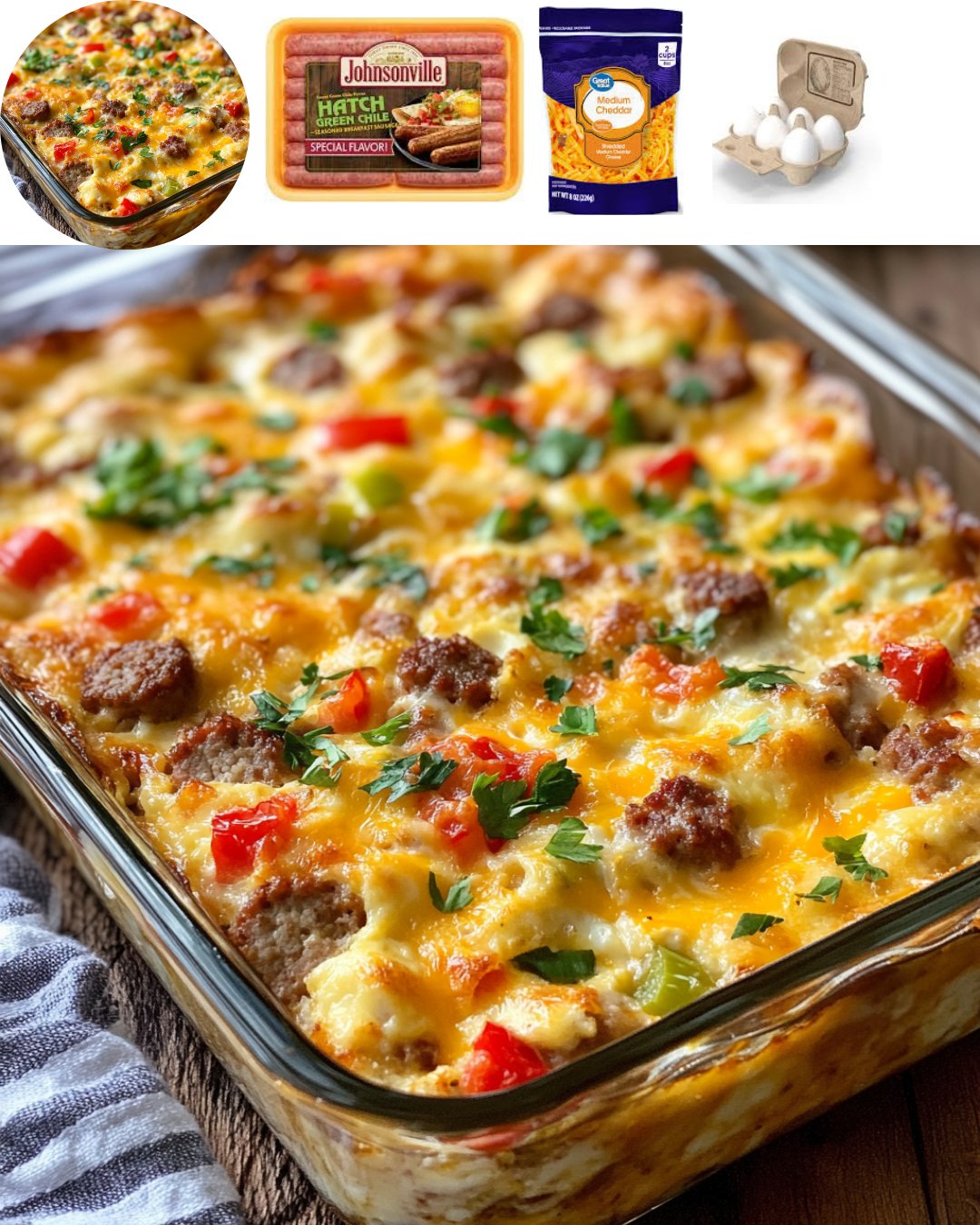
Breakfast Sausage and Egg Casserole is the kind of hearty, all‑in‑one bake that makes mornings easy and satisfying. Crumbled breakfast sausage, tender vegetables, and plenty of cheese are tucked into a baking dish with either bread or hash browns, then covered in a seasoned egg and milk mixture that bakes up into a fluffy, sliceable casserole. You can customize it with your favorite add‑ins – peppers, onions, spinach, different cheeses – and assemble it the night before so all you have to do is pop it into the oven when you wake up. It feeds a crowd, reheats well, and tastes just as good on a busy weekday as it does on a holiday morning.
Equipment
- 9×13‑inch (or similar 3–4 quart) baking dish, lightly greased.
- Large skillet for browning sausage and sautéing vegetables.
- Large mixing bowl for whisking eggs and milk.
- Whisk, wooden spoon or spatula, and measuring cups/spoons.
- Optional: plastic wrap or foil if assembling as an overnight casserole.
Ingredients
Base (bread or hash browns – choose one):
- 6–8 slices sturdy white or Italian bread, cut into 1‑inch cubes, crusts removed if you prefer a softer texture; OR about 20–30 oz (560–850 g) thawed shredded or diced hash browns.
Sausage and vegetables:
- 1 lb (450 g) breakfast sausage, casings removed if in links.
- ¼–½ cup finely diced onion.
- ½ red bell pepper, diced.
- ½ green bell pepper, diced (optional but classic).
- 2–3 cloves garlic, minced, or 1 teaspoon garlic powder.
Egg mixture and cheese:
- 10–12 large eggs.
- 2–2½ cups (480–600 ml) milk, evaporated milk, or half‑and‑half (richer = creamier casserole).
- 2–3 cups (about 200–300 g) shredded cheese, divided (cheddar, Colby Jack, or pepper jack are popular choices).
- 1 teaspoon salt (or to taste).
- ½ teaspoon black pepper.
- ½–1 teaspoon dry mustard or Dijon (optional, for subtle tang).
- ½ teaspoon onion powder (optional).
- ½ teaspoon Italian seasoning, paprika, or your favorite herb blend (optional).
- 2–3 green onions, sliced, for garnish (optional).
Instructions And Steps
Start by preparing your base. For a bread‑style casserole, lightly grease the baking dish and arrange the bread cubes in an even layer to fully cover the bottom. For a hash brown base, spread the thawed hash browns evenly in the dish, breaking up any clumps so they form a uniform layer.
Brown the sausage in a large skillet over medium‑high heat, breaking it into crumbles as it cooks until no pink remains. Drain off excess grease if needed, then add the diced onion and bell peppers to the skillet and cook for another 3–5 minutes, until the vegetables soften and the onions turn translucent. Stir in the minced garlic and cook for 30–60 seconds until fragrant.
Remove the sausage and vegetable mixture from the heat. If you’re using bread as the base, sprinkle the sausage and vegetable mixture evenly over the bread cubes. If using hash browns, scatter the cooked sausage and vegetables evenly over the potato layer in the dish.
Sprinkle about two‑thirds of the shredded cheese over the sausage and vegetable layer so you have plenty of cheese melting through the middle of the casserole. Save the remaining cheese for topping later.
In a large mixing bowl, crack the eggs and whisk until yolks and whites are fully blended. Add the milk (or evaporated milk/half‑and‑half), salt, pepper, dry mustard or Dijon if using, onion powder, and any additional herbs or seasonings, then whisk again until everything is well combined.
Slowly pour the egg mixture evenly over the contents of the baking dish, taking care to cover all areas so the liquid seeps down into the bread or hash browns. If using bread, press lightly with the back of a spoon to help it soak up the egg mixture; if using hash browns, gently shake or tap the dish to distribute the eggs through the potato and sausage layers.
If baking right away, let the casserole sit at room temperature for about 10–15 minutes while you preheat the oven to 350°F (175°C); this gives the bread or potatoes time to start absorbing the egg mixture. If making an overnight casserole, cover the dish tightly with plastic wrap or foil and refrigerate for at least 30 minutes and up to 24 hours.
When ready to bake, remove any covering and place the casserole in the preheated oven on the middle rack. Bake uncovered for about 45–60 minutes, depending on thickness and your oven. The casserole is done when the center is set (no liquid jiggle), the top is lightly golden, and a knife inserted in the center comes out clean or with just moist crumbs of egg, not runny custard.
About 10–15 minutes before the casserole is fully cooked, sprinkle the remaining cheese evenly over the top and return the dish to the oven so the cheese melts into a bubbly, golden layer. If you like a deeper color, you can broil briefly at the very end, watching closely so the cheese doesn’t burn.
Once done, remove the pan from the oven and let it rest for 5–10 minutes before slicing. This rest time helps the egg mixture firm up so you can cut neat squares instead of having the casserole collapse or run when served.
Garnish with sliced green onions or fresh herbs if desired, then cut into squares and serve warm, making sure each portion includes sausage, eggs, cheese, and some of the base. It’s great on its own or alongside fruit, toast, or a light salad, depending on whether you’re serving it for breakfast, brunch, or brinner.
Tips And Tricks
Decide on your base for the texture you want. Bread gives you a more custardy, strata‑style casserole that’s soft with pockets of soaked bread, while hash browns give you a heartier, potato‑forward version with more structure and a slightly crisp edge where the potatoes meet the pan. Both can be assembled ahead, but bread benefits especially from an overnight soak so it fully absorbs the egg custard.
Breakfast sausage adds lots of flavor, so choose one you love – regular, sage, maple, or spicy – and drain it well after browning to avoid greasy pockets in the finished casserole. If using a sweeter maple sausage, you may want to balance it with extra black pepper or a bit more salt; if using a spicy one, watch the added spice level so it doesn’t become too hot for brunch guests.
Use enough eggs and dairy to fully saturate the base; a skimpy egg mixture can leave dry patches of bread or potatoes. A rough guideline many recipes follow is about 8–12 eggs and 2–2½ cups of milk or evaporated milk for a 9×13‑inch pan, depending on how thick and custardy you like it.
Cheese choice affects both flavor and melt. Cheddar is classic and crowd‑pleasing, Colby Jack melts smoothly and mildly, and pepper jack adds a nice kick. Reserve some cheese for topping so you get a gooey upper layer as well as cheesy bits throughout.
Always let the casserole sit for a bit after baking. This not only makes it easier to slice but also keeps the interior from feeling watery, as the hot custard finishes setting while it cools slightly. If you’re baking from a chilled state, add about 5–10 extra minutes to the bake time and check that the center is cooked through.
Variations
Make it extra hearty by using hash browns as the base and stirring in additional veggies like spinach, mushrooms, broccoli, or zucchini; this turns the casserole into a more complete meal in one pan. Just sauté watery vegetables briefly first so they don’t release too much moisture into the eggs.
Change the flavor profile by swapping breakfast sausage for ham, bacon, or even chorizo. Ham gives a milder, slightly smoky flavor that pairs especially well with Swiss or Gruyère cheese, while bacon adds crisp, salty bites throughout. Chorizo brings a big hit of spice and works nicely with pepper jack or a Mexican blend.
Turn it into a lighter option by using turkey sausage, reduced‑fat cheese, and low‑fat milk instead of cream, and loading up on vegetables; the casserole will still be satisfying thanks to the eggs and spices. You can also reduce the cheese on top and lean more on herbs, onions, and peppers for flavor.
For a more “fancy brunch” feel, add herbs like chives, dill, or thyme and use a mix of cheeses such as feta, goat cheese, or gruyère alongside cheddar. Serving smaller squares with a side salad or fruit platter turns this homey casserole into something that feels restaurant‑ready while still being easy to assemble in advance.