
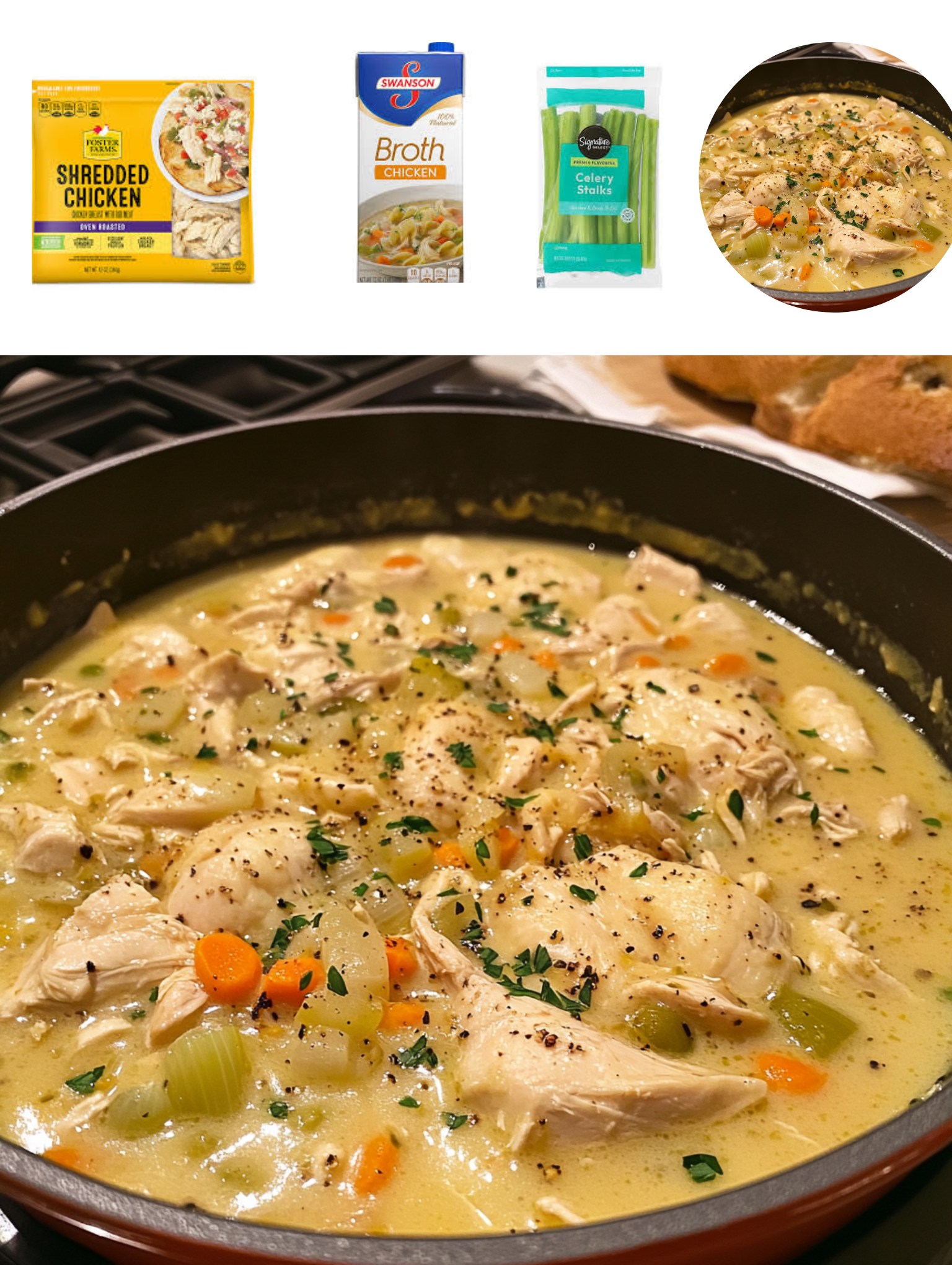
Chicken and Dumplings is the kind of old-fashioned, made-from-scratch meal that feels like a hug in a bowl. Tender pieces of chicken and simple vegetables simmer in a rich, velvety broth, then get topped with spoonfuls of soft biscuit dough that puff up into fluffy dumplings as they cook.
The result is a one-pot dinner that’s part creamy chicken soup, part stew, and completely satisfying on a cold day. With pantry-friendly ingredients and a quick drop-dumpling dough, it’s surprisingly simple to make at home, whether you use raw chicken thighs or shortcut with rotisserie chicken.
Equipment
- Large heavy-bottomed pot or Dutch oven with lid.
- Cutting board and sharp knife.
- Wooden spoon or spatula for sautéing and stirring.
- Medium mixing bowl for dumpling dough.
- Measuring cups and spoons.
- Tongs or fork for handling chicken.
Ingredients
For the chicken soup base:
- 2 tablespoons butter or olive oil.
- 1 medium onion, diced.
- 2 carrots, diced.
- 2 celery stalks, diced.
- 2–3 cloves garlic, minced (optional but tasty).
- 1 ½–2 lb (680–900 g) boneless, skinless chicken thighs or breasts, cut into chunks (or use about 3 cups cooked, shredded chicken).
- 6 cups (about 1.4 L) low-sodium chicken broth or stock.
- 1 cup (240 ml) milk or evaporated milk for creaminess.
- 2–3 tablespoons all-purpose flour for thickening (or more as needed).
- 1 teaspoon dried thyme or poultry seasoning.
- 1 bay leaf (optional).
- ¾–1 teaspoon kosher salt, or to taste.
- ½ teaspoon black pepper, or to taste.
- 1 cup frozen peas (optional, added at the end).
For the dumplings:
- 2 cups (250 g) all-purpose flour.
- 1 tablespoon baking powder.
- ½ teaspoon baking soda (optional, for extra fluffiness).
- 1 teaspoon salt.
- 2 tablespoons cold butter, cut into small pieces (or melted butter if following a drop-dumpling style).
- 1 cup (240 ml) milk, buttermilk, or heavy cream, plus more as needed.
- 1 teaspoon chopped fresh thyme or parsley (optional, for herby dumplings).
Instructions And Steps
Melt the butter or heat the oil in a large Dutch oven over medium heat, then add the onion, carrots, and celery. Cook, stirring occasionally, until the vegetables are softened and starting to turn golden at the edges, about 5–7 minutes, then stir in the garlic and cook for 30 seconds until fragrant.
Add the raw chicken pieces to the pot, sprinkle in the thyme (or poultry seasoning), salt, and pepper, and stir to coat the chicken in the aromatics. Cook for a few minutes until the chicken is opaque on the outside but not fully cooked through.
Sprinkle the flour evenly over the chicken and vegetables, stirring to coat everything; cook this mixture for 1–2 minutes to remove the raw flour taste and form a light roux on the bottom of the pan. Slowly pour in the chicken broth while stirring and scraping up any browned bits from the bottom so the flour blends smoothly into the liquid without lumps.
Bring the pot up to a gentle boil, then reduce the heat to low or medium-low and let it simmer for about 15–20 minutes, until the chicken is cooked through and the broth has thickened slightly. If using pre-cooked shredded chicken, let the veggies and thickened broth simmer first, then stir in the chicken and warm it through for a few minutes.
Pour in the milk or evaporated milk and add the peas, if using, then return the soup to a gentle simmer (not a hard boil) so it stays creamy without curdling. Taste the broth and adjust seasoning with more salt and pepper as needed; this should be your ideal soup base before adding dumplings.
While the soup simmers, make the dumpling dough. In a medium bowl, whisk together the flour, baking powder, (baking soda if using), and salt, plus any herbs like thyme or parsley. Cut in the cold butter with a pastry cutter, two forks, or your fingers until the mixture looks like coarse crumbs, or stir in melted butter if following a simpler drop-dough method.
Pour in the milk or buttermilk and stir just until a soft, sticky dough forms; avoid overmixing so the dumplings stay tender and fluffy rather than dense. The dough should hold together but still be moist and scoopable; add a spoonful more milk if it seems too dry, or a dusting of flour if it seems overly wet.
Make sure the soup is at a gentle simmer with small bubbles rising, then use a spoon or small scoop to drop dollops of dumpling dough directly onto the surface of the hot broth. Space them slightly apart—they will puff and expand as they cook—and avoid stirring them into the liquid.
Cover the pot with a tight-fitting lid and let the dumplings simmer gently for about 15 minutes without lifting the lid; the trapped steam helps them cook through and become light and fluffy. After this time, check one dumpling by cutting it in half; it should be cooked through in the center with a biscuit-like texture, not doughy.
Once the dumplings are done, gently stir in any final additions like extra cooked chicken or a splash of cream, if desired, taking care not to break up the dumplings. Remove the bay leaf if you used one, sprinkle with extra herbs, and ladle the Chicken and Dumplings into bowls, making sure each portion gets both broth and dumplings.
Tips And Tricks
Keep the simmer gentle once the dumplings are in; a hard boil can break them apart or make them tough instead of fluffy. Resist lifting the lid too often, since losing steam can slow down cooking and affect the dumplings’ texture.
Mix the dumpling dough just until the flour is moistened; overworking develops gluten and leads to dense, chewy dumplings. If using buttermilk or cream, you may get an even more tender, biscuit-like dumpling with richer flavor.
Using chicken thighs adds extra richness and tenderness compared to white meat, which can dry out more easily; rotisserie chicken is a great shortcut if you need to save time. For a thicker, stew-like broth, add an extra spoonful or two of flour when making the roux, or simmer a bit longer before adding the dumplings.
Taste and adjust seasoning after adding milk or cream, since dairy can mellow the saltiness and herbs in the broth. A pinch of extra thyme, black pepper, or even a splash of hot sauce in individual bowls can brighten the final dish without changing its classic character.
If making ahead, prepare the soup base and chill it, then reheat to a gentle simmer and cook the dumplings fresh right before serving so they stay fluffy. Leftovers reheat best on the stovetop over low heat with a splash of broth or milk; warm gently so the dumplings don’t fall apart.
Variations
For a true Southern shortcut, use torn refrigerated biscuits or canned biscuit dough as dumplings, dropping or layering them into the simmering broth for an easier, more rustic version. You can also roll biscuit-style dough into thin strips for “flat” dumplings that eat more like noodles.
Make it extra creamy by adding a bit of heavy cream or cream of chicken soup toward the end for a richer, gravy-like base. Alternatively, keep it more brothy by using more stock and less milk, for a lighter, soup-style Chicken and Dumplings.
Add extra vegetables like peas, corn, or even hominy to bulk up the soup and add color and sweetness. Fresh herbs like thyme, parsley, or chives stirred in at the end brighten the flavor and give a nice contrast to the rich broth.
For slow cooker or Instant Pot adaptations, the chicken and broth can be cooked low and slow or under pressure, then the dumplings are added and cooked on a simmering setting at the end. You can also flavor the base with a touch of turmeric or paprika for a deeper color and subtle warmth without changing the classic taste too much.