
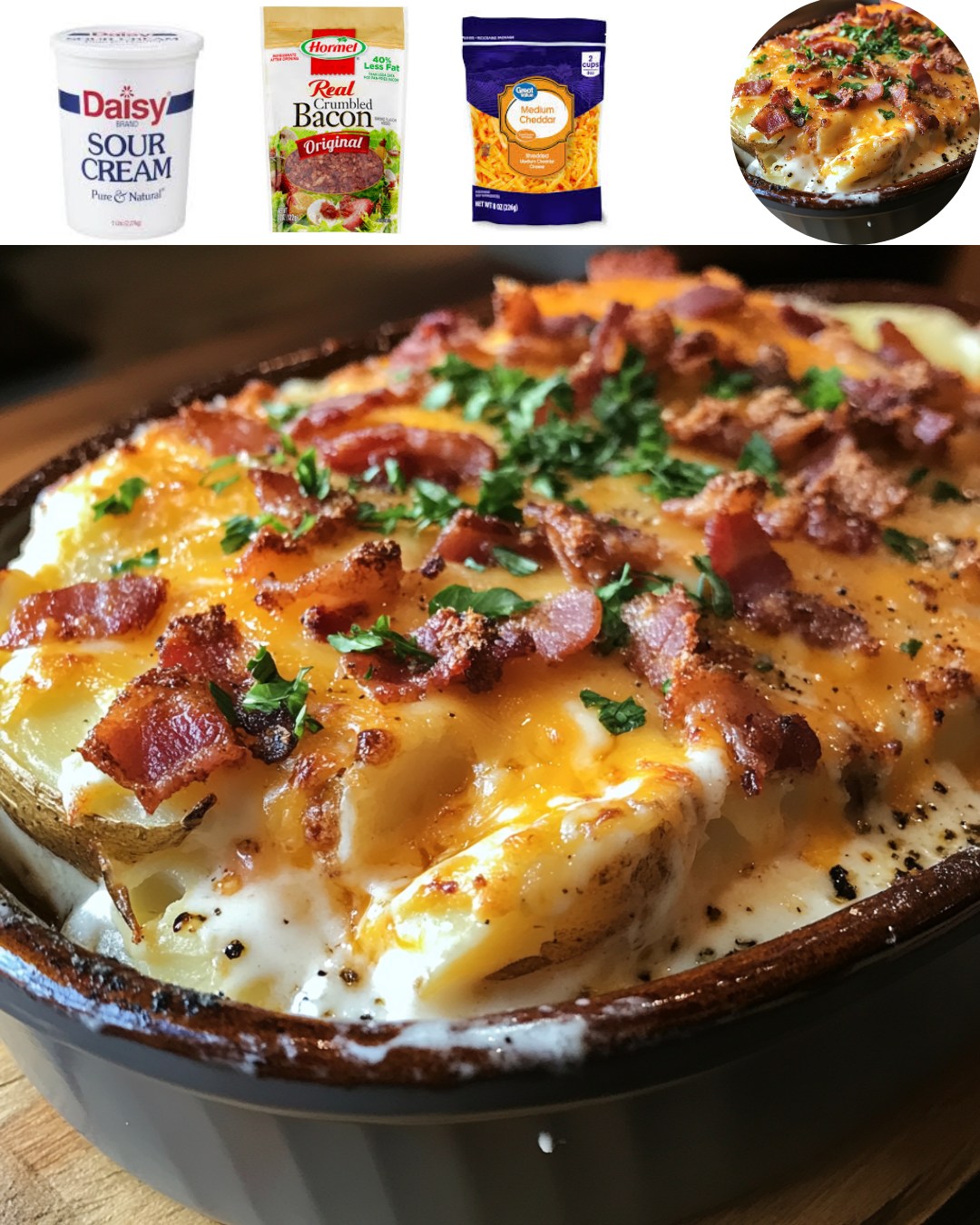
This Loaded Baked Potato Casserole starts with tender, fluffy potatoes that get mashed or gently folded with butter, cream cheese, sour cream, and a splash of milk until they’re rich and creamy. Then you stir in shredded cheddar, crispy bacon, and green onions, spread the mixture into a baking dish, and blanket the top with even more cheese and bacon before it goes into the oven. As it bakes, the casserole heats through, the cheese melts into a gooey layer on top, and the edges get just a little bit golden, giving you that perfect mix of creamy and slightly crisp.
Equipment
- Large pot for boiling potatoes
- Colander
- Large mixing bowl
- Potato masher or hand mixer
- 9×13‑inch or 2–3 quart baking dish
- Measuring cups and spoons
- Skillet (for cooking bacon)
- Spatula or wooden spoon
- Foil (optional, for covering if needed)
Ingredients
- 6–8 medium russet potatoes (about 3–3½ pounds), peeled and cut into chunks
- 4 tablespoons butter
- 4 ounces cream cheese, softened
- ⅔–¾ cup sour cream
- ½ cup milk or cream, warmed (plus a splash more if needed)
- ½–1 teaspoon garlic powder
- 1 teaspoon salt, plus more to taste
- ¼–½ teaspoon black pepper
- 2–2½ cups shredded cheddar cheese, divided
- 8–10 slices bacon, cooked until crisp and crumbled (reserve some for topping)
- 3–4 green onions, thinly sliced (plus extra for garnish)
Cooking the Potatoes
Everything starts with well‑cooked potatoes, because they’re the base that carries all the richness and toppings. Russet potatoes are a classic choice because their starch content makes for fluffy mash, but Yukon Golds also work and give a naturally buttery flavor.
Most loaded potato casseroles use either baked potatoes that are later scooped and chopped, or boiled potatoes chopped into chunks. Boiling is usually the quicker route.
Peel the potatoes and cut them into evenly sized pieces—roughly 1½‑inch chunks work well. Place them in a large pot, cover with cold water by an inch or so, and add a generous pinch of salt. Starting in cold water helps the potatoes cook evenly inside and out.
Bring the pot to a boil, then reduce the heat to maintain a gentle simmer. Cook until the potatoes are very tender when pierced with a fork, usually 15–20 minutes depending on size. You want them soft enough to mash easily without lumps.
When the potatoes are done, drain them well in a colander and let them sit for a minute so excess moisture evaporates. Return them to the warm pot.
The residual heat will help any remaining moisture steam off, which gives you fluffier potatoes once you add the dairy. This is a good time to cook the bacon if you haven’t already: slice or chop it and fry until crisp, then drain on paper towels and crumble.
Making the Creamy Potato Base
With the potatoes back in the warm pot, add the butter, cream cheese, sour cream, salt, pepper, and garlic powder. The heat from the potatoes will soften the butter and cream cheese, making them easier to incorporate.
Using a potato masher or hand mixer on low speed, begin mashing the potatoes and blending in the dairy. As the mixture starts to smooth out, gradually add the warm milk or cream, a little at a time, until the potatoes reach a creamy but still scoopable consistency. They should be thick and rich, not runny.
You can decide how rustic or smooth you want the texture. If you like some homey chunks, mash less aggressively and fold more than you beat; if you prefer a silky base more like restaurant mashed potatoes, you can mix a bit longer.
Just be careful not to overmix with an electric mixer, as that can make potatoes gluey. Taste and adjust the seasoning at this point—these potatoes should already taste delicious on their own, since they’re the core of the casserole. Add more salt, pepper, or garlic as needed.
Loading the Potatoes
Now it’s time to turn these creamy potatoes into “loaded” potatoes. Add about 1½–2 cups of shredded cheddar, most of the crumbled bacon (reserve some for topping), and most of the sliced green onions to the pot.
Using a spatula or wooden spoon, gently fold everything in. The idea is to distribute the cheese, bacon, and green onions evenly without turning the potatoes into glue by stirring too hard. The residual heat will start to melt the cheese into ribbons and pockets of gooey goodness throughout the mash.
Some recipes also stir in extras like parsley or a bit of onion powder at this stage for added flavor, or even a spoonful of mayonnaise for more richness and tang in place of some sour cream.
You can customize here based on what you like, but the core formula is potatoes plus butter, cream cheese, sour cream, cheese, bacon, and green onion.
Assembling the Casserole
Preheat your oven to 350–375°F (175–190°C). Many loaded baked potato casseroles bake at 350°F for a gentler heat, while some go to 375°F for a bit more browning on top. Grease a 9×13‑inch or similar 2–3 quart baking dish with butter or nonstick spray.
Scrape the loaded potato mixture into the prepared baking dish and spread it into an even layer. You can smooth the top or leave some peaks and swirls; those little high points will brown nicely in the oven.
Sprinkle the remaining cheddar cheese evenly over the surface, then scatter the reserved crumbled bacon over the top. This double layer of cheese and bacon is what makes it truly “loaded,” not just cheesy mashed potatoes.
If you want a make‑ahead option, you can cover the dish tightly and refrigerate it at this stage for several hours or overnight. You’ll just need to add some baking time to ensure it heats through from cold.
Many twice baked potato casseroles and holiday versions are assembled ahead like this and baked just before serving.
Baking and Resting
Place the casserole on the center rack of the preheated oven and bake until it’s hot all the way through and the top is melted and bubbly.
At 350°F, this usually takes around 25–30 minutes; if the dish is going in straight from the fridge, plan on closer to 35–40 minutes and consider covering with foil for the first part so the top doesn’t overbrown before the center warms.
You’ll know it’s ready when you see the edges bubbling, the cheese fully melted, and some golden spots forming where the cheese and potatoes meet. If you want a deeper golden top, you can switch the oven to broil for the last minute or two, watching closely to prevent burning.
Once done, remove the casserole from the oven and let it rest for about 5–10 minutes. This brief rest lets the cheese set slightly and makes it easier to scoop neat portions without everything sliding apart.
Right before serving, sprinkle the top with the remaining sliced green onions. That fresh burst of color and oniony brightness wakes up the rich flavors and gives it that classic “loaded” baked potato look.
Tips and Variations
Loaded Baked Potato Casserole is easy to customize. If you prefer a slightly lighter version, you can swap some of the cream cheese or sour cream for Greek yogurt, use milk instead of cream, or reduce the cheese inside the potatoes and focus it more on the top.
For extra indulgence, you can add more bacon, a bit more cheese, or even fold in some cooked, crumbled sausage or diced ham to push this into main‑dish territory instead of just a side.
Texture is another place to play. Some recipes emphasize gently folding rather than mashing to keep more chunks so it eats a bit more like a pan of chopped baked potatoes tossed in toppings instead of smooth mash.
If you like that, go easier on the mixing and leave some visible pieces. If you want ultra‑smooth, mash more thoroughly and use a hand mixer on low, but avoid overworking the potatoes.
You can also change up the cheese. Sharp cheddar is the classic, but blends like Colby Jack, Monterey Jack, or even a bit of smoked Gouda or pepper Jack can take the flavor in different directions. A sprinkle of Parmesan on top with the cheddar can add a salty, nutty edge and help with browning.
If you’re starting with baked potatoes instead of boiled, the method shifts slightly but the end result is similar.
You bake whole potatoes until tender, let them cool enough to handle, then scoop or chop the insides and mix them with the same lineup of butter, sour cream, cream cheese, cheese, bacon, and seasonings before transferring to a casserole dish. Using baked potatoes gives a slightly different texture and a bit more of that classic baked potato flavor.
Serving and Storage
Loaded Baked Potato Casserole is a natural side dish for grilled or roasted meats: steak, pork chops, barbecue, roasted chicken, ham, and turkey all pair beautifully with it.
Because it’s rich and filling, a simple green salad, roasted vegetables, or something crisp like green beans or a broccoli salad makes a good contrast on the plate. It’s also a star on holiday tables, where it can take the place of plain mashed potatoes for a more decadent option.
Leftovers keep very well. Let the casserole cool, then cover the dish tightly or transfer portions to airtight containers and refrigerate for 3–4 days.
To reheat, you can warm individual servings in the microwave, or reheat the whole dish in the oven at 325°F (165°C), covered with foil until hot, then uncover briefly if you want to re‑crisp the top. If the potatoes seem a bit thick after chilling, a small splash of milk stirred into the portion before reheating can help restore creaminess.
This casserole also freezes reasonably well, especially if you’re okay with a slightly softer texture after thawing. Cool it completely, wrap tightly or portion into freezer‑safe containers, and freeze for up to a couple of months. Thaw overnight in the refrigerator and reheat gently until heated through.
The flavors stay on point—cheesy, smoky, savory, and creamy—which is exactly why Loaded Baked Potato Casserole has become a go‑to side dish for everything from weeknight dinners to big celebrations.