
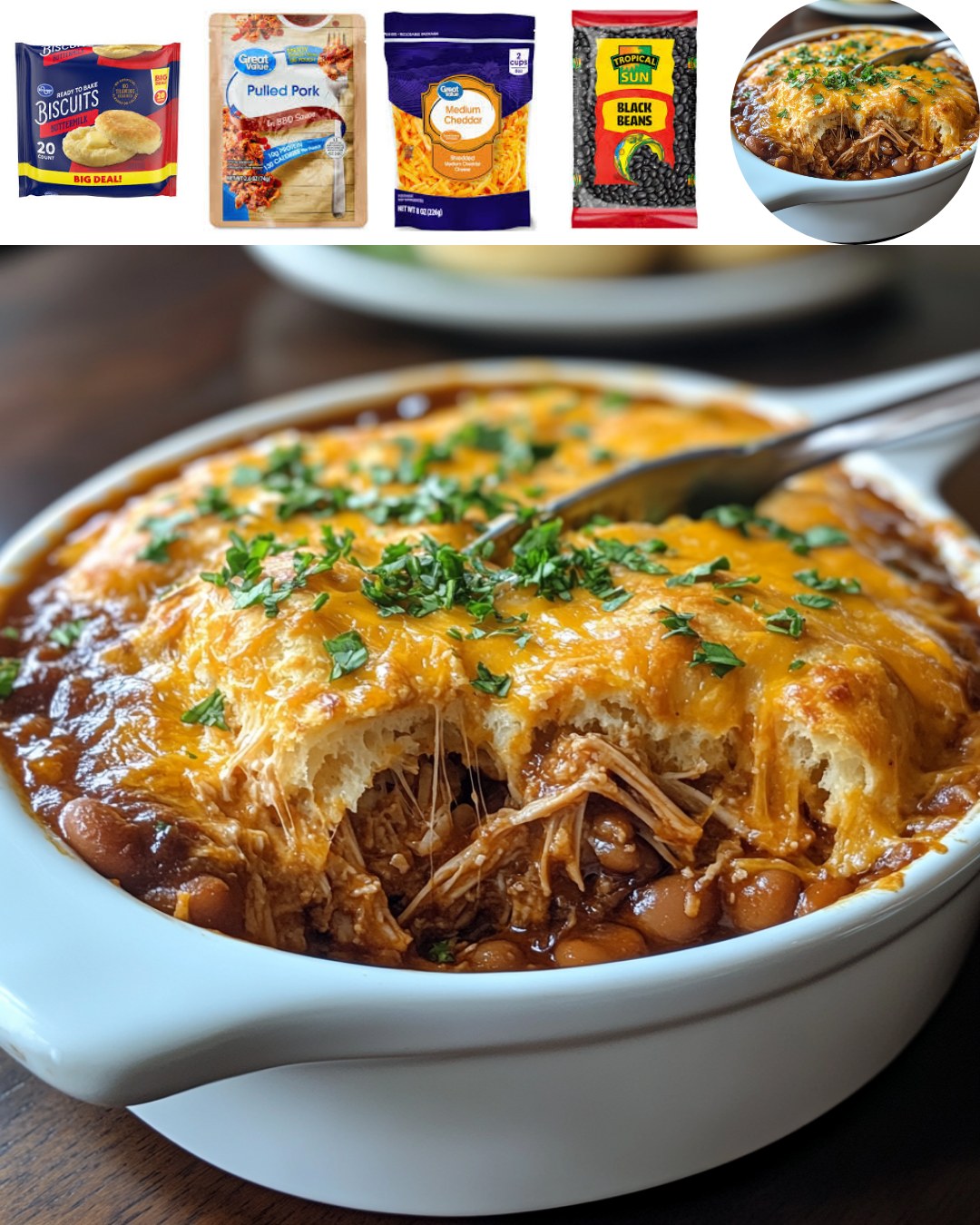
This BBQ Pulled Pork Casserole leans into everything that makes pulled pork so irresistible—smoky meat, tangy‑sweet sauce, melty cheese—and wraps it in a format that’s weeknight‑friendly and crowd‑pleasing. Instead of building individual sandwiches, you layer pulled pork into a baking dish with beans and corn for extra substance, then top it with something starchy and comforting: either a cornbread batter that bakes into a golden crust, or a loaded potato base or hashbrown layer that soaks up all the juices. As it bakes, the sauce bubbles up around the edges, the pork stays juicy, and the cheese melts into every layer, so you get a bit of everything in each scoop.
Equipment
- 9×13‑inch baking dish
- Large mixing bowl
- Medium mixing bowl (for cornbread layer, if using)
- Whisk
- Spatula or wooden spoon
- Measuring cups and spoons
- Foil for covering, if needed
Ingredients
This version follows the cornbread‑topped BBQ pulled pork casserole style, which is one of the most popular ways to build it.
For the pork layer:
- 3–4 cups cooked pulled pork, warmed slightly if cold
- 1–1½ cups BBQ sauce (sweet, smoky, or spicy, your choice)
- 1 can (15–16 ounces) black beans or baked beans, drained if using black beans, undrained if using baked beans depending on how saucy you want it
- 1 cup corn kernels (frozen or canned and drained)
- 1½–2 cups shredded cheddar or Colby Jack cheese, divided
For the cornbread topping:
- 1 box (about 8.5 ounces) cornbread or corn muffin mix (such as Jiffy)
- 1 egg
- ½ cup milk or buttermilk (per package directions)
- 2 tablespoons melted butter
- ½–1 cup shredded cheddar cheese (folded into the batter)
Optional toppings/garnishes:
- Sliced green onions or chives
- Pickled jalapeños or sliced pickles
- Extra BBQ sauce or sour cream for serving
Preparing the Pulled Pork Layer
The heart of this casserole is the BBQ pork layer, so start by getting that base right. If your pulled pork is coming straight from the fridge, it helps to warm it a bit in the microwave or a skillet so it’s easier to mix and spread.
Place the shredded pork in a large mixing bowl and pour in about 1 cup of BBQ sauce to start. Use a fork or tongs to toss and coat the pork thoroughly, adding more sauce as needed until the meat looks glossy and well‑covered but not swimming. How saucy you go is up to you and how wet the pork was to begin with; recipes using leftover pulled pork often adjust the sauce amount for that reason.
Once the pork is coated in sauce, stir in the beans and corn. Black beans bring an almost Tex‑Mex note and extra protein, while baked beans add sweetness, smokiness, and more sauce; either direction works, and some pulled pork casseroles lean heavily on baked beans and BBQ for a “cowboy casserole” feel.
Gently fold everything together until the beans and corn are evenly dispersed throughout the pork. This mixture should be hearty and chunky, with enough moisture from the sauce and beans to stay juicy as it bakes.
At this stage, mix in about half of your shredded cheese so some of it melts into the pork layer itself. This is a trick a lot of recipes use: you get cheese both running through the casserole and melted on top, which makes each bite feel especially indulgent.
Taste a small bit and adjust the seasoning if your pork wasn’t heavily seasoned before—sometimes a pinch of salt or a dash of hot sauce helps balance the sweetness of the BBQ sauce.
When the mixture tastes good to you, lightly grease your 9×13‑inch baking dish and spread the BBQ pork, bean, and corn mixture in an even layer across the bottom. Use a spatula to press it gently into the corners so it bakes uniformly. This will be the base that the cornbread layer bakes on top of, soaking up flavors and juices from below.
Mixing the Cornbread Topping
The cornbread topping is what turns this from simple “pulled pork in a pan” into a full casserole that feels a bit like tamale pie or a BBQ cornbread bake. In a medium mixing bowl, whisk together the cornbread mix, egg, and milk according to the package directions.
Most mixes just require those three ingredients, but always check the box in case yours differs slightly. You’re aiming for a smooth batter with no dry pockets of mix remaining.
Next, whisk in the melted butter. This adds richness and gives the cornbread a more homemade taste, with a tender crumb and slightly crisp, golden edges. Fold in the remaining shredded cheese so it’s evenly distributed through the batter.
Many pulled pork cornbread casseroles call for cheese mixed right into the topping; it bakes into little melty pockets that are especially good where the cornbread meets the saucy pork underneath.
The cornbread batter should be thick but pourable, able to spread over the pork without sinking all the way through. If it feels extremely thick and hard to work with, you can add a splash more milk; if it seems overly thin, a small spoonful of cornmeal or a sprinkle of extra mix can bring it back into line.
Assembling and Baking
With both layers ready, preheat your oven to 350°F (175°C). Some recipes bake similar casseroles at 375–400°F, but 350°F gives the cornbread enough time to cook through without over‑browning before the center sets. If you like your cornbread extra browned, you can always bump up the heat or broil briefly at the end.
Take your baking dish with the BBQ pork mixture already spread in it. Carefully spoon the cornbread batter over the top in several large dollops, then use a spatula or the back of a spoon to gently spread it into an even layer that completely covers the pork.
Work slowly, nudging the batter out toward the edges rather than trying to push it hard across the surface, which can cause it to drag the pork up into the topping. If a little pork peeks through here and there, it’s not the end of the world; the batter will puff and spread some as it bakes.
Once the cornbread is evenly distributed, you can sprinkle a small extra handful of cheese over the very top if you want a visibly cheesy crust. Then place the dish on the center rack of the preheated oven and bake for about 30–35 minutes, or until the cornbread is golden brown and set in the center.
You should see the pork layer bubbling up around the edges, and a toothpick inserted into the cornbread topping should come out mostly clean, with maybe a few moist crumbs but no wet batter.
If the top seems to be browning too quickly before the center is cooked through, loosely tent the casserole with foil for the last part of baking. On the other hand, if the cornbread looks pale after 30 minutes but a toothpick test shows it’s nearly done, a final few minutes under the broiler can give you that deeper golden color and lightly crisp top, as long as you watch it closely.
When the casserole is done, remove it from the oven and let it rest for 5–10 minutes. This short rest lets the cornbread firm up slightly and the saucy pork layer settle, so it slices more cleanly and doesn’t spill out everywhere when you cut into it.
Serving Ideas
BBQ Pulled Pork Casserole is bold and rich, so it pairs best with sides that add freshness, crunch, or a bit of acidity. A classic choice is coleslaw—either creamy or vinegar‑based—which echoes the BBQ joint vibe and adds crunch against the soft cornbread and tender pork. A simple green salad with a tangy dressing also works well, as does a plate of sliced tomatoes and cucumbers or some grilled or steamed vegetables like green beans and broccoli.
For toppings, you have plenty of fun options. Sliced green onions, pickled jalapeños, dill pickle slices, or even a dollop of sour cream can all bring contrast and extra interest to each serving. If you prefer extra saucy, keep a bottle or small bowl of warmed BBQ sauce on the table so people can drizzle a bit more over their portion.
On game days or casual gatherings, you can cut the casserole into smaller squares and serve it more like a hearty snack or small plate alongside chips, dips, and other finger foods. It’s sturdy enough that you can scoop and serve it from the baking dish without it falling apart completely, especially after it has rested.
Tips, Variations, and Storage
There are several easy ways to tweak this casserole without losing its BBQ comfort‑food core. If cornbread isn’t your favorite, you can adapt the same pork base to other starches.
Some recipes use a loaded mashed potato layer, spreading bacon‑ and cheese‑spiked mashed potatoes in the dish, then topping them with BBQ pork and more cheese and baking until everything is hot and melty.
Others build the casserole over a hashbrown base, baking a creamy hashbrown mixture first, then layering the BBQ pork and cheese on top and returning it to the oven. You can also go the tater tot route, spreading the pork in the dish, topping with beans and cheese, and finishing with a blanket of frozen tater tots.
The BBQ profile is just as flexible. A sweeter sauce will give you a more dessert‑leaning, kid‑friendly flavor, especially combined with cornbread and corn, while a smoky or spicy sauce makes the casserole feel more grown‑up.
You can stir in a little chipotle in adobo or cayenne if you’d like some heat, or add extra brown sugar or honey to the sauce for more sweetness. Using different cheeses—like Pepper Jack, smoked Gouda, or a sharp white cheddar—can also shift the flavor in fun ways.
For storage, leftovers keep very well. Let the casserole cool to room temperature, then cover the baking dish tightly or transfer portions to airtight containers. In the refrigerator, it will keep for about 3–4 days.
Reheat individual slices in the microwave, or warm larger portions in the oven at a moderate temperature until heated through. The cornbread will soften a bit but still tastes great, and the pork stays moist thanks to the sauce and beans.
This casserole also freezes nicely in portions. Wrap slices tightly or place them in freezer‑safe containers, label, and freeze for up to a couple of months.
Thaw overnight in the refrigerator and reheat gently. The cornbread layer may be slightly more tender after freezing, but the flavors remain deeply satisfying, and it’s a convenient way to get another full meal from one big batch of pulled pork.
With its layered BBQ flavors, cheesy comfort, and flexible structure, BBQ Pulled Pork Casserole quickly becomes a go‑to whenever there’s extra pork in the fridge—or whenever you’re simply craving something smoky, saucy, and baked under a golden crust.