
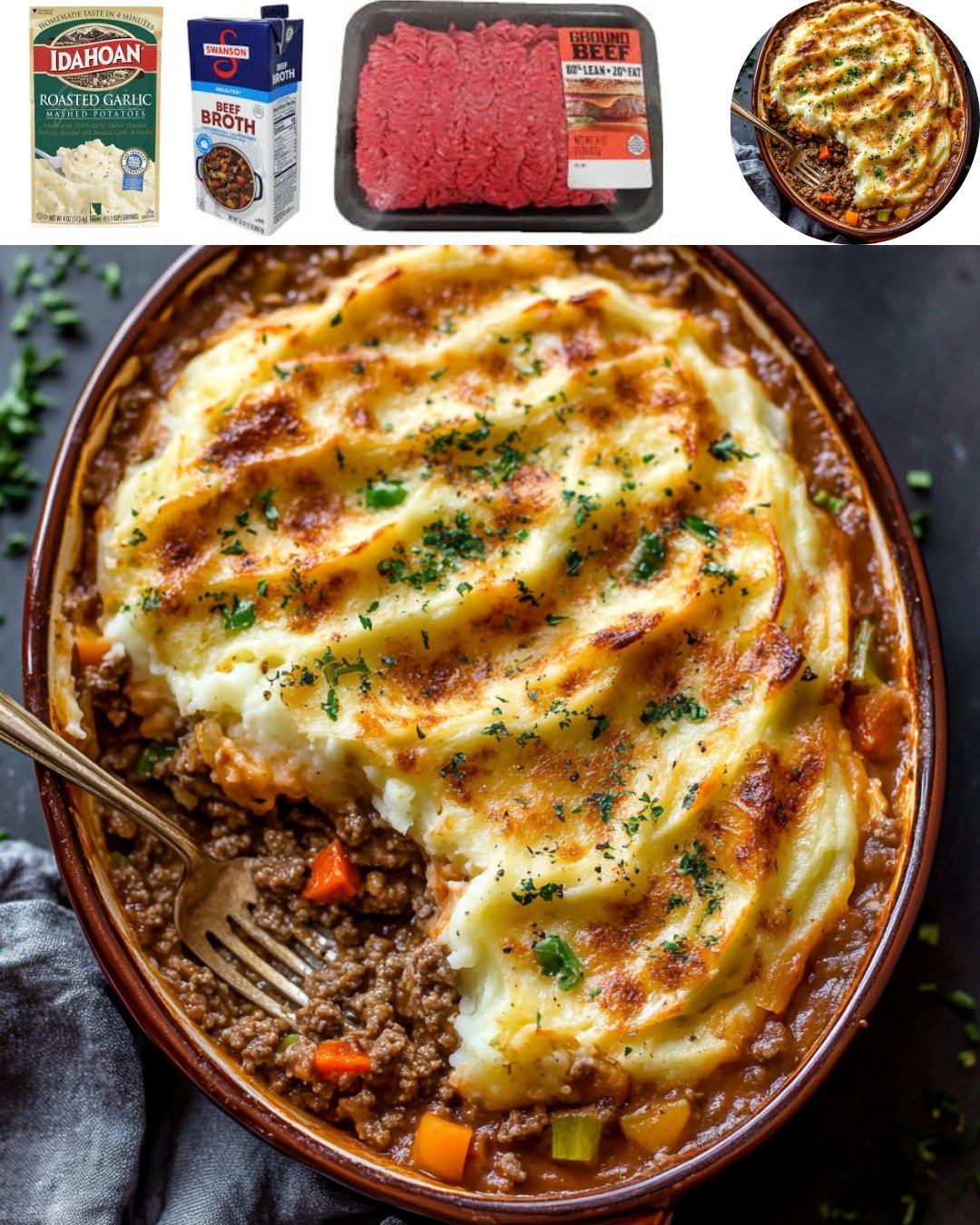
This Shepherd’s Pie Casserole is built for real life: everything bakes in one 9×13 dish, uses basic ingredients you probably already have, and reheats beautifully for next‑day lunches. The base starts with ground beef or lamb browned with onions and garlic, then simmered with tomato paste, broth, Worcestershire sauce, and mixed vegetables until it thickens into a hearty, spoon‑coating gravy. While that bubbles away, you whip up a batch of fluffy mashed potatoes—sometimes enriched with butter, sour cream, cheese, or even roasted garlic—then spread them over the meat mixture and drag a fork across the top so the peaks crisp and brown in the oven.
Equipment
- Large skillet or sauté pan
- Large pot for boiling potatoes
- Colander
- Potato masher or hand mixer
- 9×13‑inch baking dish (or similar 3‑quart casserole)
- Measuring cups and spoons
- Wooden spoon or spatula
- Foil (optional, for covering)
Ingredients
- 2½–3 pounds potatoes (Yukon Gold or russet), peeled and cubed
- 4 tablespoons butter
- ½–¾ cup milk or half‑and‑half
- ½–1 teaspoon salt, to taste
- ¼ teaspoon black pepper
- ½ teaspoon garlic powder or 1–2 cloves roasted/pressed garlic (optional)
- 1½ pounds ground beef or ground lamb (or a mix)
- 1 small onion, finely diced
- 2 cloves garlic, minced
- 2 tablespoons tomato paste
- 2 tablespoons all‑purpose flour
- 1½ cups beef broth
- 1–2 tablespoons Worcestershire sauce
- 1 teaspoon dried thyme or Italian seasoning
- ½ teaspoon smoked or sweet paprika (optional)
- 1 teaspoon salt, plus more to taste
- ½ teaspoon black pepper
- 2 cups frozen mixed vegetables (peas, carrots, corn, and/or green beans)
- ½–1 cup shredded cheddar or Parmesan for topping (optional, for a cheesy crust)
- Chopped parsley, for garnish (optional)
Making the Mashed Potato Topping
The potato layer is a big part of what makes shepherd’s pie feel so comforting, so it’s worth taking a few minutes to do it right. You start by peeling the potatoes and cutting them into evenly sized chunks so they cook at the same rate.
Yukon Golds naturally mash up creamy and flavorful, while russets give you a fluffier texture; either works, and a mix can be lovely. Place the potato chunks in a large pot, cover with cold water by about an inch, and add a generous pinch of salt. Starting them in cold water helps them cook evenly from the inside out.
Bring the pot to a boil, then reduce the heat to a gentle simmer and cook until the potatoes are very tender when pierced with a fork, usually 12–15 minutes depending on the size of the pieces. Once they’re soft all the way through, drain them well in a colander and return them to the warm pot.
Add the butter, about half of the milk or half‑and‑half, salt, pepper, and garlic powder or roasted garlic if you’re using it. Mash by hand for a more rustic texture or use a hand mixer for smoother potatoes, adding more milk a little at a time until the mash is creamy and spreadable but not runny.
Taste and adjust the seasoning: the potatoes should be delicious on their own, since they’ll be the first thing you taste in every bite of casserole.
If you like a richer topping, some recipes fold in sour cream, cream cheese, or shredded cheddar at this stage, turning the mash into something closer to loaded mashed potatoes.
Once you’re happy with the flavor and texture, cover the pot and set the mashed potatoes aside while you prepare the meat filling. They’ll firm up slightly as they sit, which actually makes them easier to spread over the hot filling later.
Cooking the Meat and Vegetable Layer
While the potatoes cook, you build the savory base on the stovetop. In a large skillet over medium‑high heat, add the ground beef or lamb and the diced onion.
Cook, breaking the meat apart with a wooden spoon, until the meat is browned and cooked through and the onion has softened and turned translucent. If there is a lot of fat rendered in the pan, carefully spoon or drain most of it off, leaving just enough to lightly coat the bottom; this keeps the final casserole rich but not greasy.
Stir in the minced garlic and cook for about 30 seconds, just until fragrant. Then add the tomato paste and cook it with the meat and onions for another minute, stirring to coat everything. This quick cooking step deepens the tomato paste’s flavor and takes away its raw edge.
Sprinkle the flour evenly over the mixture and stir again, letting it cook for a minute so the flour can absorb some of the fat and begin to toast slightly. This flour will act as the thickener for the gravy.
Now it’s time to turn the mixture into a proper sauce. Pour in the beef broth while stirring, scraping up any browned bits from the bottom of the skillet as you go so they melt into the liquid. Add the Worcestershire sauce, dried thyme or Italian seasoning, paprika if you’re using it, and another pinch of salt and pepper.
Bring the mixture up to a gentle simmer and let it bubble for 5–10 minutes, stirring occasionally, until it thickens into a glossy, spoon‑coating gravy around the meat. Adjust the seasoning to taste; the filling should be savory, a little tangy from the Worcestershire, and well‑balanced.
Once the gravy has thickened, stir in the frozen mixed vegetables. They’ll thaw quickly in the hot mixture and only need a few minutes to heat through. Using frozen veg keeps things easy and ensures the vegetables don’t get overcooked and mushy in the oven. When the vegetables are hot and the filling looks cohesive and saucy—not dry, but not soupy—it’s ready to transfer to the baking dish.
Assembling the Casserole
Preheat your oven to 375°F (190°C). Lightly grease a 9×13‑inch baking dish or similar 3‑quart casserole with a bit of butter or nonstick spray.
Pour the hot meat and vegetable mixture into the dish, spreading it into an even layer and making sure the vegetables are fairly evenly distributed so every serving gets a good mix of meat and veg.
Now bring in the mashed potatoes. Dollop them in large spoonfuls across the surface of the meat layer rather than dumping them in one big pile; this makes it easier to spread without dragging the meat up into the potatoes.
Using the back of a spoon or an offset spatula, gently spread the mash from dollop to dollop until the entire surface is covered, sealing the filling underneath. Try not to press too hard; a light touch keeps the layers distinct.
For a more traditional shepherd’s pie look, you can run a fork lightly over the top of the potatoes in a crosshatch pattern to create ridges and peaks. Those little ridges will brown more deeply in the oven and add texture.
If you’re going for a cheesy shepherd’s pie, sprinkle shredded cheddar or Parmesan evenly over the top of the potatoes at this stage for a melty, golden crust.
Baking and Resting
Slide the assembled casserole into the preheated oven and bake for 25–30 minutes, or until the filling is bubbling up around the edges and the top of the potatoes is lightly golden. If you added cheese, it should be fully melted and starting to brown in spots.
For a deeper, more even golden crust, you can flip the oven to broil for the final 1–3 minutes of baking, watching closely so the potatoes (and cheese, if using) don’t scorch.
When the casserole looks done, remove it from the oven and let it rest on the counter for about 10–15 minutes. This rest is key: it allows the gravy inside to thicken slightly and the layers to settle, making it much easier to cut or scoop clean portions without the filling spilling out everywhere.
Garnish the top with chopped parsley if you like, which adds a little color and a touch of freshness against the rich potatoes and gravy.
Tips and Variations
Shepherd’s Pie Casserole is famously adaptable, so it’s easy to tailor it to your tastes or what you have on hand. For a more traditional take, use ground lamb instead of beef, or a half‑and‑half mix; lamb gives the dish a slightly richer, more distinct flavor that’s closer to classic British shepherd’s pie.
If lamb isn’t popular at your table, sticking with ground beef or even a mix of beef and pork works beautifully and is often more budget‑friendly.
The vegetable mix can also be customized. Frozen peas and carrots are classic, but corn and green beans are common additions as well.
To sneak in extra veg, you can sauté finely chopped celery, mushrooms, or bell peppers with the onions at the beginning and then add the frozen vegetables later. Just keep the total volume similar so the filling stays balanced and not overcrowded.
If you love an extra creamy or cheesy potato topping, folding shredded cheddar, Parmesan, cream cheese, or sour cream directly into the mash is a popular upgrade. You can also make garlic mashed potatoes by stirring in roasted garlic or extra garlic powder.
For a slightly lighter version, use milk instead of cream in the potatoes, leaner meat in the filling, and go easy on the cheese—or skip it entirely and rely on the potato crust for richness.
For a shortcut on busy nights, some recipes use refrigerated prepared mashed potatoes or even leftover mash from another meal as the topping, which can save a good chunk of prep time. You can also assemble the casserole ahead, cover it tightly, and refrigerate for several hours or overnight.
If you bake it from cold, add 10–15 minutes to the baking time and make sure the center is hot and the filling is bubbling before you pull it from the oven.
Serving and Storage
Shepherd’s Pie Casserole is a complete meal in a pan—meat, potatoes, and vegetables all baked together—so it doesn’t need much on the side. A simple green salad with a bright vinaigrette or some steamed or roasted green beans, broccoli, or Brussels sprouts are great choices to add freshness and color.
If you’re serving a crowd or want to stretch the meal, warm rolls or crusty bread make a nice addition for anyone who wants to mop up extra gravy from the plate.
Leftovers keep well and often taste even better the next day as the flavors continue to meld. Let the casserole cool, then cover the dish tightly or transfer portions to airtight containers and refrigerate for up to three or four days.
To reheat, you can warm individual servings in the microwave, or cover the baking dish with foil and heat in a 325°F (165°C) oven until hot all the way through. If the potatoes seem to dry a bit on top, a small pat of butter dotted over before reheating can revive them.
Shepherd’s pie also freezes nicely. For best results, assemble and bake the casserole, let it cool completely, then wrap it tightly and freeze for up to a couple of months. Thaw overnight in the refrigerator and reheat covered in the oven until piping hot.
The potatoes and filling hold their texture well, and the dish comes out tasting just as cozy and satisfying as the day you made it—perfect for those nights when you want a homemade, comforting dinner with almost no effort.