
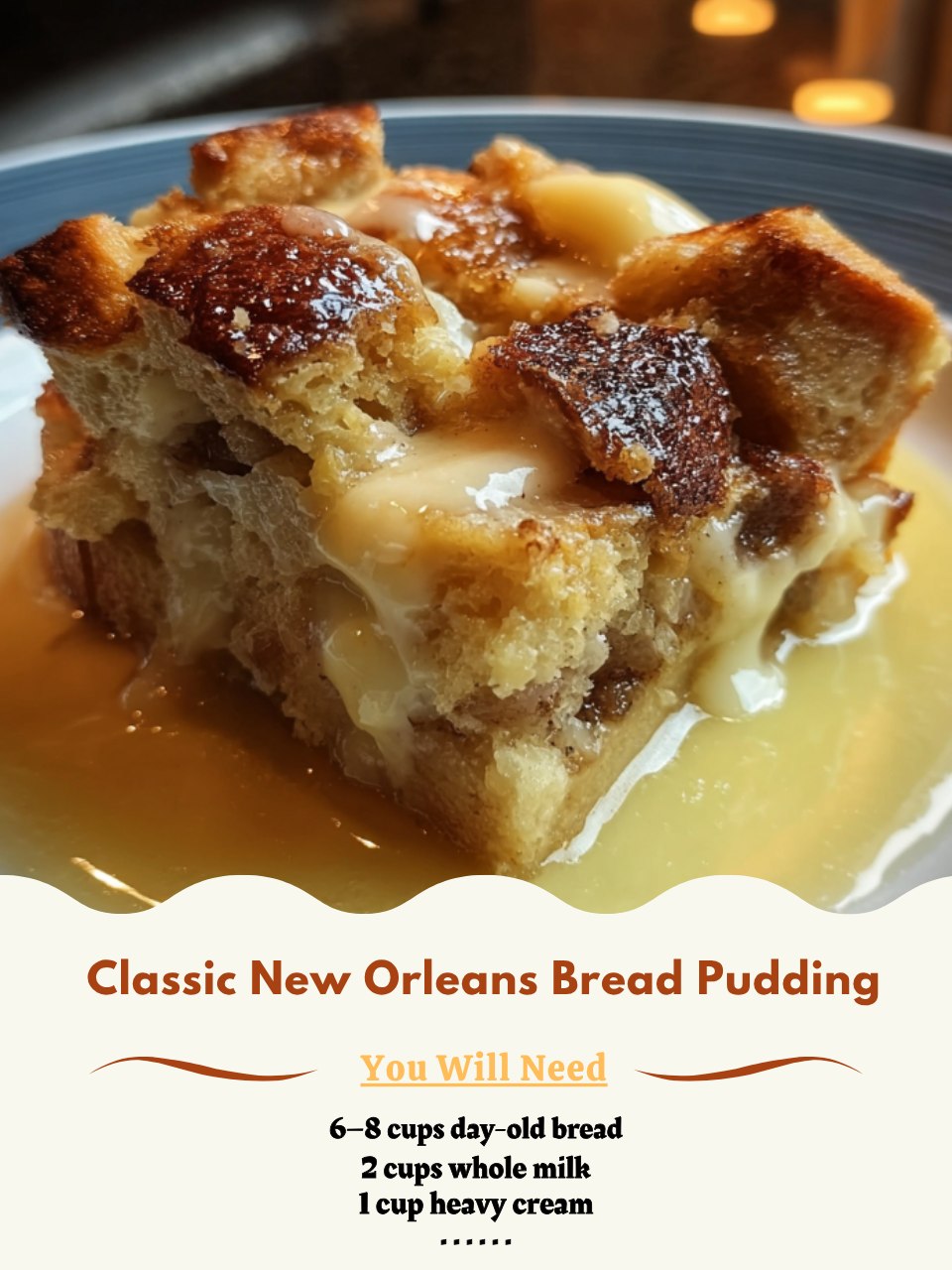
Classic New Orleans Bread Pudding is the kind of timeless Southern dessert that wraps you in warmth from the very first bite. It takes humble leftover bread and transforms it into something luxurious and comforting, thanks to a rich vanilla custard, plump raisins, warm spices, and a buttery texture that melts beautifully in your mouth.
What really makes this dish unforgettable is the iconic bourbon or vanilla sauce drizzled over the top, creating a silky finish that elevates every bite. Whether you’re serving it during the holidays, at a Sunday supper, or when you simply crave something warm and nostalgic, this bread pudding brings true New Orleans charm to your table. It’s easy, cozy, soulful, and always a crowd-pleaser.
Equipment You Will Need
- 9×13-inch baking dish
- Mixing bowls
- Whisk
- Rubber spatula
- Measuring cups and spoons
- Saucepan
- Cooling rack
- Aluminum foil
Ingredients List
- Bread Pudding
- 10 cups stale French bread cubes
- 4 cups whole milk
- 1 cup heavy cream
- 4 large eggs
- 1 cup sugar
- 1 tbsp vanilla extract
- 1 tsp cinnamon
- ½ tsp nutmeg
- ½ cup raisins (optional)
- 4 tbsp melted butter
- Bourbon or Vanilla Sauce
- ½ cup butter
- 1 cup sugar
- 1 egg
- 2 tsp vanilla extract or 2 tbsp bourbon
Step-by-Step Instructions
Begin by preheating your oven to 350°F (175°C). Grease your baking dish lightly with butter. Place your stale French bread cubes into the dish. In a large mixing bowl, whisk together the whole milk, heavy cream, eggs, sugar, vanilla extract, cinnamon, and nutmeg until smooth.
Add raisins if using. Pour the custard mixture evenly over the bread cubes, ensuring every piece gets soaked. Gently press down with a spatula to help the bread absorb the liquid.
Let the mixture sit for 15–20 minutes so the custard fully permeates the bread. Drizzle the melted butter across the top, coating as evenly as possible. Cover the dish loosely with foil and bake for 35 minutes.
Remove the foil and continue baking for another 25–30 minutes until the top turns golden brown and slightly crisp while the inside remains soft and custard-like. Allow the bread pudding to cool slightly on a rack while preparing the sauce.
For the sauce, melt the butter in a saucepan over low heat. Add the sugar and stir until combined. Remove the pan from heat and quickly whisk in the egg until smooth. Return to low heat and whisk continuously until the sauce thickens into a silky consistency. Stir in vanilla or bourbon. Spoon generously over warm slices of bread pudding and serve immediately.
Expert Tips for Success
Using stale French bread is essential for absorbing the custard without turning mushy. If your bread is fresh, toast the cubes lightly in the oven first to dry them out. Letting the mixture rest before baking helps deepen flavor and ensures the custard soaks evenly.
Covering with foil for the first half of baking prevents the top from browning too fast while allowing the inside to steam into tender perfection. Adding melted butter on top enhances richness and helps with caramelization.
When making the sauce, whisk constantly to prevent the egg from scrambling. The moment it begins to thicken, remove it from heat—it will continue thickening as it cools slightly. Bourbon gives an authentic
New Orleans flair, but vanilla creates a family-friendly version with the same luxurious texture. If you prefer more spice, add a pinch of cloves or ginger. Always serve warm; bread pudding tastes best freshly baked or warmed gently before serving.
Allowing the bread pudding to rest after baking helps the custard set properly, making it easier to slice. If you want a firmer texture, bake a few extra minutes uncovered. For extra flavor depth, soak raisins in warm bourbon or hot water before adding. If the custard mixture seems thin, whisk briefly again to rebalance. Quality vanilla extract makes a noticeable difference, especially in the sauce.
Variations and Substitutions
Create a festive holiday version by adding dried cranberries, orange zest, and a hint of clove to the custard. A chocolate twist can be made by mixing in chocolate chips or drizzling melted chocolate across the top after baking.
For a tropical spin, add shredded coconut and pineapple tidbits for a pineapple-coconut bread pudding that tastes like vacation in dessert form. Apples or peaches also make wonderful additions when mixed into the bread before pouring the custard.
Use brioche or challah instead of French bread for an ultra-rich, buttery pudding. Swap raisins for chopped pecans or walnuts for texture. Cinnamon swirl bread can replace plain bread for extra warmth and sweetness.
Caramel sauce or rum sauce is a fantastic substitute for bourbon sauce. If you prefer a lighter version, use half the sugar and substitute part of the milk with evaporated milk for deeper flavor.
Gluten-free sandwich bread works surprisingly well, though it may require less soaking time. For a no-alcohol version, skip the bourbon and add extra vanilla or almond extract. If you love spice, try adding pumpkin spice mix. The base recipe is incredibly flexible and allows endless flavor combinations to suit any season or occasion.
Serving Suggestions and Pairings
Serve bread pudding warm with a generous drizzle of sauce and a dusting of powdered sugar for a classic presentation. Add a scoop of vanilla or butter pecan ice cream for a decadent pairing that melts beautifully against the warm dessert.
For brunch, serve smaller squares alongside fresh fruit, coffee, and scrambled eggs to add a sweet touch to the meal. A drizzle of caramel, chocolate, or maple syrup enhances richness even more.
For holiday gatherings, cut into small cubes and serve as part of a dessert board with pralines, pecan pie bars, and cookies. If you’re serving for a dinner party, garnish with whipped cream and toasted pecans for a polished appearance.
Pair with coffee, hot chocolate, or chai tea to highlight the warm spices. For adults, bourbon cocktails or spiked eggnog balance the sweetness wonderfully.
This dessert also works beautifully as a warm breakfast treat the next day. Serve with fresh berries or bananas for a lighter contrast. Bread pudding reheats well and makes an excellent addition to holiday morning spreads. Its comforting texture and nostalgic flavor make it a standout hit no matter how you serve it.
Storage, Freezing, and Reheating
Store leftover bread pudding in an airtight container in the refrigerator for up to five days. The flavors deepen as it rests, making reheated servings even more delicious.
Reheat individual portions in the microwave for 20–30 seconds or warm in the oven at 300°F (150°C) for 10–15 minutes to restore crisp edges. Avoid overheating, as it may dry out the custard.
To freeze, cool completely before wrapping tightly in plastic wrap and placing in a freezer-safe bag or container. It freezes well for up to two months. Thaw overnight in the refrigerator, then warm gently before serving. Freeze sauce separately in small containers and reheat slowly while whisking to maintain smoothness. Add a splash of milk if it thickens too much.
If the bread pudding becomes slightly dry after reheating, drizzle with leftover sauce or a bit of warm cream. It revitalizes beautifully and keeps its rich, custardy texture. Proper storage ensures every bite—fresh or reheated—tastes just as comforting and satisfying as the day it was baked.
Frequently Asked Questions
Can I use a different type of bread?
Yes—brioche, challah, or even croissants work beautifully.
Why is my bread pudding soggy?
It may need more baking time to fully set the custard.
Can I make it without raisins?
Absolutely—leave them out or substitute nuts or chocolate.
Does it need to be refrigerated?
Yes, because of the eggs and dairy in the custard.
Can I make it ahead?
Yes—it reheats extremely well and tastes even better the next day.