
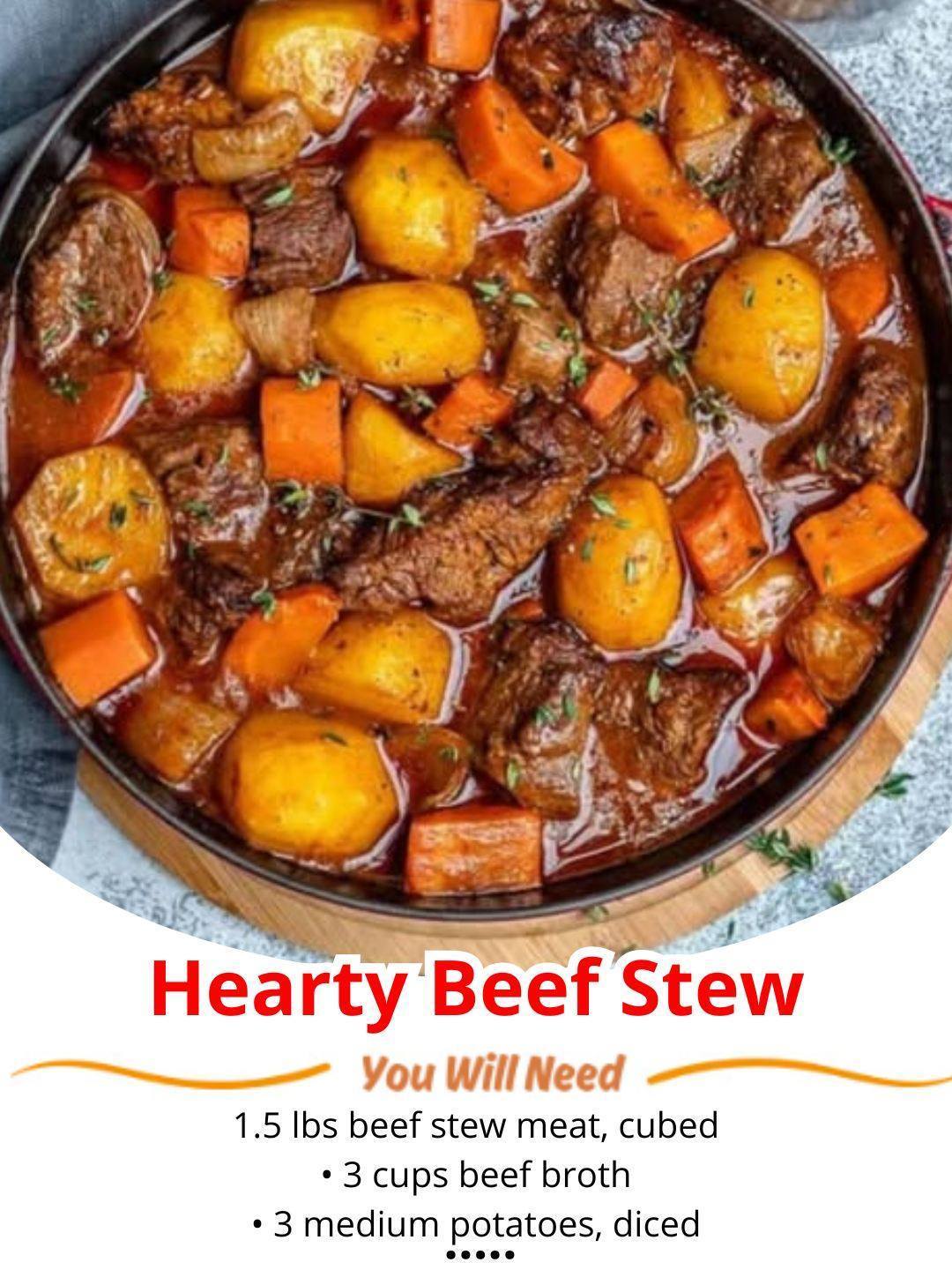
Hearty Beef Stew is comfort food at its finest—tender cubes of beef simmered in a robust, savory broth with carrots, potatoes, and onions, all enriched by the mellow sweetness of slow-cooked vegetables and the deep undertones of herbs and red wine (if you choose).
The result is a warming, deeply satisfying dish that’s perfect for cold evenings, busy family tables, or Sunday gatherings. Each bowl offers bite after bite of melt-in-your-mouth meat, soft, flavorful vegetables, and a broth so good you’ll want extra bread for soaking it up. Whether you’re batch cooking for the week or making a special dinner, this stew is the very definition of nourishing, thoughtful home cooking.
Why You’ll Love It
This recipe transforms affordable cuts of beef into tender, succulent bites, layering in flavor through patient browning and gentle simmering. The vegetables contribute both substance and subtle natural sweetness, while the broth—boosted by stock, wine, and herbs—grows richer as it simmers. Everything cooks in one pot, yielding a meal that’s as practical as it is irresistible.
Hearty Beef Stew is forgiving and flexible—you can add or swap ingredients to suit your tastes or the season, and leftovers taste even better with time, making this an ideal make-ahead meal. It’s cozy, classic, and guaranteed to satisfy.
Key Ingredients
- 2 lbs beef chuck, stew beef, or round roast, cut into 1.5-inch cubes
- 3 tablespoons vegetable oil or olive oil
- 1/4 cup all-purpose flour (for dusting beef)
- 1 large onion, chopped
- 3 carrots, cut into thick rounds
- 3 ribs celery, chopped
- 4 cloves garlic, minced
- 4 medium potatoes (Yukon gold or russet), peeled and cut into chunks
- 2 tablespoons tomato paste
- 3 cups beef broth (low sodium preferred)
- 1 cup dry red wine (optional, substitute with more broth or water)
- 1 tablespoon Worcestershire sauce
- 2 bay leaves
- 1 teaspoon dried thyme or 2 sprigs fresh
- 1 teaspoon dried rosemary
- Salt and black pepper, to taste
- 1 cup frozen peas (optional, for color)
- Optional extras: parsnips, turnips, mushrooms, chopped parsley
Preparation
Begin by patting beef cubes dry and tossing them in flour with salt and pepper. Heat half the oil in a heavy Dutch oven over medium-high; brown beef in batches, turning until deeply colored on all sides, then transfer to a plate. This browning step is critical for building flavor.
Add more oil to the pot as needed, then sauté onions, carrots, and celery until softened and golden. Stir in garlic and tomato paste, cooking for another minute until fragrant and darkened.
Deglaze the pot with wine (or broth), stirring to scrape up brown bits. Pour in broth, Worcestershire, bay leaves, thyme, rosemary, and the browned beef (plus any juices from the plate). Add potatoes last and bring to a gentle simmer.
Cover loosely and cook on low for 2–2.5 hours, stirring occasionally, until beef is fork-tender and vegetables are soft and flavorful. Add peas in the last 15 minutes if using. Skim fat from the surface and adjust seasoning to taste.
Remove bay leaves and herb stems. Thicken broth if desired by mashing a few potato chunks into the stew or let simmer uncovered for another 10–15 minutes. Serve piping hot, garnished with parsley and paired with crusty bread.
Technique, Tips & Tricks
Dry beef ensures a better sear—moisture inhibits browning. Don’t skip dredging in flour—it helps develop crust and later thickens stew naturally. Browning in batches avoids overcrowding, yielding deeper flavor.
Long, gentle simmering softens tougher cuts like chuck or round, turning chewy meat tender. Tomato paste should be cooked briefly to amplify sweetness and reduce acidity. Stir herbs in with liquid; fresh bay and thyme add classic stew depth.
To make ahead, chill stew overnight—flavors blend and intensify. Use a slow cooker for convenience: brown beef and aromatics first, then cook on LOW for 8 hours.
For a thicker stew, add a cornstarch slurry near the end or mash some potatoes.
Substitutions and Variations
Substitute stew beef for lamb, pork, or venison for regional twists.
Vegetarian? Make with mushrooms, canned beans, and vegetable broth.
Use sweet potatoes or butternut squash instead of white potatoes for flavor variation.
Add pearl onions, root veggies, or barley for bulk.
Gluten-free? Dust beef in cornstarch or rice flour.
Boost herbs with parsley, sage, or tarragon.
Swap red wine for beer for a different savory edge.
Serving Suggestions
Dish up generous bowls with crusty bread for dunking, fluffy mashed potatoes for ladling, or over cooked egg noodles for a hearty “beef tips” variation. Serve alongside a crisp green salad or sauerkraut to cut through the richness.
If preparing for friends, keep warm in a Dutch oven or slow cooker; let guests serve themselves and add their own garnishes.
For next-day lunches, stew pairs perfectly with rice or as a filling for savory pies.
Story & Origins
Beef stew is a centuries-old staple, beloved across global cuisines—French boeuf bourguignon, Irish stew, and American pot roast all have roots in slow simmering and transforming hearty cuts and root vegetables into nourishing, flavorful fare. The technique reflects practical kitchen wisdom: patience, layering, and the alchemy of simple ingredients over heat.
In American homes, beef stew stands as the hallmark of winter weekend cooking—a dish to fill the kitchen with savory scents and gather family around the table. Its adaptability and enduring comfort have made stew a true classic.
Nutrition Notes
Beef stew provides protein, iron, B vitamins, and potassium from beef and potatoes, plus antioxidant power from vegetables. Lighter versions substitute lean cuts, add more vegetables, or use low-sodium broth.
For gluten-free or lower-carb options, swap flour for cornstarch or add more non-starchy veggies. Skim fat before serving for a heart-healthier meal. Boost fiber and vitamins by loading up carrots, celery, and adding dark leafy greens near the end.
Flavors & Pairings
Pair robust stew with tangy, crisp, or fresh sides: pickled vegetables, slaw, marinated tomatoes, or bright citrus salads. Slices of sourdough, rye, or oat bread are classic dunkers.
Drinks like dark ale, rustic wines, or sparkling water match the richness. Finish with brownies or fruit cobbler for a cozy meal’s end.
Frequently Asked Questions
Can I make it ahead?
Yes—stew tastes better the second day, and can be refrigerated for up to four days or frozen in portions.
Can I freeze beef stew?
Absolutely—cool completely, transfer to freezer-safe containers, and thaw overnight before gentle reheating.
Can I use a slow cooker?
Brown meat and aromatics first, then assemble in cooker; LOW for 8 hours is best.
How do I thicken the stew?
Mash a few potatoes, add a cornstarch slurry, or let simmer uncovered for 10–20 extra minutes.
What about leftovers?
Use as filling for pot pies, shepherd’s pie, or serve over baked potatoes.
Final Thoughts
Hearty Beef Stew is the comfort food that keeps on giving—rich, flavorful, and deeply satisfying. With every bite, it offers the warmth of tradition, the joy of slow-cooked flavor, and the practical pleasure of a one-pot meal. Make it your go-to when you crave reliability, nostalgia, and nourishment in a bowl.