
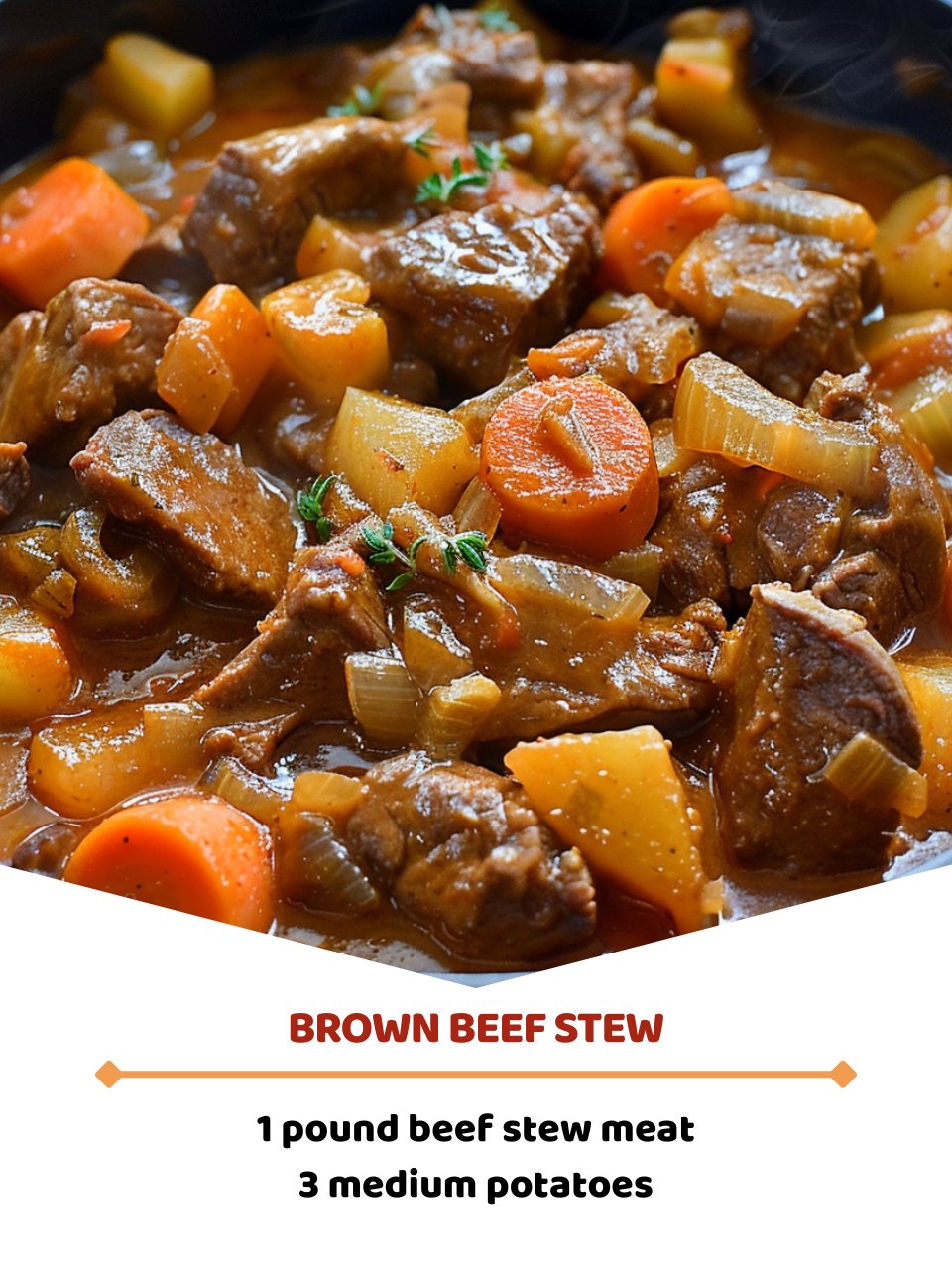
Brown Beef Stew is a timeless, soul-satisfying comfort dish—delivering fork-tender beef, hearty vegetables, and a deep, savory broth that tastes of slow-simmered goodness. Unlike simpler “dump-and-go” stews, this recipe earns the name “brown” through the all-important step of searing beef until beautifully golden, coaxing out a complex, layered flavor that infuses every spoonful.
Each bite melds rich beef, sweet carrot, earthy potato, and silky onion, creating a stew that’s nourishing, filling, and brimming with classic charm. On chilly nights or lazy Sundays, nothing brings folks together like a steaming pot of homemade beef stew—rustic, wholesome, and the epitome of kitchen comfort.
Why You’ll Love It
The secret to a truly memorable stew isn’t just in the ingredients, but in the patient browning of the beef and the aromatic vegetables. This lock-in-flavor step creates the foundation for deep, umami richness, rewarding you with a broth that borders on gravy and meat that practically melts on the fork.
The process is straightforward enough for any home cook, yet the results are worthy of a special occasion. It’s endlessly adaptable—fresh herbs, root veggies, or even red wine can layer in more depth. Leftovers taste even better the next day, making this an ideal make-ahead meal for easy weeknight dining or as comfort food to share with friends.
Key Ingredients
- 2–2.5 lbs beef chuck, stew beef, or round, cut into 1.5-inch cubes
- 2 tablespoons vegetable oil or olive oil
- 1/4 cup all-purpose flour (for dredging)
- 1 large onion, chopped
- 3 carrots, cut into thick rounds
- 3 ribs celery, chopped
- 4–5 garlic cloves, minced
- 3–4 medium Yukon gold or red potatoes, cut into chunks
- 2 tablespoons tomato paste
- 1/2 cup dry red wine or extra beef broth (optional for depth)
- 4 cups beef broth, low sodium preferred
- 2 teaspoons Worcestershire sauce
- 1 teaspoon dried thyme (or 2 sprigs fresh)
- 2 bay leaves
- Salt and black pepper, to taste
- 1 cup frozen peas (optional, for color and sweetness)
- Optional additions: parsnips, turnips, mushrooms, rutabaga, chopped parsley
Preparation
Pat beef cubes dry, then season well with salt and black pepper. Dredge lightly in flour, shaking off excess. Heat oil in a heavy Dutch oven or large pot over medium-high heat. Working in batches, brown beef on all sides—don’t crowd the pot, and allow a deep sear for flavor, turning every 1–2 minutes. Transfer browned beef to a plate as you go.
If needed, add a little more oil, then sauté onions, carrots, and celery until softened and starting to color, about 6–8 minutes. Stir in garlic and tomato paste; cook for another 2 minutes until the paste darkens and becomes fragrant.
Pour in wine to deglaze, scraping flavorful brown bits from the pan. Let reduce by half. Return beef and any juices to the pot, add potatoes, Worcestershire, thyme, bay leaves, and enough beef broth to just cover ingredients. Bring to a simmer, skimming any foam.
Cover loosely, reduce heat to low, and simmer gently for 2–2.5 hours until beef is fork-tender and potatoes soft. (Or, oven-braise at 325°F/160°C for the same time.) In the final 15 minutes, stir in peas if using.
Taste and adjust seasoning with salt, pepper, or a splash of vinegar for brightness. Discard bay leaves and herb stems. For a thicker stew, mash a few potato pieces or simmer uncovered a few extra minutes. Serve piping hot with crusty bread or over buttered noodles.
Technique, Tips & Tricks
Dry beef well before dredging for the best browning. Don’t skip the flour—it helps create a beautiful crust and later thickens the stew. Brown in batches; rushed or crowded beef will steam, not sear.
Sauté vegetables long enough to build a base of flavor. Deglazing with wine pulls up all the luscious brown bits, which become the essence of the broth. Tomato paste deepens color and taste; let it cook to mild its acidity.
Simmer low and slow for tenderness and flavor fusion. If you have time, stew can be cooked and cooled in advance—resting overnight enhances taste. For slow cookers: brown meat and veggies first, then slow cook on LOW 6–8 hours.
To thicken, crush a few potato chunks, or stir in a cornstarch slurry in the final 10–15 minutes, simmering gently until thickened.
Substitutions and Variations
- Use lamb shoulder for a rustic twist, or venison for gamier flavor.
- Non-alcoholic: substitute wine with more broth plus 2 tsp balsamic or red wine vinegar.
- Gluten-free: use rice flour or cornstarch instead of all-purpose for dredging and thickening.
- Increase veggies: parsnip, rutabaga, fennel, or mushrooms add earthy notes.
- Add beans or barley for a heartier, stew-pottage hybrid.
- For richer stew, add 1–2 tbsp butter at the end or a swirl of cream for a “hunter’s stew.”
- Make spicy: stir in crushed red pepper or smoked paprika.
- Vegetarian: use hearty mushrooms, lentils, and veggie stock in place of beef; skip Worcestershire or use vegan version.
Serving Suggestions
Ladle stew into deep bowls, sprinkle with chopped parsley or chives, and serve with slices of warm, crusty bread or buttermilk biscuits. For extra comfort, pour over buttered egg noodles, mashed potatoes, or even dumplings.
Balance richness with a crisp side salad, tangy pickles, or vinegar-dressed slaw. For drinks, pair with dry red wine, dark ale, or sparkling cider.
Stew is even better reheated—portion leftovers for easy next-day lunches, or freeze in batches for future cold-weather cravings.
For rustic gatherings, keep stew in a Dutch oven on the table, letting guests help themselves with generous ladles.
Story & Origins
Brown beef stew is a descendant of centuries-old braising traditions, stretching from French “boeuf bourguignon” to the hearty Irish stew, German sauerbraten, and American beef pot roast. The secret—browning meat in fat, layering with aromatic vegetables, and slow-cooking with broth or wine—draws out every nuance of flavor from affordable cuts.
Stews became staples of the farmhouse kitchen, feeding large families and yielding rich, sustaining fare from simple ingredients. Through immigration and adaptation, these techniques spread and blended in America’s melting pot, inspiring countless versions featuring native and new vegetables, spices, and herbs.
Today, brown beef stew stands at the heart of comfort cooking, as likely to grace Sunday tables as to simmer on the stove for impromptu gatherings. Its deep aroma evokes nostalgia, security, and the timeless appeal of home-cooked meals.
Nutrition Notes
Beef stew is rich in protein, iron, and B vitamins—especially using chuck or round. Potatoes and vegetables add vitamin C, potassium, fiber, and antioxidants. For a lighter stew, use extra-lean beef, swap carrots for parsnips, and skip butter.
Increase the veggie-to-meat ratio for extra nutrition and bulk; use low-sodium broth, moderate added salt, and be mindful of flour if gluten-free is needed.
Make lower-carb by reducing potatoes and doubling carrots, or serve over cauliflower mash for a lighter base.
For meal prep, stew is a perfect candidate: it portion-controls easily, gets even better after cooling, and can be frozen for up to 3 months.
Flavors & Pairings
Earthy, robust flavor pairs well with:
- Crusty sourdough, rye, or oat bread.
- Buttered egg noodles or classic mashed potatoes.
- Pickles, beets, or bright greens (arugula, chicory, or watercress).
- Red wine, porter, or sparkling water with lemon.
- For dessert: apple crisp, rice pudding, or gingerbread for homey perfection.
Add a splash of red wine vinegar or squeeze of lemon just before serving to liven and balance the stew.
Frequently Asked Questions
Can I use stew meat?
Yes, but for best results, buy whole chuck or round and cut yourself, as “stew meat” is often mixed trimmings.
Can I make it in a slow cooker?
Yes—brown meat and veggies first, then cook LOW 6–8 hours.
Do I have to use wine?
No, but it adds depth. Substitute more broth plus vinegar for similar results.
Can it be made ahead?
Absolutely—chill and store up to 4 days in the fridge; reheat gently on the stovetop.
Can I freeze it?
Stew freezes well in airtight containers for up to 3 months.
Is it gluten-free?
Use rice flour or cornstarch for dredging, and check all broth/seasonings.
My stew is thin—how do I thicken it?
Simmer uncovered, mash some potato into the broth, or add a slurry of cornstarch and water.
What to do with leftovers?
Serve over grains, in pot pies, or spoon atop baked sweet potatoes for a next-day meal.
Final Thoughts
Brown Beef Stew is the classic dish that’s always in season—an emblem of hospitality, nourishment, and the slow joy of home cooking. With its rich aroma, tender beef, and medley of hearty vegetables, this stew is more than a meal; it’s a culinary ritual that warms hands, hearts, and memories with every single bowl.