
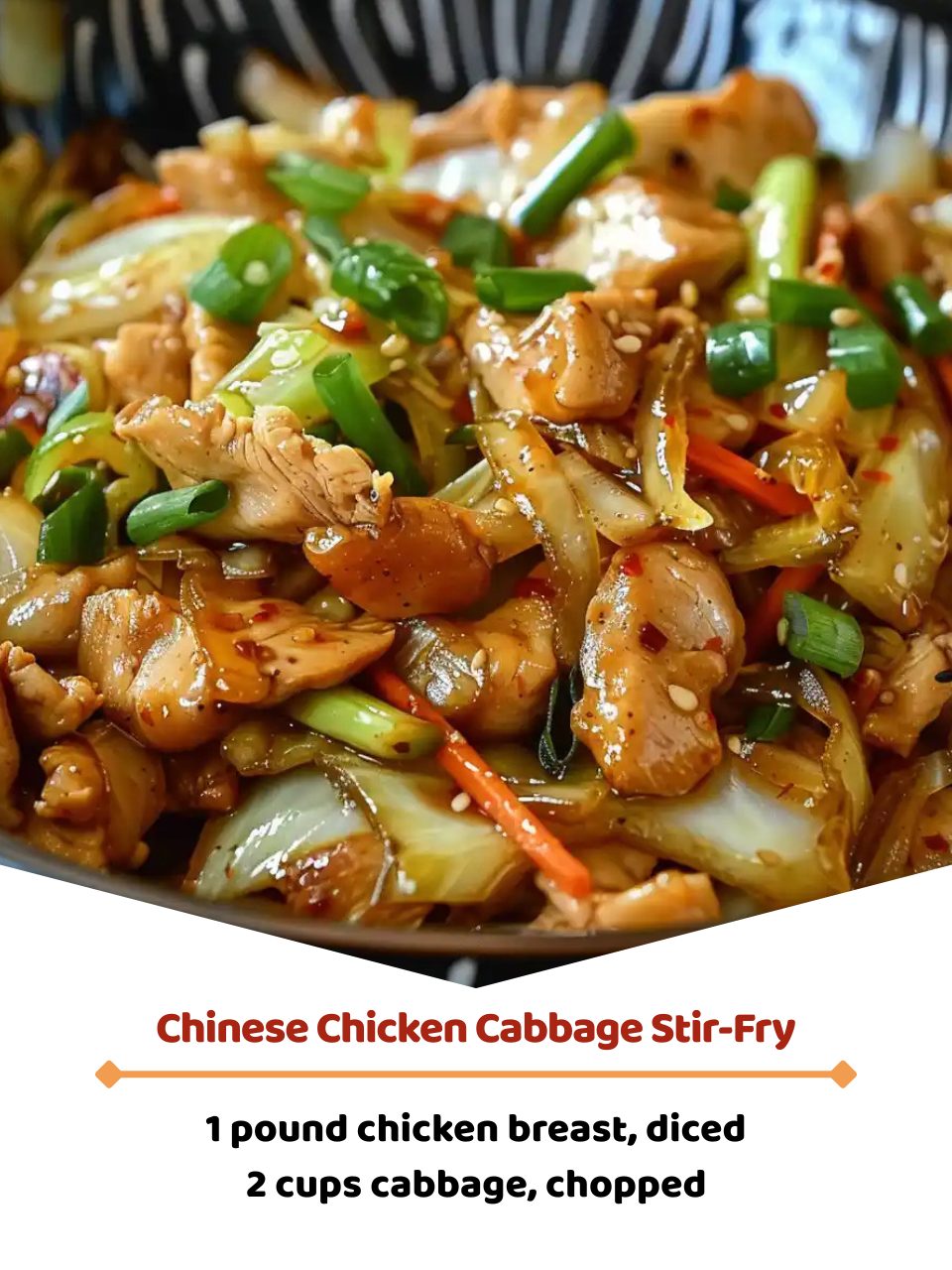
Chinese Chicken Cabbage Stir-Fry is the embodiment of quick, nourishing, and flavor-packed home cooking. Tossed together in a sizzling wok or skillet, this dish melds tender chicken, the delicate sweetness and crunch of fresh cabbage, aromatic vegetables, and a savory sauce that clings to every bite. It’s a mainstay on family tables—healthy, endlessly adaptable, easy to whip up with pantry ingredients, and a model of how Chinese cooking techniques maximize both nutrition and taste.
Equally suited to weeknight dinners or meal-prep lunchboxes, this stir-fry is as satisfying as takeout, but fresher, lighter, and completely under your control.
Why You’ll Love It
This stir-fry combines the highest virtues of Chinese cooking: fast, high-heat technique that locks in both color and crunch, a balanced sauce that is both sweet and savory, and the merger of protein and vegetables in a single, satisfying skillet. Every bite brings juicy, well-seasoned chicken, tender-crisp cabbage, and pops of flavor from ginger, garlic, scallion, and optional chili.
The whole meal can be prepared in under 30 minutes (often much less), uses one pan, and can be customized for any diet. Cabbage is heroically budget-friendly, keeps well in the fridge, and brings a lovely freshness to the dish. Plus, it’s ideal for busy households, as leftovers are delicious—hot or cold.
Key Ingredients
- 1 lb boneless, skinless chicken breast or thigh, thinly sliced
- 4 cups green or napa cabbage, shredded
- 1 large carrot, julienned or sliced thin
- 1 red bell pepper, sliced into strips
- 3 scallions, cut into 1-inch pieces, whites and greens separated
- 3 cloves garlic, minced
- 1 tablespoon fresh ginger, grated (or 1 tsp ground ginger)
- 2 tablespoons vegetable oil (canola, peanut, or sunflower)
- 2 tablespoons soy sauce (or tamari, for gluten-free)
- 1 tablespoon oyster sauce (optional for deeper umami)
- 2 teaspoons cornstarch
- 2 tablespoons rice wine or dry sherry (or 1 tbsp rice vinegar)
- 1 teaspoon sesame oil
- 1/2 teaspoon sugar
- White pepper and salt, to taste
- Optional: 1 Thai chili or pinch of red pepper flakes for heat
- Optional garnish: sesame seeds, extra scallions, cilantro
Preparation
Start by preparing all ingredients before heating your pan—stir-frying is quick and requires everything to be ready. Slice the chicken thinly across the grain for the most tender bites. In a bowl, mix chicken with 1 tbsp soy sauce, 1 tsp cornstarch, and 1 tbsp rice wine; marinate for 10-15 minutes while prepping vegetables.
Heat a wok or large skillet over high heat until shimmering. Add 1 tablespoon oil, swirl, and add chicken in a single layer—leave undisturbed for 1 minute to sear, then stir-fry until just cooked through. Remove chicken to a bowl and set aside.
Add the remaining oil to the pan and toss in the garlic, ginger, and scallion whites (plus chili, if using). Stir-fry for 30 seconds until fragrant. Add carrots and bell pepper; stir-fry another 1–2 minutes to brighten. Add cabbage, stir-frying quickly until just wilted but still vibrant—about 2–3 minutes for green cabbage, less for napa.
Return chicken to the pan. Mix 1 tbsp soy sauce, oyster sauce, sesame oil, sugar, 1 tsp cornstarch, and 2 tbsp water to make a slurry; pour over the stir-fry, tossing to coat every piece. Cook 1–2 minutes until the sauce bubbles and thickens slightly.
Taste and adjust seasoning with salt, white pepper, or more soy/oyster sauce. Finish with scallion greens and a sprinkle of sesame seeds. Serve immediately, with steamed rice or noodles if desired.
Technique, Tips & Tricks
For best stir-fry texture, use a wok, high heat, and avoid crowding: ingredients should sear, not steam. Slice all components uniformly for even cooking.
Marinating the chicken not only flavors it but helps protect it from overcooking. Thin slices are fastest and most tender; if using breast, watch especially to avoid dryness.
Add the cabbage last, as it cooks quickly and wilts down. For extra crunch, use savoy or napa cabbage and undercook slightly. Don’t walk away—once you start, the dish comes together in minutes.
Use fresh ginger and garlic for deep aroma. If you like extra zing, add strips of fresh chili or a dash of chili bean paste with aromatics.
Oyster sauce lends deep umami but can be skipped for a lighter, simpler (and vegetarian) meal—sub with more soy and a splash of mushroom or hoisin sauce instead.
Substitutions and Variations
- Swap chicken for thinly sliced beef, pork, shrimp, or tofu (press and cube for best results).
- Vegetarian? Use mushrooms, tempeh, or extra-firm tofu, and skip oyster sauce for hoisin or mushroom soy.
- Gluten-free: ensure tamari or gluten-free soy, and use GF oyster sauce if desired.
- Amp the veggies: snow peas, broccoli slaw, baby corn, or bean sprouts are great additions.
- For extra crunch, add cashews, slivered almonds, or fried wonton strips atop just before serving.
- Make it spicy with more chili, or turn sweet-sour with a dash of rice vinegar and pinch of sugar.
- Lighten it up: use less oil, serve over cauliflower rice, or skip rice entirely and double veggies.
This stir-fry is meal-prep friendly: store in airtight containers for up to 3 days; reheat quickly in a hot pan to restore crispness.
Serving Suggestions
Serve hot from the pan over fluffy jasmine or brown rice, rice noodles, or even in lettuce cups for a playful low-carb wrap. For a complete meal, pair with a simple cucumber salad, quick kimchi, or pickled vegetables.
Top with sesame seeds, more sliced scallion, or fresh cilantro for color and flavor. For a richer meal, serve alongside dumplings, egg rolls, or spring rolls, and finish with ripe fruit or a light citrus sorbet.
For a potluck, set out with bowls of hot chili sauce (sriracha, chili crisp) and let everyone customize their own bowls. For lunchboxes, chill and pack with extra veggies and a lime wedge to keep flavors bright.
Story & Origins
Chicken and cabbage stir-fries are classic across China, especially in home kitchens, family restaurants, and rural markets. Cabbage is a winter staple, valued for keeping well and stretching into hearty, filling meals. Stir-frying maximizes flavor with minimal cooking time, keeping cabbage crisp-tender and sweet.
Some regional versions add soy sauce, some sesame oil, others use chili bean paste; all are unified by the “wok hei”—the seared, smoky aroma unique to hot wok cooking. Chinese-American adaptations, especially in the West and South, have made the dish even more ingredient-flexible.
In recent decades, this stir-fry gained popularity for meal prepping, healthy affordable eating, and its adaptability for any protein, veggie, or dietary need. It exemplifies both tradition and modern trends in making home-cooked meals fast, flavorful, and deeply nourishing.
Nutrition Notes
Chicken cabbage stir-fry is high in protein, low in fat (if using breast and limiting oil), and packed with vitamins—especially C, K, and fiber from cabbage and carrots. For lower sodium, use low-sodium soy, skip oyster sauce, or dilute sauces with water.
Boost health further by increasing veggies, using brown rice, or adding sprouted beans. For calorie-conscious meals, skip or halve the oil and serve with steamed rather than fried accompaniments.
Diabetic-friendly, gluten-free, and heart-healthy versions are all easy to achieve; limit sugar and oil, check all processed sauces, and use lean proteins.
Unfried leftovers are fantastic cold or at room temperature—add to salads or inside wraps for nutrition on the go.
Flavors & Pairings
This stir-fry pairs flawlessly with steamed rice or rice noodles, but shines with crisp or tangy sides: try vinegary cucumber salad, pickled ginger, or Asian slaw. Pair with miso soup or hot & sour soup for a fuller meal.
Drinks: Green tea, jasmine tea, light beer, or a dry Riesling. Dessert: orange segments, sliced pineapple, or coconut jelly round out the meal perfectly.
For heat lovers, serve with extra chili paste or dipping sauce.
Try rolling leftovers up in rice paper wraps with mint and basil for a creative lunch the next day!
Frequently Asked Questions
Can I use bagged coleslaw mix?
Absolutely—a major time saver; just stir-fry 1–2 minutes less.
Can I make it ahead?
Yes, but for the best texture, assemble and cook just before eating. Otherwise, store separately and reheat together quickly.
Is it freezer friendly?
Best fresh, but cooked chicken and cabbage can be frozen; reheat quickly from frozen to limit sogginess.
Can I skip meat altogether?
Yes; use tofu, mushrooms, or seitan—add a splash of soy for depth.
What if I don’t have a wok?
A large, heavy skillet works fine—just use high heat and avoid crowding ingredients.
Why is my cabbage watery?
High heat and quick stir-frying minimize moisture. Don’t salt until serving, and drain excess liquid if necessary.
Can I add more vegetables?
Yes! Snow peas, zucchini, kale, or bean sprouts are great additions. Add sturdy ones (like carrots) early, tender ones (like spinach) last.
How do I avoid mushy chicken?
Slice thinly, marinate briefly, and don’t overcook; remove as soon as no longer pink.
Final Thoughts
Chinese Chicken Cabbage Stir-Fry beautifully illustrates the best of home cooking—fast, healthy, affordable, infinitely adaptable, and always delicious. With bright vegetables, savory chicken, and a balanced sauce, it’s equally at home on a hurried Tuesday night or an elegant takeout-inspired feast.