
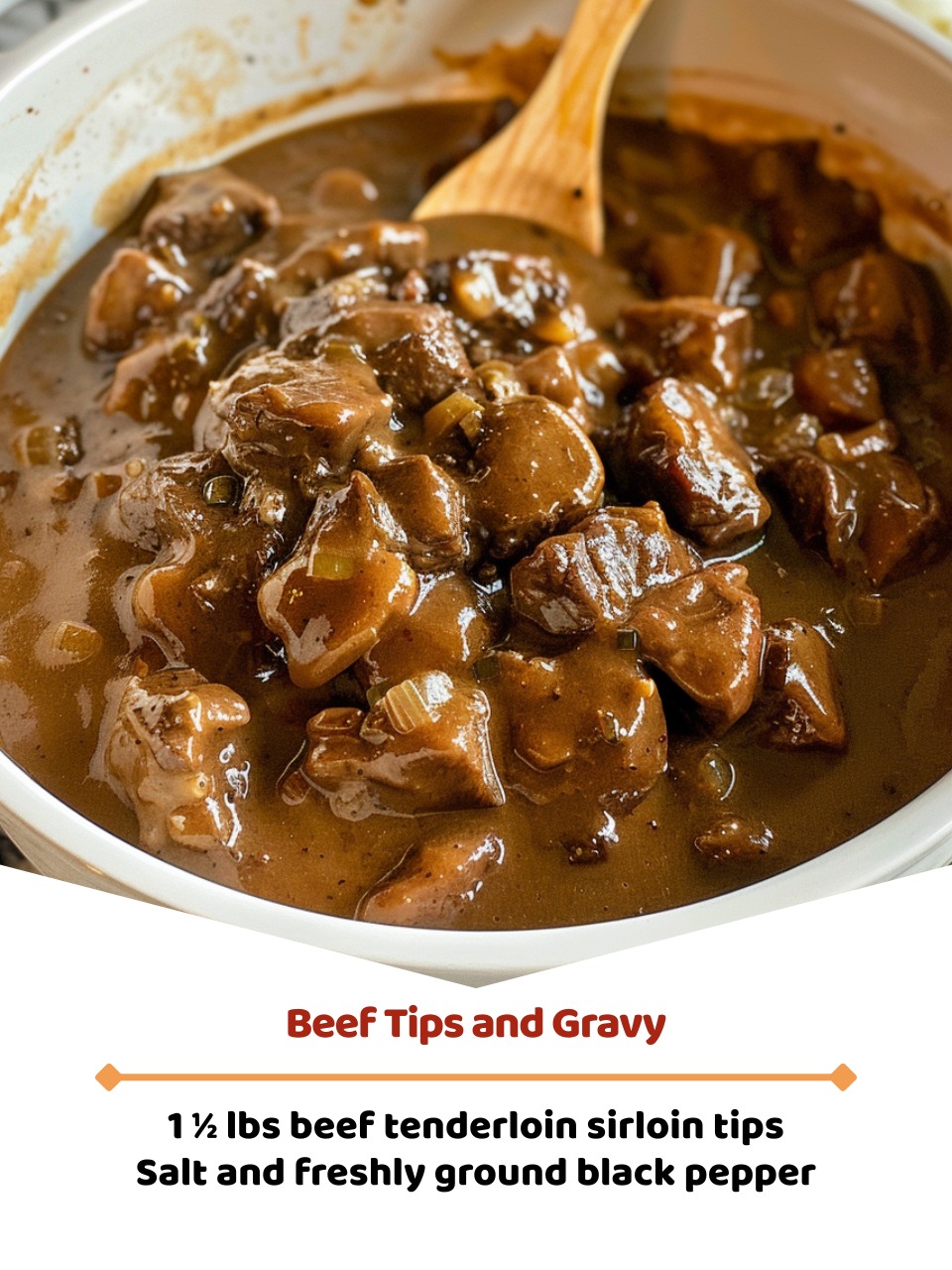
Beef Tips and Gravy is the classic comfort dish that turns simple cuts of beef into a tender, luxurious main course bathed in savory, glossy sauce. It’s a dish that has graced kitchen tables for generations, celebrated both for its convenience and its soul-satisfying flavor.
Chunks of steak or roast simmer low and slow until they’re meltingly soft, then enveloped in a rich gravy laced with onions, garlic, and deep beefy flavors. Whether ladled over fluffy mashed potatoes, rice, egg noodles, or warm biscuits, beef tips and gravy is a homey meal that warms winter nights, fills hungry bellies, and brings people together.
Why You’ll Love It
This dish makes the most of affordable beef cuts, coaxing tenderness through braising, and amplifying flavor by infusing the gravy with aromatics and savory notes. Everything cooks in one pot—minimal mess and maximum flavor. The slow simmer is forgiving, making this recipe ideal for busy schedules or beginner cooks. With each bite you get fork-tender beef, velvety gravy, and a comforting aroma that fills the kitchen.
It’s customizable with mushrooms, carrots, peas, or herbs and plays well with nearly every side you crave, from potatoes to buttery noodles. Beef tips and gravy tastes just as good on day two, making it a meal-prepping marvel.
Key Ingredients
- 2 lbs beef stew meat or sirloin tips, cut into 1-inch chunks
- 2 tablespoons oil (vegetable, canola, or olive)
- 1 large onion, sliced
- 2 cloves garlic, minced
- 2 cups beef broth (low sodium recommended)
- 1/3 cup dry red wine or additional broth (for depth; optional)
- 1 tablespoon Worcestershire sauce
- 2 tablespoons soy sauce
- 1 tablespoon tomato paste (optional, for richness)
- 1 teaspoon dried thyme or rosemary
- 2 bay leaves
- Salt and black pepper, to taste
- For thickening: 3 tablespoons all-purpose flour or cornstarch + 1/4 cup water for slurry
- Optional: 8 oz mushrooms, sliced; 1 cup frozen peas or diced carrots (for added veggies)
Preparation
Begin by heating oil in a large, heavy Dutch oven or deep skillet over medium-high heat. Pat the beef pieces dry, season lightly with salt and pepper, then brown in batches, turning for an evenly golden crust on all sides. Remove to a plate—don’t overcrowd, which will steam the meat instead of searing it.
Add a little more oil if needed. Sauté onions until softened and golden, scraping the fond from the pan, followed by garlic for a brief 30 seconds until fragrant. If using mushrooms or carrots, add now and cook until their water evaporates and edges begin to brown.
Deglaze the pan with a splash of wine (or broth, if omitting wine), scraping up brown bits. Return beef to the pot along with broth, Worcestershire, soy sauce, tomato paste, thyme, bay leaves, and any juices. Stir to combine.
Bring to a gentle boil, then cover, reduce heat to low, and simmer 90–120 minutes or until beef is fork-tender—stirring every 30 minutes. For a slow cooker: after browning, transfer everything to the crockpot and cook on low for 6–8 hours.
Ten minutes before serving, mix flour (or cornstarch) with water to make a slurry. Remove bay leaves, then stir the slurry into simmering pot and cook until gravy thickens, about 5–10 minutes. Taste and adjust seasonings. If adding peas, stir in now and heat through.
Serve hot over mashed potatoes, rice, buttered noodles, or bread.
Technique, Tips & Tricks
Brown beef thoroughly—color means flavor. Work in small batches and let each piece get deep color, as this caramelization gives the gravy base irresistible taste. Onion and garlic should always be sautéed until just golden, bringing sweetness and dimension.
Deglaze with wine or broth, and scrape all pan bits for the best sauce. Slow simmer is key; rushing will leave tough beef. If your stew meat is lean, add a splash more broth and monitor for dryness.
Gradually thicken the gravy—adding the slurry too quickly can cause lumps. Cornstarch gives a glossy finish; flour offers richness. Adjust thickness by simmering longer or adding splashes of broth.
Always let beef tips and gravy rest off heat for a few minutes before serving; this helps flavors settle and the sauce cling to every bite.
Substitutions and Variations
- Replace beef stew meat with sirloin, chuck, or even leftover roast for a quicker meal.
- For gluten-free, use cornstarch slurry instead of flour.
- Add mushrooms, carrots, peas, or even pearl onions for different flavors or nutrition.
- Swap Worcestershire for steak sauce or balsamic vinegar for deeper tang.
- Use beef bouillon and water if broth is unavailable; taste for salt and richness.
- For a creamy finish, swirl in a few tablespoons of sour cream or Greek yogurt at the end.
- Herbs: rosemary, thyme, or tarragon all shine; add parsley for freshness.
- Vegetarian? Substitute beef with hearty mushrooms, eggplant, or plant-based ‘beef’ pieces; use veggie broth.
For extra decadence, top with crispy fried onions, bacon bits, or shredded cheese before serving.
Serving Suggestions
Serve big scoops of beef tips and gravy over creamy mashed potatoes, buttery egg noodles, or fluffy white rice for maximum comfort. On the side, add roasted or steamed vegetables—green beans, carrots, broccoli, or cauliflower. Include a simple salad with vinaigrette to cut through the richness.
For bread lovers, offer crusty baguette, Texas toast, or buttermilk biscuits to mop up the gravy. Garnish portions with chopped parsley or fresh thyme.
For weeknight ease, serve as a one-bowl dinner over grains and veggies. At parties or holidays, present in a big casserole with extra sauce and sides of pickles or relishes.
Leftovers make superb sandwiches (on toasted buns!) or can be folded into shepherd’s pie, pot pies, or open-faced melts with cheese.
Story & Origins
Beef Tips and Gravy descends from the tradition of “hunter’s stew,” braised beef dishes beloved in European and American kitchens for centuries. The need to tenderize affordable cuts and create maximum flavor from minimal waste led cooks to slow-simmer meat in seasoned liquids, thickened for a rich, satisfying sauce.
The dish evolved in North America with the availability of slow cookers and electric skillets, becoming a staple in diners, cafeterias, and, most fondly, Sunday suppers. As commercial cuts of “beef tips” grew popular in butcher shops, frugal cooks adapted the dish for both weekly meals and potluck occasions.
Today, Beef Tips and Gravy represents comfort, thrift, and the beauty of simple ingredients transformed through technique and time—a favorite for holiday feasts, cold nights, and hearty home cooking.
Nutrition Notes
Beef tips provide complete protein, iron, and zinc; all the better when paired with nutritious sides. To lighten, use leaner beef, trim visible fat, and swap for extra vegetables and broth over oil and cream. Go easy on salt by using low-sodium broth and monitoring sauces.
Cornstarch thickening reduces calories slightly compared to flour. Add carrots, mushrooms, and peas for fiber, antioxidants, and flavor. Gluten-free substitutions are simple; dairy-free works well with olive oil for richness and no cream.
Portion with a generous helping of vegetables for balance. For meal prepping, this recipe keeps beautifully for days, and reheats easily.
Flavors & Pairings
The deep umami of beef tips pairs well with tart, bright, or herby sides. Serve with cucumber salad, tomato slices, or vinegary slaw for counterpoint. Wines such as Merlot, Syrah, or dry Cabernet offer classic match; for beer, amber ales or pilsners balance the richness.
Earthy and fresh flavors—parsley, green onions, pickles, or roasted garlic—can garnish, or add heat with a dash of horseradish or hot sauce. For dessert, classic apple crisp, berry cobbler, or lemon bars finish the meal on a high note.
Frequently Asked Questions
Can I use a slow cooker?
Yes—brown beef and onions, combine all ingredients (except slurry and peas) in crockpot, cook on low 6–8 hours, then thicken and finish as described.
Can I prep ahead?
Prepare and refrigerate up to 2 days in advance; reheat gently and add broth if sauce thickens too much.
Can I freeze leftovers?
Absolutely. Let cool, portion in tightly sealed containers, and freeze for up to three months. Thaw overnight before reheating.
Is this gluten-free?
Use cornstarch, gluten-free soy sauce (tamari), and check all labels on broth and sauces.
Can I make vegetarian or vegan?
Sure! Use mushrooms, eggplant, or seitan, and vegetable broth; thicken gravy with cornstarch.
What cuts of beef work best?
Stew meat, chuck, sirloin tips, round roast all work well. Lean cuts need extra monitoring so as not to dry out.
How do I get tender beef?
Braising low and slow is key. Don’t rush—tough cuts soften with time. Always let rest before serving.
Final Thoughts
Beef Tips and Gravy is an enduring comfort staple—hearty, forgiving, and able to transform humble ingredients into a dish worthy of any family gathering or cozy night in. Whether you stick to tradition or riff on the flavors, this one-pot wonder is sure to become a regular at your table—delicious, practical, and satisfying with every spoonful.