
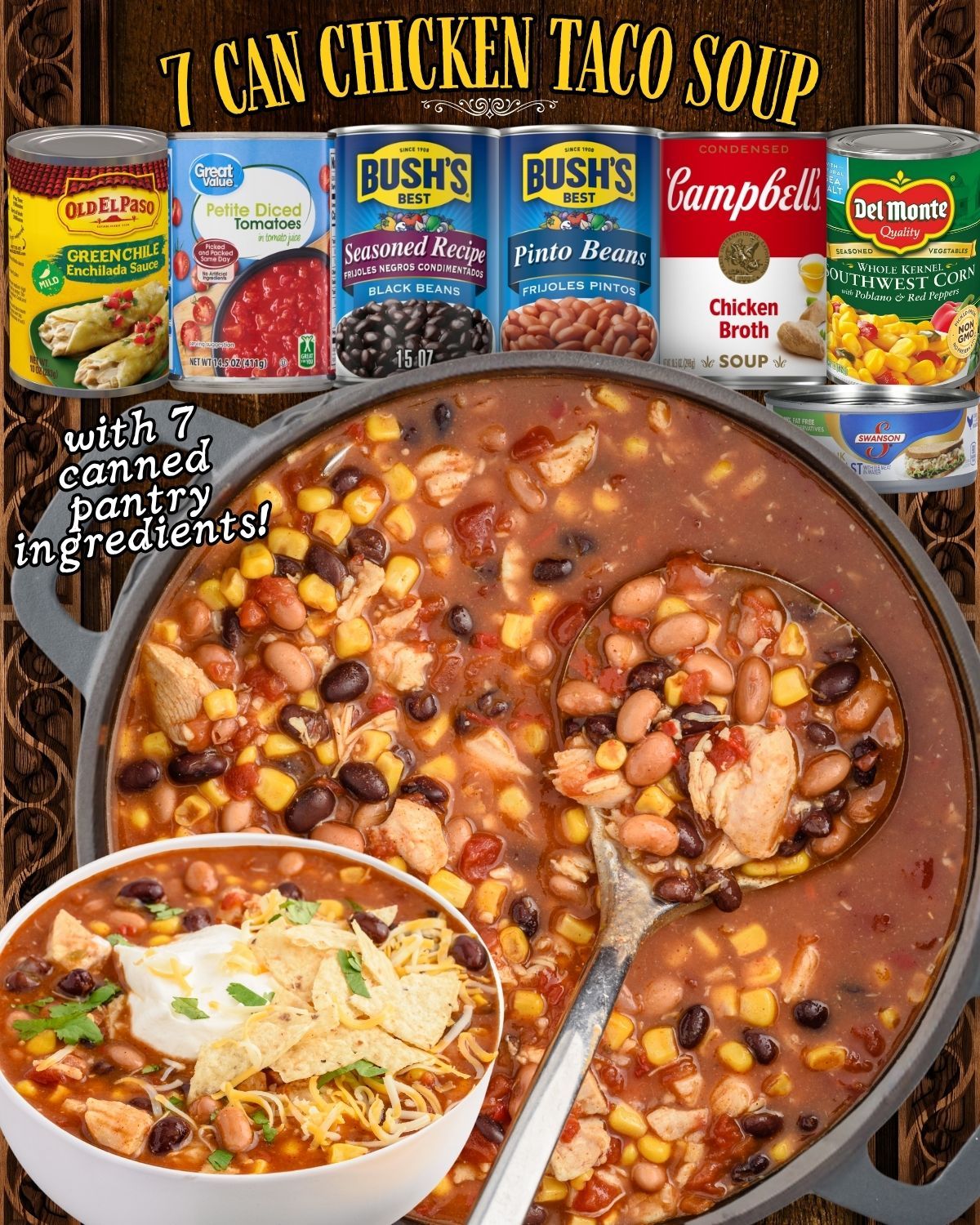
At its core, 7 Can Chicken Taco Soup follows a simple idea: use seven cans to build layers of flavor and texture without chopping or sautéing anything. Black beans and pinto (or kidney) beans bring protein and body, while canned corn and diced tomatoes add sweetness and acidity, and green enchilada sauce and chicken broth create a seasoned, savory base that carries the taco seasoning. Canned chicken breast or leftover shredded chicken is stirred in for tender meat throughout, making the soup feel substantial enough to serve as a full meal with just some chips or cornbread on the side.
The method is intentionally minimal: drain and rinse a few cans, open the rest, dump everything into a pot, add taco seasoning and a few extra spices if you like, and let it simmer until hot and flavorful. Because the beans and chicken are already cooked, the simmering time is mostly about heating through and letting the spices bloom and meld; the soup can be on the table in 20–30 minutes, or it can simmer longer on low if you want deeper flavor. The finished soup is thick, chunky, and perfect for loading with toppings like cheese, sour cream, cilantro, jalapeños, and tortilla chips.
Equipment
- Medium or large stockpot or Dutch oven (about 5–6 quarts) to hold and simmer the soup on the stovetop.
- Can opener because every main ingredient comes from a can.
- Colander or mesh strainer for draining and rinsing the beans and corn.
- Large spoon or heat‑safe spatula for stirring the soup as it simmers.
- Measuring spoons if you’re adding extra cumin, chili powder, garlic, or onion powder beyond the taco seasoning packet.
- Optional slow cooker (4–6 quart) if you want to make an all‑day crock pot version.
- Optional Instant Pot or electric pressure cooker if you like a quick pressure‑simmer with minimal oversight.
- Ladle and serving bowls for dishing up the soup and setting up a topping bar.
Ingredients
Most 7 Can Chicken Taco Soup recipes use the same basic mix with only small variations in bean type or tomato style.
Seven canned ingredients:
- 1 can (about 15 oz) black beans, drained and rinsed.
- 1 can (about 15 oz) pinto beans (or kidney beans), drained and rinsed.
- 1 can (about 14.5 oz) petite diced tomatoes, undrained; some versions use diced tomatoes with green chilies (like Rotel) for extra heat.
- 1 can (about 15 oz) corn, drained; some recipes call for “Mexican” or “southwest” corn that includes peppers.
- 1 can (about 12.5 oz) canned chicken breast, drained and flaked, or about 1½–2½ cups cooked shredded chicken.
- 1 can (10 oz) mild green enchilada sauce.
- 1 can (14–14.5 oz) low‑sodium chicken broth, undrained.
Seasonings:
- 1 packet (about 1 oz) taco seasoning, usually mild.
- ½–1 teaspoon ground cumin for extra warmth and depth beyond the packet.
- ½ teaspoon chili powder if you want a little more chili flavor.
- ½ teaspoon garlic powder or 2 teaspoons minced fresh garlic.
- 1 teaspoon onion powder to boost the savory base.
- ½ teaspoon kosher salt, adjusting to taste depending on the saltiness of your canned ingredients.
Optional creamy twist:
- 1 block (8 oz) cream cheese, cut into cubes and stirred in at the end to make the soup rich and creamy.
Toppings (mix and match):
- Shredded cheese (cheddar, Colby Jack, or Mexican blend).
- Sour cream or plain Greek yogurt.
- Tortilla chips or crispy tortilla strips.
- Diced avocado.
- Chopped fresh cilantro.
- Lime wedges for squeezing over each bowl.
- Sliced jalapeños, pickled or fresh, or hot sauce for extra heat.
Instructions and steps
The stovetop method is the simplest, and most recipes follow almost the same order.
- Prepare the cans and chicken
First, open all seven cans. Rinse the black beans and pinto beans in a colander under cool tap water until the foam and some of the starch wash away, then let them drain thoroughly so they don’t thin out the flavor. Corn is drained as well, especially if you’re already adding broth and sauce; this keeps the texture bright and avoids an overly sweet, starchy broth.
The diced tomatoes, enchilada sauce, and chicken broth are left as‑is, including their liquid, because those juices form a big part of the soup’s flavorful base. Canned chicken breast is drained and then flaked or shredded with a fork into smaller pieces, so it disperses evenly throughout the soup instead of sitting in big chunks. If using cooked leftover or rotisserie chicken, it’s pre‑shredded to about bite‑size pieces.
- Dump everything in the pot
With the prep done, all the ingredients go into the pot. Beans, corn, tomatoes (with juice), flaked chicken, green enchilada sauce, and chicken broth are added to the stockpot. The taco seasoning packet, cumin, chili powder, garlic powder, onion powder, and salt are sprinkled over the top.
Everything is stirred together thoroughly so that the taco seasoning and other spices dissolve into the liquid and coat the beans and chicken. At this point, the soup will look fairly brothy and raw, but the flavors come together quickly once it heats up. If you’re planning to make the creamy version, the cream cheese is held back for later instead of adding now.
- Simmer and adjust
The pot is brought to a simmer over medium to medium‑high heat. Once it reaches a gentle boil, the heat is reduced to low or medium‑low, and the soup is left to simmer uncovered for about 15–25 minutes, with occasional stirring. During this time, the seasonings bloom, the beans and corn take on the taco flavor, and the broth thickens slightly as steam escapes.
After 10–15 minutes, a taste test is important. If the broth tastes flat, a pinch more salt or cumin can help; if it’s too sharp or acidic from the tomatoes, a tiny pinch of sugar can round it out. If the heat level is milder than you’d like, additional chili powder, a dash of hot sauce, or using a spicy taco seasoning next time can take it up a notch.
For the creamy version, cream cheese cubes are added once the soup has simmered and you’ve lowered the heat. The soup is kept on low and stirred frequently until all the cream cheese melts and blends into the broth, turning it from a tomato‑broth base into a velvety, slightly tangy, creamy taco soup. Any stubborn bits can be smoothed out by pressing them against the side of the pot with a spoon.
If you want a thicker, chili‑like consistency, part of the soup can be mashed against the side of the pot with a spoon to break some beans, or the soup can simmer uncovered a bit longer to reduce the liquid. For a thinner texture, adding a bit more chicken broth or water is an easy fix.
- Serve with toppings
Once hot, flavorful, and at your preferred thickness, the soup is ready to serve. Bowls are filled with soup and then topped generously. Shredded cheese melts into the surface, sour cream or Greek yogurt adds cool creaminess, tortilla chips or strips bring crunch, and fresh cilantro and lime brighten everything. Diced avocado and sliced jalapeños can turn a simple bowl into something that feels like a loaded taco in soup form.
Leftovers are cooled and stored in airtight containers in the refrigerator; the soup usually keeps well for several days and reheats easily on the stovetop or in the microwave. Because it’s bean‑heavy and doesn’t rely on delicate vegetables, it also freezes well, so extra portions can be packed into freezer containers for quick future meals.
Slow cooker and pressure cooker adaptations
The same basic ingredients and ratios translate nicely to the slow cooker. For a crock pot version, all the drained and rinsed beans, drained corn, drained chicken, and undrained tomatoes, enchilada sauce, and broth go straight into the slow cooker crock along with the taco seasoning and any additional spices. The soup cooks on low for about 4–6 hours or on high for 2–3 hours, just enough time to warm through and let the flavors blend. Cream cheese, if using, is stirred in for the last 30–60 minutes so it can melt gently without curdling.
Some seven‑can style soups use ground beef instead of chicken; in those, the beef and onions are browned in a skillet first, then added to the slow cooker with the cans, giving you a beef taco soup version based on the same shortcut method.
In an Instant Pot, sauté mode can be used to briefly toast the spices in a bit of oil or to soften fresh onion and garlic before adding the cans. All the canned ingredients and chicken are then added, the lid is locked, and the soup is cooked under pressure for a short time—often around 5–8 minutes—followed by a quick release. Cream cheese, if used, is stirred in after pressure cooking on the sauté or keep‑warm setting until fully melted.
Variations
7 Can Chicken Taco Soup is extremely flexible, and cooks often tweak it to match what’s in the pantry or to suit different tastes.
Creamy ranch version: A packet of ranch dressing mix can be added along with taco seasoning (especially in beef or mixed‑meat versions), giving the broth a tangy, herbaceous flavor that pairs well with cream cheese or sour cream.
Different beans and corn: Chili beans, kidney beans, or white beans can replace one or both of the standard black and pinto beans. Fire‑roasted corn or a can of hominy can stand in for regular corn for a slightly different texture.
Tomato choices: Rotel or other diced tomatoes with green chilies add more spice and complexity than plain diced tomatoes, while fire‑roasted tomatoes give a subtle smoky note.
Fresh enhancements: Even with an all‑canned base, adding freshly sautéed onion, garlic, and bell pepper at the beginning builds extra flavor and makes the soup feel more “from scratch.” Finishing with fresh lime juice and cilantro just before serving brightens and balances the richness.
Grain add‑ins: Stirring in cooked rice, quinoa, or small pasta in the last few minutes of cooking turns the soup even more into a hearty stew, useful for stretching the recipe to feed a bigger group.
Lighter or low‑sodium spin: Using low‑sodium beans, broth, and enchilada sauce and then salting at the end gives more control over sodium content without sacrificing flavor.
No matter how the details shift, the foundation of 7 Can Chicken Taco Soup stays the same: seven convenient cans, a packet of taco seasoning, a pot, and a short simmer. That basic framework delivers a cozy, customizable, weeknight‑friendly soup that feels like it took much more effort than simply opening a few cans and letting the stove do the work.