
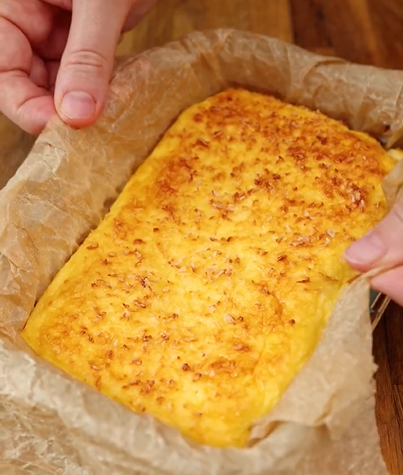
I don’t try to fully incorporate them into the base. Instead, I dollop the fluffy whites on top and then gently fold and swirl them through the coconut layer, creating a marbled effect. I’m careful not to deflate the whites too much. I then smooth the top lightly. Into a preheated 350°F (175°C) oven it goes! I bake it for 25-30 minutes, until the top is a beautiful, deep golden brown and feels set to the touch. The smell is absolutely incredible—like a toasted coconut macaroon.
Pro Tips for Best Results
The most critical tip is to pack the coconut-condensed milk layer very firmly into the pan. I tested a gentle press versus a firm, compacting press. The firmly pressed base held together beautifully when sliced, creating a dense, chewy bottom layer that contrasts perfectly with the lighter top. A loose pack will result in a crumbly base that falls apart.
Room temperature egg whites are non-negotiable for maximum volume. Cold egg whites from the fridge simply won’t whip up as high or as stable. I let mine sit out for 30 minutes, or I place the bowl of whites in a larger bowl of warm water for 5 minutes, swirling occasionally. That extra air you incorporate is the only leavening in this cake, so it’s worth the wait.
Don’t overmix after adding the egg whites. The goal is to fold them in just enough to create a marbled mixture, not a homogenous one. If you fully stir them in, you’ll deflate all the air and the cake will be dense and flat. A light hand preserves those air bubbles, which expand in the oven to give the cake its lift and delicate texture on top.
Common Mistakes to Avoid
My first attempt failed because I used the wrong coconut. I grabbed a bag of unsweetened, wide-flake coconut from the health food aisle. The cake was dry, didn’t hold together, and lacked the necessary sweetness. Trust me, you need the fine, moist, sweetened shredded coconut. It has the perfect moisture content and sugar level to bind with the condensed milk.(See the next page below to continue…)